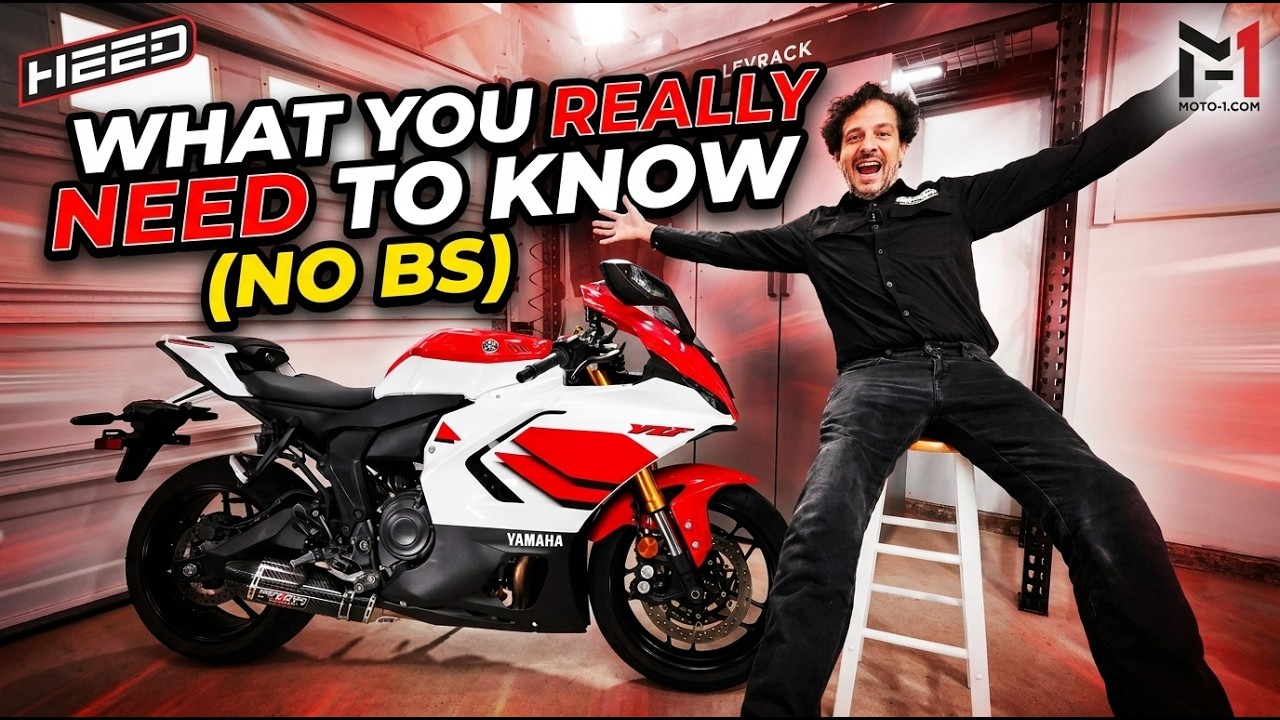
Thousands of miles later, this middleweight still rules.
Summary: After thousands of real-world miles commuting, carving canyons and hitting the racetrack, the 2026 Yamaha YZF-R7 is our Motorcycle of the Year. The overhauled 689cc CP2 parallel-twin makes right around 65 horsepower, just over 40 mpg and a guttural hit of torque. Yamaha fixed the suspension, added a Brembo radial-mount master cylinder and priced the standard bike at $9,399.
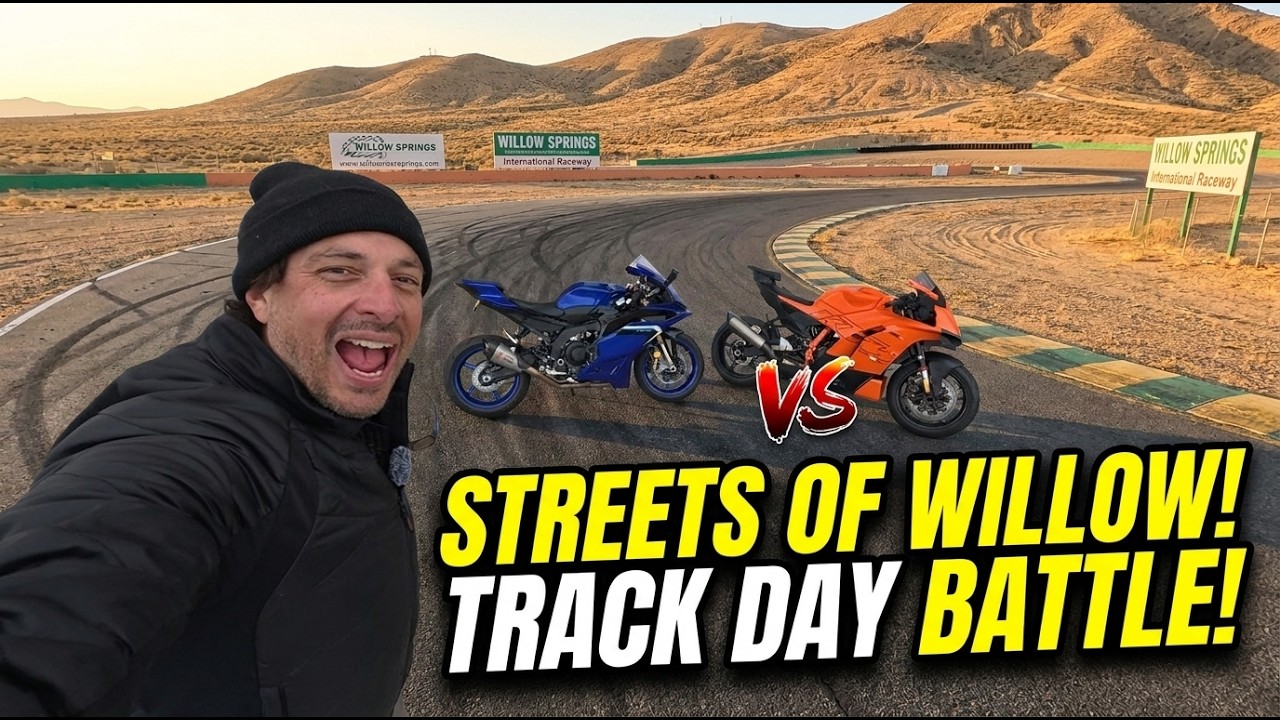
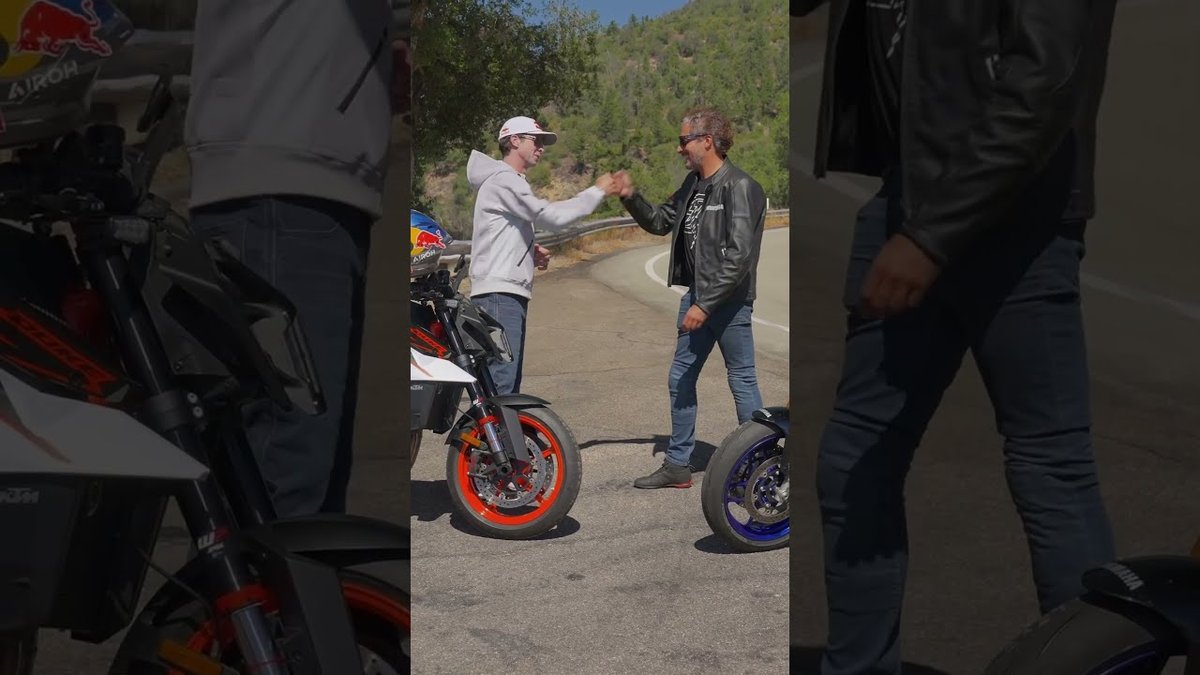
If you have not spent time with this motorcycle, get up to speed. We already put the 2026 Yamaha YZF-R7 through our Real MC Commute, first ride, road test and track test, then lined it up against Suzuki’s GSX-8R in our Head 2 Head track shootout with Red Bull street freestyle rider Aaron Colton and a street shootout. There is also our 2026 Suzuki GSX-8R vs. Yamaha YZF-R7 comparison. Every one of those stories landed in the same place: this bike kicks butt.
When the original twin-cylinder YZF-R7 arrived for 2022, we were less than impressed, and we said so. Yamaha addressed those squawks and turned the 2026 YZF-R7 into a much more capable middleweight sportbike. It is our 2026 Motorcycle of the Year, and here is why. We will do a dedicated Motorcycle of the Year episode later. You heard it here first.
Engine: 689cc of CP2 Torque
The 689cc CP2 parallel-twin is just awesome. It makes a ton of torque down low and right around 65 horsepower. It is a stand-up wheelie monster. Once you find the balance point, you can keep the front wheel up basically through the gearbox. It is a very easy-to-ride engine, and it has that guttural hit we have come to love from Yamaha’s crossplane engines, whether it is this CP2, the CP3 triple or the YZF-R1. Parallel twins are everywhere now, but Yamaha has something special here. They sound and feel unlike anybody else’s.
We still got just over 40 miles per gallon on the road, which is impressive. You are going to need that fuel economy, because one of our gripes is the 3.7-gallon fuel tank. It is a little too small.
That engine is mated to an electronic quickshifter that lets you make full-throttle upshifts and downshifts without the cable-actuated clutch. It is a cool piece of kit on a motorcycle that starts at $9,399, or $9,699 in the 70th Anniversary Edition livery we have been living with.
Electronics You Do Not Need, and Still Want
The engine is so friendly that this motorcycle does not need traction control, slide control or any of the rest of it. Yamaha fitted the suite anyway, and the platform is really good. It is based on the original 2015 YZF-R1 electronics, and 11 years later that system still works, even compared with Ducati, Aprilia and Honda. To be fair, the modest, friendly power delivery is why you barely need it. It is still cool that it is here.
The color TFT dash is easy to see, and we like the updated switchgear with the chunky buttons. We wish those buttons were backlit, but the menu is intuitive and it is easy to set the motorcycle up the way you want it. You can disable rear ABS, and you get cornering ABS functionality even if Yamaha does not call it that. The bike also pairs with Yamaha’s smartphone app for extra metrics, and you can download the Garmin StreetCross app and put turn-by-turn navigation right on that color TFT. We wish that were more integrated, so you did not have to add the Garmin app, but the feature is there. Download it, connect over Bluetooth, and you are in.
Suspension and Brakes: The Big Fixes
Suspension was the major issue on the original YZF-R7, and Yamaha addressed it. This is not track-grade or race suspension. It is versatile suspension that gives a sportbike a genuinely good ride on the street and still has enough road holding when you want to get after it in the canyons. It rides well over bumps and still holds the road. Good job, Yamaha. You did your homework.
The other nice improvement is the Brembo radial-mount master cylinder. You are not going to be ripping this thing to 140 mph, so you do not need huge brakes. This master cylinder has really good response, and you do not have to put a lot of lever input into slowing a 417-pound motorcycle. We really like that.
Surprisingly Fun on the Track
This motorcycle is super capable on the road, and it is also really nice at the track. I was pretty surprised by how fun it was. It is easy to ride, the sportbike ergonomics put you in the right place, the engine sounds cool and stays friendly, and the suspension deals with the bumps. You can really tear some butt on this bike on a racetrack, and it is easy. We already covered that in our 2026 Yamaha YZF-R7 Track Test.
Yoshimura R-77: Seven Pounds and a Better Voice
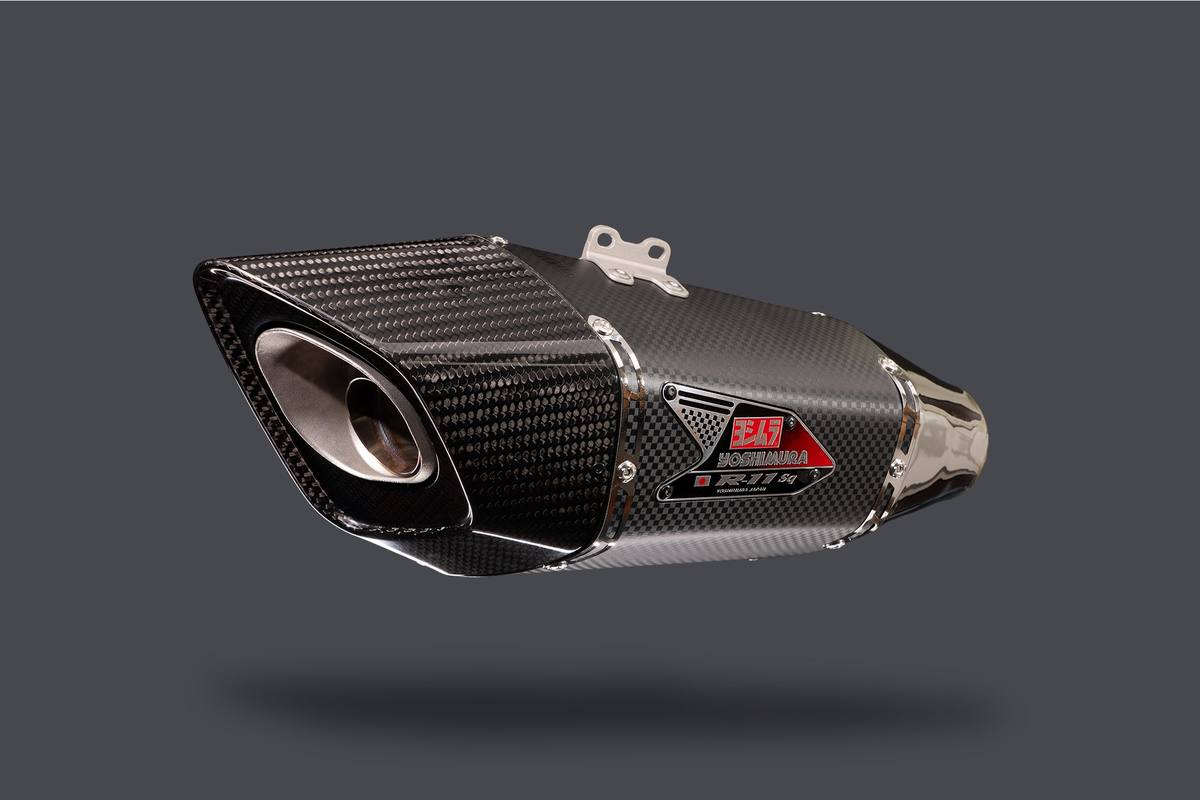
To wake the bike up a little, we fitted Yoshimura’s R-77 carbon fiber full exhaust. It lists for $999, and it is worth it. These R-77 systems look sick. That old-school muffler design looks awesome, and it gives the bike a little more throaty performance when you crack the throttle. It also sounds super sick. The mufflers are made in America, the quality is very high, and they are easy to install. Pull the upper fairing, pull the lower fairing, and the two-piece system mounts right up. The fit and finish and the carbon fiber look really good.
Yoshimura also makes a newer AT2 full exhaust. The AT2 is super sick too, but we like the R-77 a little better. It sounds a little more throaty and it sharpens throttle response a little more than the AT2. It also took right around seven pounds off this motorcycle, from 417 pounds down to 410. Get one at yoshimura-rd.com. You will not be disappointed.
R-World Styling and Smarter Bodywork
This motorcycle looks way better than the original R7. Yamaha is going all-in on this R-World design, with the fish gills on top of the tank and the twin LED headlights with the faux ram-air intakes. It does not have ram air, but it looks like it does, and it is a very sleek motorcycle with the turn signals integrated into the mirrors.
We also really like how Yamaha is piecing these motorcycles together. The fairings come on and off in a much more logical way, with not too many fasteners and not too few. People do not talk about this enough, but the industrial design of the bodywork is getting downright awesome. Work on this bike next to a Kawasaki Ninja and you will spend a lot less time fumbling with panels. Good job, Yamaha. We love that you are paying attention to the details.
A Maintenance Schedule You Can Live With
We rode this bike a few thousand miles this year because it was so fun and so practical. Engine oil changes come every 4,000 miles, with the oil filter replaced every other service, or 8,000 miles. Yamaha also wants a little grease in the steering bearings every 12,000 miles. The air filter goes a surprisingly long 24,000 miles, and the spark plugs are due a little early, at 8,000 miles. In our opinion you can usually stretch the plugs a little longer, but the manual calls for 8,000. The really cool number is the valve inspection interval on this eight-valve cylinder head: more than 26,000 miles. You can buy this motorcycle, which revs past 10,000 rpm, and you do not have to check the valves for more than 26,000 miles. That is serious durability. Good job, Yamaha.
Sponsored by Shoei
This episode is supported by Shoei and its all-new RF-1500 helmet. The RF-1500 has significantly improved ventilation, a more refined fit through the jawline and six unique shell sizes. Read our Shoei RF-1500 Review and shop for Shoei helmets at shoei-helmets.com.
Verdict: Motorcycle of the Year
If you cannot tell, we really like this bike, and we are sad that it has to go back. It looks awesome, it performs on the street as well as it does on the track, it has a modern electronics package that is easy to use, the suspension actually goes over bumps, the fit and finish is excellent, it is made in Japan, and minor maintenance and bodywork are easy. For all of those reasons, the 2026 Yamaha YZF-R7 is our Motorcycle of the Year. You heard it first. We will do another video on that later.
This wraps our long-term review of Yamaha’s 2026 YZF-R7. For more on this motorcycle, start with our first ride, road test, track test, Real MC Commute and the Head 2 Head comparisons. There are hours of video and a lot of tips you will not find anywhere else.
2026 Yamaha YZF-R7 Specifications
| Spec | 2026 Yamaha YZF-R7 |
|---|---|
| U.S. MSRP | $9,399 plus $675 destination ($10,074 total); 70th Anniversary Edition $9,699 plus $675 ($10,374 total) |
| Warranty | 1-year limited factory warranty |
| Engine | 689cc liquid-cooled DOHC inline twin-cylinder four-stroke; 4 valves per cylinder; 270-degree crossplane crankshaft (CP2) |
| Bore x stroke | 80.0mm x 68.6mm |
| Compression ratio | 11.5:1 |
| Fuel system | Fuel injection with YCC-T |
| Transmission / clutch | 6-speed; multiplate wet clutch with Assist & Slipper clutch; third-generation Quick Shift System (QSS) |
| Final drive | Chain |
| Front suspension | Telescopic fork, adjustable for preload, rebound and compression; 4.7 in travel |
| Rear suspension | Linked-type Monocross shock, adjustable preload and rebound; 4.8 in travel |
| Front brake | Dual 298mm hydraulic discs; Brake Control System and ABS; Brembo radial-mount master cylinder (as tested) |
| Rear brake | 245mm hydraulic disc; Brake Control System and ABS; rear ABS can be disabled |
| Tires (F/R) | 120/70ZR17 / 180/55ZR17 Bridgestone Battlax Hypersport S23 |
| Rake / trail | 24.0° / 3.6 in |
| Wheelbase | 54.9 in |
| Seat height | 32.7 in |
| Ground clearance | 5.3 in |
| L x W x H | 81.5 x 28.5 x 45.7 in |
| Fuel capacity | 3.7 gal |
| Fuel economy | Just over 40 mpg (our test); 59 mpg estimated (Yamaha) |
| Weight (full tank) | 417 lb wet; 410 lb with Yoshimura R-77 carbon full exhaust (our test) |
| Horsepower | Right around 65 hp (this review) |
| Instruments | 5-inch full-color TFT; Y-Connect smartphone connectivity; Garmin StreetCross turn-by-turn navigation |
| Rider aids | Six-axis IMU with traction, slide, lift, brake and engine-brake control plus launch control; Yamaha Ride Control (SPORT, STREET, RAIN, plus CUSTOM/TRACK modes) |
| Colors | Team Yamaha Blue, Raven, Breaker Cyan / Raven ($9,399); 70th Anniversary Edition ($9,699) |
| As tested | 70th Anniversary Edition with Yoshimura R-77 carbon fiber full exhaust ($999) |
2026 Yamaha YZF-R7 FAQ
Is the 2026 Yamaha YZF-R7 Moto-1’s Motorcycle of the Year?
Yes. After a long-term wrap-up that followed our commute, first ride, road test, track test and Head 2 Head comparisons, the 2026 Yamaha YZF-R7 is our Motorcycle of the Year. We will do a dedicated Motorcycle of the Year video later.
How much does the 2026 Yamaha YZF-R7 cost?
The 2026 Yamaha YZF-R7 starts at $9,399 plus $675 destination, or $10,074 total. The 70th Anniversary Edition we tested is $9,699 plus $675 destination, or $10,374 total.
How much horsepower does the 2026 Yamaha YZF-R7 make?
In this long-term review we call it right around 65 horsepower, with a ton of torque down low from the 689cc CP2 parallel-twin.
What kind of fuel mileage does the 2026 Yamaha YZF-R7 get?
We got just over 40 mpg on the road. Yamaha estimates 59 mpg. The fuel tank holds 3.7 gallons, which is a little too small in our opinion, so that real-world mileage matters.
What exhaust is on the long-term 2026 Yamaha YZF-R7?
Our long-term bike wears a Yoshimura R-77 carbon fiber full exhaust, which lists for $999. It sounds throatier than Yoshimura’s newer AT2 system, sharpens throttle response a little more and drops the wet weight from 417 pounds to 410.
What is the 2026 Yamaha YZF-R7 maintenance schedule?
Oil changes are every 4,000 miles, with the oil filter replaced every other service at 8,000 miles. Spark plugs are due at 8,000 miles, steering-bearing grease at 12,000 miles, the air filter at 24,000 miles and a valve inspection at more than 26,000 miles.
More Yamaha YZF-R7 Coverage on Moto-1
- 2026 Yamaha YZF-R7 Review and First Look
- 2026 Yamaha YZF-R7 Review and First Ride
- 2026 Yamaha YZF-R7 Road Test
- 2026 Yamaha YZF-R7 Track Test: Too Smart for Its Own Good?
- Yamaha YZF-R7 Real MC Commute
- Middleweight Sportbike Shootout: 2026 Yamaha YZF-R7 vs. Suzuki GSX-8R
- 2026 Suzuki GSX-8R vs. Yamaha YZF-R7 Shootout (Street)
- 2026 Suzuki GSX-8R vs Yamaha YZF-R7
Want more Moto-1 in your Google results?
Add Moto-1 as a Preferred Source on Google