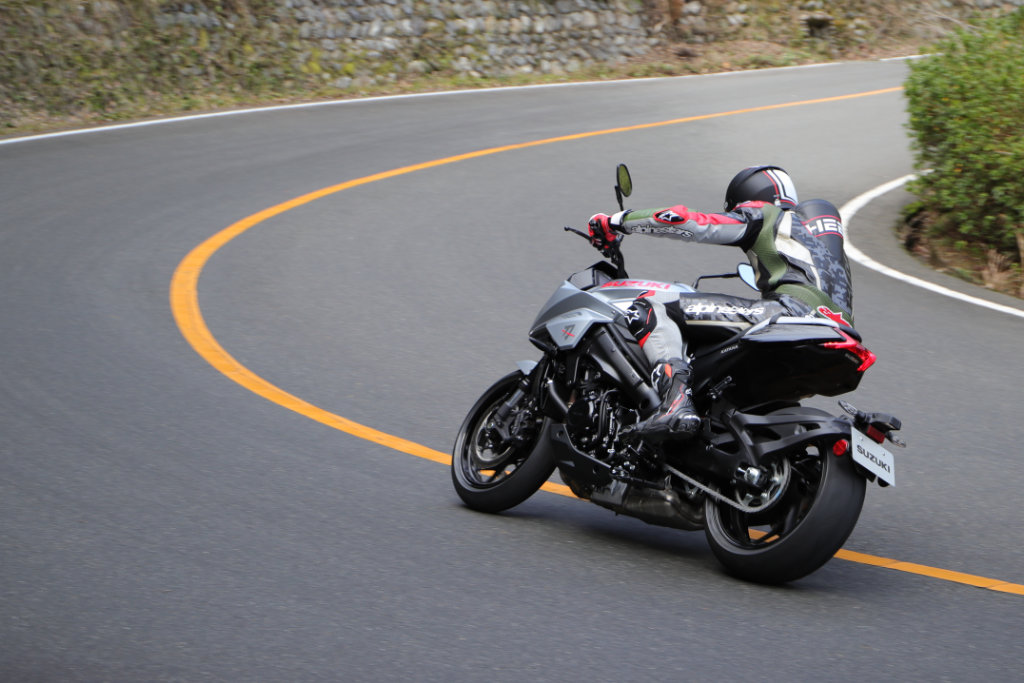
The hills of Kyoto, Japan, provided the backdrop for a highly anticipated revival in the motorcycling world: the 2020 Suzuki Katana. Riding on a closed toll road winding up the mountains—a place where the speed limit is usually “suggestions only”—Adam Waheed took this reinvented icon for a spin to see if it’s a sharp blade or just a butter knife.
A Nod to the Past (With Less ’80s Shoulder Pads)
Back in the early ’80s, the original Suzuki Katana radicalized the industry with a design so sharp it practically gave viewers paper cuts. Looking to recapture that “cool kid on the block” energy, Suzuki has re-engineered the Katana for the modern era.
The styling is entirely new, looking like something straight out of a Tron movie—or perhaps what a Cylon would ride on its day off. But beneath that futuristic skin, the bike is actually quite grounded, sharing its chassis and core components with the GSX-S1000.
The Heart of a Champion (and a Very Productive Teenager)
Powering the Katana is the legendary 2005-spec GSX-R1000 engine. At 15 years old, this engine is basically a high schooler in human years, but in motorcycle years, it’s a seasoned gladiator. It’s so good that BMW famously used it as a benchmark when developing the original S1000RR—high praise from a company not exactly known for handing out participation trophies.
Performance: Handling the Curves
On the road, the Katana feels compact and agile, carving through corners with the grace of… well, a katana. Suzuki’s hallmark “intake induction roar” is present and accounted for, giving the bike a raspy, aggressive growl that says, “I’m here to party,” while its competitors are still clearing their throats.
Even though it’s ride-by-wire, they kept a physical cable because, let’s face it, bikers have trust issues with computers. This ensures that when you crack the throttle, the bike doesn’t immediately try to exit the solar system, keeping the power delivery smooth and manageable.
Electronics: Keeping it Simple
Suzuki kept the tech straightforward to ensure the price doesn’t require you to sell a kidney. You get:
- Three-level Traction Control: A simple system that doesn’t need a PhD to operate.
- Dunlop RoadSport 2 Tires: Specifically designed to stick to the road better than a toddler to a candy aisle.
Ergonomics: Snug as a Bug
The design philosophy here was to make the rider feel like they are sitting inside the bike rather than perched on top of it like a gargoyle. This “part of the machine” feeling is great for confidence, even if it makes you feel slightly like you’re wearing the motorcycle as a very heavy suit of armor.
Suzuki Katana Technical Specifications
| Feature | Specification |
| Engine | 999cc, 4-stroke, liquid-cooled, 4-cylinder, DOHC |
| Bore x Stroke | 73.4 mm x 59.0 mm |
| Compression Ratio | 12.2:1 |
| Horsepower | 147–150 hp @ 10,000 rpm (Claimed) |
| Torque | 80 lb-ft @ 9,500 rpm |
| Transmission | 6-speed constant mesh with Slipper Clutch |
| Front Suspension | 43mm KYB inverted fork (Fully adjustable) |
| Rear Suspension | Link type, single shock (Preload & Rebound adjustable) |
| Front Brakes | Dual 310mm discs, Brembo 4-piston radial calipers, ABS |
| Rear Brake | Single 240mm (approx) disc, Nissin 1-piston caliper, ABS |
| Seat Height | 32.5 inches (825 mm) |
| Curb Weight | 474 lbs (215 kg) |
| Fuel Capacity | 3.2 US gal (12.0 L) |
| Tires (Front/Rear) | 120/70ZR17 / 190/50ZR17 (Dunlop Sportmax RoadSport 2) |