Which budget dual-sport gives you more bike for the buck?
Summary: The Yamaha WR125R ($3,999) beats the Honda XR150L ($3,399) in our budget dual-sport comparison. Yamaha’s liquid-cooled, fuel-injected 125cc VVA single is peppier, and the WR adds more suspension travel, 21/18-inch wheels and a rear disc brake. The Honda counters with a plusher seat, better fuel economy, a standard rack and a lower price.
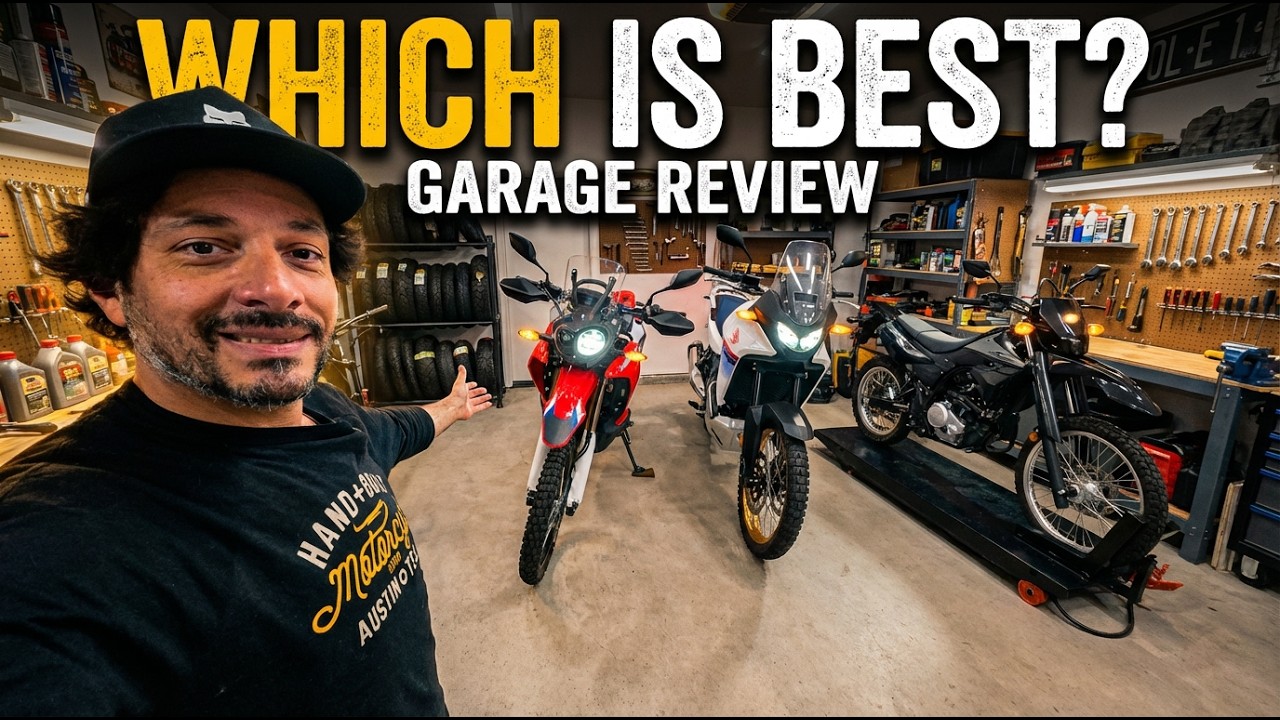
Looking for the cheapest way into the dual-sport world without buying a toy? Honda and Yamaha both sell street-legal, trail-ready singles in America for around $4,000 or less. This Honda XR150L vs. Yamaha WR125R comparison is a spec shootout: we park them side by side and break down the engines, suspension, wheels, brakes, ergonomics and price before we ride them head to head. We’ve already spent plenty of time on both bikes in our other test series, so this isn’t a first date. Let’s get into it.
Honda XR150L: Old-School Simple, Ridiculously Affordable
Honda’s tried-and-true XR150L is powered by a 149cc air-cooled single with an overhead camshaft and two valves. It breathes through an old-school 22mm carburetor. What’s that? It’s the fuel-and-air mixing device we all used before fuel injection. Ask your dad. It also gets nearly 100 mpg in our experience, which is borderline unbelievable.
With its 2.8-gallon tank full, the XR weighs 282 pounds. It rolls on 19-inch front and 17-inch rear spoked wheels, and it has a headlight, taillight, turn signals and mirrors, so you can ride it legally on the road and then hit the dirt. Just stay off the interstate: with an engine under 150cc, it isn’t freeway legal in many states.
This is a very simple motorcycle. Up front there’s a conventional 31mm telescopic fork with 7.1 inches of travel, and a single shock out back delivers 5.9 inches. It stops with a hydraulic front disc and an old-school rear drum. Instrumentation is basic, with an analog speedometer and a few warning lights.
Where the Honda shines is comfort. The seat is crazy comfortable for both rider and passenger, and there’s a ton of room for a buddy back there. Passenger pegs and a tubular-steel luggage rack come standard. The XR takes you back to what motorcycles used to be: simple, affordable, tough transportation you can ride on- and off-road. For the money, it’s well put together. The plastics look nice and so does the headlight. For $3,399, you really can’t go wrong.
Our test bike wears a Yoshimura RS-2 slip-on muffler, which gives it a little more bark and a little more bite. If you’re going to be kicking up dust off-road, it’s a worthwhile accessory.
Yamaha WR125R: Less Displacement, More Motorcycle
Yamaha’s WR125R gives up 24cc to the Honda, but its 125cc SOHC single has a four-valve cylinder head (two more valves than the XR) and a more modern design. It also gets Variable Valve Actuation (VVA), which switches between two intake cam profiles depending on engine speed and throttle opening. The result: despite the smaller displacement, the Yamaha makes more power than the XR150L.
The WR is liquid-cooled, too. Look at the oversized radiator. That’s a big radiator for a 125cc single. It also gets real fuel injection instead of a carburetor, which is totally awesome. It drinks from a 2.1-gallon tank, smaller than the Honda’s, and I like its modern-looking keyed fuel cap over the Honda’s old-school chrome one.
Fuel economy is the Yamaha’s catch. It’s rated at 105 mpg, but the way we ride it, it returns more like 70 to 80 mpg. That’s not as thrifty as the carbureted, bigger-displacement Honda, and it comes down to how you ride: the WR’s engine makes more power, so you ride it in a sportier manner.
With a full tank, the WR125R weighs 304 pounds, 22 more than the XR. It’s still very manageable on the trail. Side by side, these two look very similar, but the Yamaha is about 10 percent bigger. It feels more like a real motorcycle, with more modern ergonomics. The Honda feels almost like a play bike. I don’t mean that in a bad way, but Yamaha’s ergonomics and overall handling package feel more grown-up.
Suspension and Wheels: Real Dirt Bike Sizes
The WR125R’s 41mm KYB fork delivers 8.5 inches of travel versus the Honda’s 7.1, and its linkage-type KYB shock serves up 7.3 inches versus 5.9 on the XR. More travel means more bump-eating ability when the trail gets rough.
The Yamaha also rolls on a 21-inch front and 18-inch rear wheel, authentic off-road dirt bike sizes. It’s still a 125 dual-sport, so you don’t need full-race knobbies, but if you want more aggressive rubber, you’ve got endless choices. You can swap rubber on the Honda too, but its 19/17-inch combo has fewer fitment options for those of you who want to get crazy with racy aftermarket dirt bike tires.
I also like the Yamaha’s rims. They have a nicer, more modern finish than the Honda’s chrome, ’80s-style hoops.
Brakes, Seats and Cockpits
The WR125R has hydraulic disc brakes front and rear, a 267mm front disc with a two-piston caliper and ABS plus a 220mm rear disc. The Honda pairs its 240mm front disc with a 110mm drum out back.
The Yamaha’s seat is more dirt bikey. It has a nice cutout for the rider, and there’s a passenger pillion and pegs so you can bring a friend, but it’s not as cozy as the Honda’s big, oversized saddle. The WR’s LCD instrument panel is more refined than the Honda’s analog gauge, and even the Yamaha’s key looks more modern. All in all, the WR125R is a very good-looking motorcycle, sportier and maybe even a little racier than the XR150L.
Like the Honda, the Yamaha is under 150cc, so it isn’t freeway legal in many states either. Both are best on surface streets, back roads and trails.
Price: $600 Buys a Lot of Upgrades
It’s crazy that Yamaha can build the WR125R and sell it to American riders for $3,999. That’s $600 more than the XR150L’s $3,399 MSRP. Add destination ($400 for the Yamaha, $300 for the Honda) and the gap grows to $700, $4,399 versus $3,699. For that money you get liquid cooling, fuel injection, VVA, two more valves, more suspension travel, bigger wheels and a rear disc brake. That’s a pretty good price difference. You’re definitely getting more bike for your money.
Sponsored by Speed Addicts
This episode is supported by SpeedAddicts.com, the fastest-growing gear site around. You get a huge selection of new parts, gear and accessories, in-depth product breakdowns, no-cost exchanges and killer deals on the best brands. Orders over $50 ship free. If you’d rather shop in person, swing by the Speed Addicts Superstore in Orange, California, open seven days a week.
Verdict: Yamaha WR125R Wins
If our money were on the line, we’d take the Yamaha. At 6 feet tall and 190 pounds, I fit the WR125R better. It’s peppier, more modern and more fun to ride. It isn’t as comfy for everyday riding as the Honda with its awesome seat, and it gets worse mileage, but for $600 more you get the better motorcycle.
The Honda XR150L is still a gem. If you want the lowest price, the plushest seat, a standard rack and nearly 100 mpg, it’s a simple, tough little bike that’ll take you anywhere you’re legally allowed to go.
Next up, we ride these two on the road so you can hear what Yoshimura’s RS-2 sounds like on both. The Honda runs the slip-on, and the Yamaha gets the full RS-2 system. It even looks like a works edition. It isn’t, but you get the point. Tell us in the YouTube comments which bikes we should test next.
Want more? Read our 2025 Honda XR150L Review, the 2025 Honda XR150L Garage Talk Review and our 2026 Yamaha WR125R Review and First Ride. Curious about that Yoshimura pipe? See How $650 and 30 Minutes Transformed Our 2026 Yamaha WR125R.
Honda XR150L vs. Yamaha WR125R Specifications
| Spec | 2026 Honda XR150L | 2026 Yamaha WR125R |
|---|---|---|
| U.S. MSRP | $3,399 plus $300 destination ($3,699 total) | $3,999 plus $400 destination ($4,399 total) |
| Warranty | Transferable, one year included, limited warranty; HondaCare Protection Plan available | 1-year limited factory warranty |
| Engine | 149cc air-cooled single-cylinder four-stroke; SOHC, two valves; 57.3mm x 57.8mm bore x stroke | 125cc liquid-cooled SOHC single-cylinder four-stroke; four valves; Variable Valve Actuation (VVA); 52.0mm x 58.7mm bore x stroke |
| Fuel delivery | 22mm piston-valve carburetor | Fuel injection |
| Transmission | Five-speed manual | Six-speed; multiplate wet clutch |
| Final drive | #428 chain; 17T/49T | Chain |
| Frame | Steel tube | Semi-double cradle |
| Front suspension | 31mm telescopic fork; 7.1 in travel | 41mm KYB telescopic fork; 8.5 in travel |
| Rear suspension | Single shock; 5.9 in travel | Linked-type Monocross KYB gas shock; 7.3 in travel |
| Front brake | 240mm disc, dual-piston hydraulic caliper | 267mm disc, two-piston caliper; ABS |
| Rear brake | 110mm drum | 220mm hydraulic disc, one-piston caliper |
| Wheel sizes (F/R) | 19 in / 17 in | 21 in / 18 in |
| Tires (F/R) | 90/90-19 / 110/90-17 | 90/90-21 / 110/80-18 Dunlop D605 |
| Rake / trail | 27.0° / 4.1 in | 28.3° / 4.6 in |
| Wheelbase | 53.5 in | 56.3 in |
| Seat height | 32.8 in | 34.4 in |
| Ground clearance | 9.6 in | 9.4 in |
| L x W x H | 81.7 x 31.9 x 44.5 in | 85.0 x 33.1 x 47.0 in |
| Weight (full tank) | 282 lb curb | 304 lb wet |
| Fuel capacity | 2.8 gal | 2.1 gal |
| Our fuel economy | Nearly 100 mpg | 70-80 mpg (105 mpg rated) |
| Instruments | Analog speedometer with warning lights | Multi-function LCD with Y-Connect smartphone connectivity |
| Standard extras | Tubular-steel rear carrier, passenger pegs, electric starter | Passenger pegs, Y-Connect, wide motocross-style footpegs |
Honda XR150L vs. Yamaha WR125R FAQ
Which is better, the Honda XR150L or the Yamaha WR125R?
The Yamaha WR125R. Its liquid-cooled, fuel-injected VVA engine is peppier, and it has more suspension travel, 21/18-inch wheels, a rear disc brake and more modern ergonomics. The Honda XR150L is cheaper, more comfortable and more fuel efficient.
How much do the Honda XR150L and Yamaha WR125R cost?
The XR150L is $3,399 plus $300 destination ($3,699). The WR125R is $3,999 plus $400 destination ($4,399).
Which is lighter?
The Honda, at 282 pounds with a full tank versus 304 pounds for the Yamaha.
Which gets better fuel economy?
The Honda. We see nearly 100 mpg from the XR150L versus about 70 to 80 mpg from the WR125R the way we ride it.
Are the XR150L and WR125R freeway legal?
Not in many states. Both engines are under 150cc, so stick to surface streets, back roads and trails.
More Dual-Sport Coverage on Moto-1
- Is Yamaha’s 2026 WR125R the $4K Trail Cheat Code?
- 2026 Honda CRF300L Rally vs. Honda Transalp vs. Yamaha WR125R
- Honda’s 2025 CRF300L Rally Review
- 2025 Suzuki DR-Z4S Review
- Dual-Sport Bikes
- Motorcycle Shootouts and Bike Comparisons
- Honda Motorcycles
- Yamaha Motorcycles