Kumamoto killer meets the Hamamatsu heavy hitter
Summary: Honda’s CBR1000RR-R Fireblade SP wins our track comparison against Suzuki’s GSX-R1000R. The $28,999 Honda is more agile, more modern and faster, with semi-active Öhlins Gen 3 suspension and better brake feel. The $17,939 Suzuki fights back with a great-sounding engine, a hooked-up rear end and an $11,060 smaller price tag.
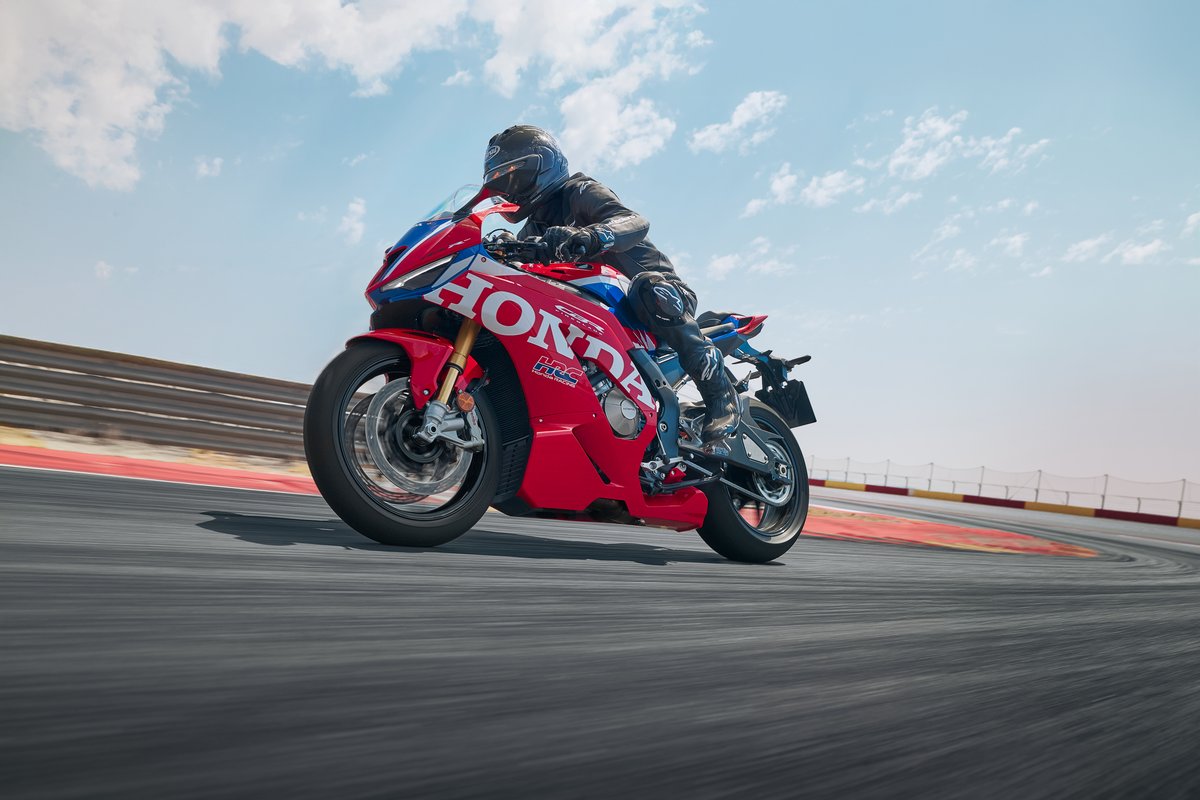
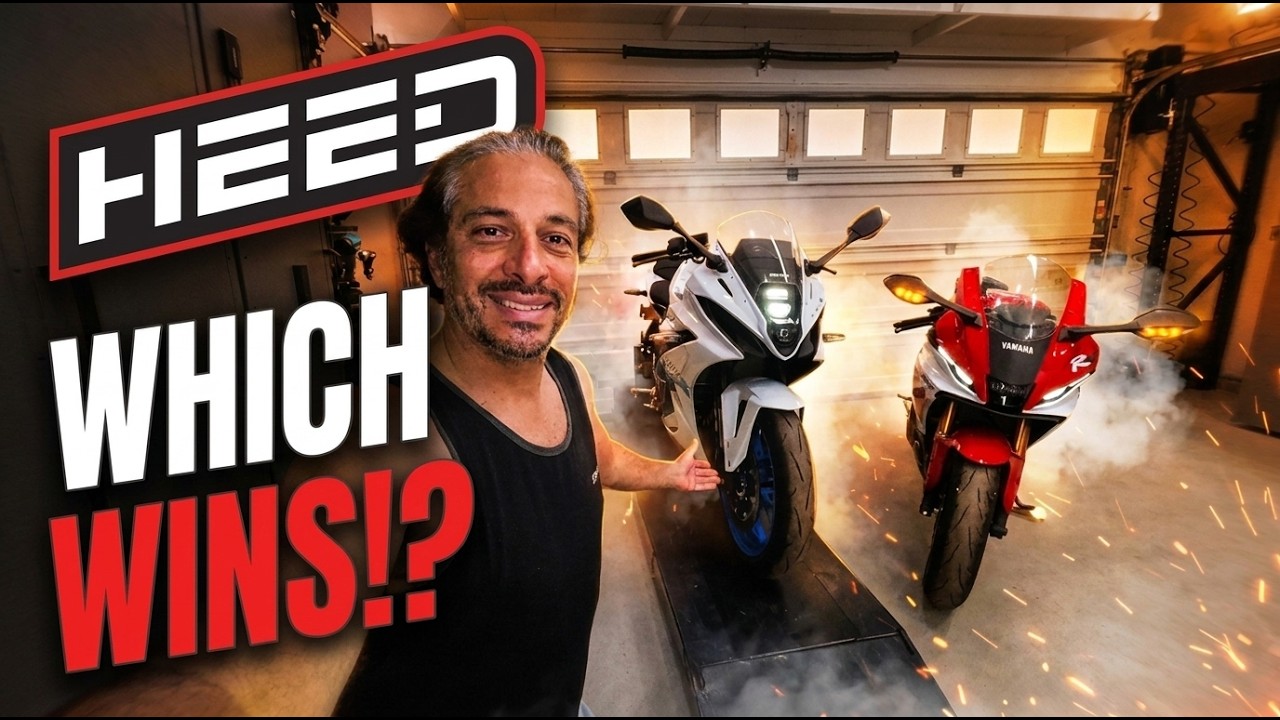
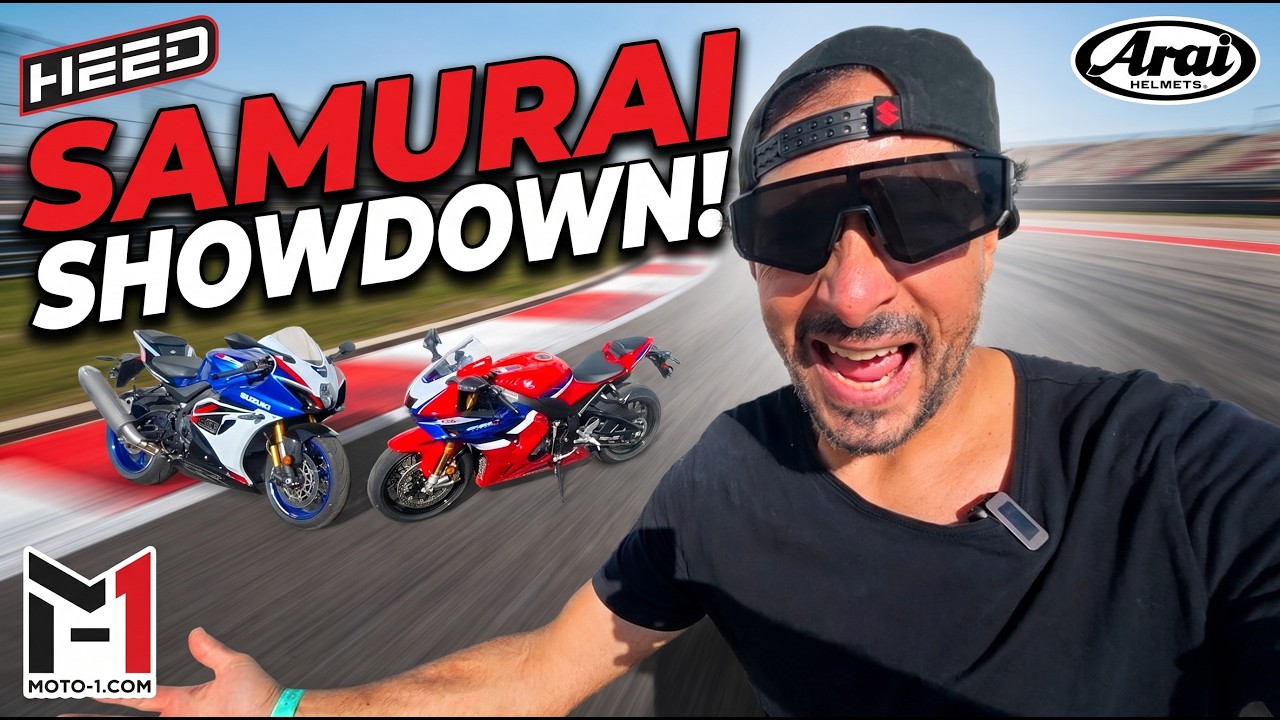
The ultimate Japanese superbike shootout has finally arrived on American tarmac. In this Honda Fireblade SP vs. Suzuki GSX-R1000R track comparison, Hamamatsu takes on Kumamoto in a fight to the death. In one corner, Suzuki’s value-minded GSX-R1000R 40th Anniversary Edition. In the other, Honda’s ultra-exclusive 2026 CBR1000RR-R Fireblade SP in Grand Prix Red. Same cylinder count, same country, totally different philosophies. Let’s go.
The Price Gap
The Fireblade SP retails for $28,999. The GSX-R1000R goes for $17,939. That’s $11,060 between them, and the Honda costs about 60% more. Both make about 160 horsepower in stock form. The Honda gets semi-active Öhlins Gen 3 suspension. The Suzuki makes do with manually adjustable Showa pieces: a pressurized Balance Free fork and a Balance Free shock.
The Honda rode on Bridgestone Battlax Racing Street RS12 tires, since Bridgestone is the official tire partner of our Head 2 Head series (KTM 990 Duke R vs. Yamaha MT-09 SP Shootout: Twin Beats Triple). The Suzuki ran its stock RS11s. More on that later. If you’re not up to speed on either bike, check out our 2026 Honda CBR1000RR-R Fireblade SP Garage Talk, the 2027 Suzuki GSX-R1000R Garage Talk, our Real MC Commute rides on both, and our 2027 Suzuki GSX-R1000R Track Review.
Honda Fireblade SP: Warp Drive Engaged
Let’s hop aboard the Honda first. As we’ve said before, the user interface isn’t the best. We set it up with max power, the least engine braking and the least wheelie control. And there’s no keyed ignition. That really annoys me. I have to carry the key fob in my leather suit. Honda, put a real key on this motorcycle. You have a key for the 4.4-gallon fuel tank, so why not one for the bike?
Right away, the Fireblade feels a lot more modern ergonomically than the GSX-R. The clip-ons are low and canted out in a modern bend, the wide-body fairing is a little wider and the windscreen is a little shorter. The tank feels wider through the midsection than the Suzuki’s, but it’s shaped so you can really squeeze it with your legs and go fast. This is modern superbike, racy and purposeful.
Give her the beans and you can tell there’s some electronic restriction going on. At lower rpm and in the lower gears, it doesn’t give you the full berries. It feels even more locked up than the Suzuki. Ride it wide open in the higher gears at high rpm, though, and you don’t feel that restriction at all. Honda has also made great strides with its ride-by-wire. When it debuted on the 2017 Fireblade, it was the worst ride-by-wire known to man. Now it’s pretty dang good. Both bikes surge a little, but the Honda does it less, and its throttle response feels more refined and more intimate than the Suzuki’s.
Then this engine comes online. I thought the Suzuki pulled well, and it does, but this Honda has warp drive. It screams, it doesn’t sign off and it has an intoxicating howl that makes you want to hold her wide open. I really missed this 1000cc inline-four.
The Honda carries a little more fuel than the Suzuki, yet weighs three pounds less, and it feels like a lot more than three pounds. Put a little input into the bar and it turns. It’s more precise and more organic in its direction changes, where the Suzuki doesn’t fight you but feels vaguer. It enters corners beautifully, too. Between the slipper clutch and the quickshifter, the back end stays hooked up on the downshifts. It feels very BMW-ish.
The Fireblade also feels great at lean, but that’s not quite a fair fight. The RS12s are a significant improvement over the old-gen RS11s on the Suzuki. Night and day. Do yourself a favor: junk the RS11s, forget what you ever thought about them and shoe up with RS12s.
Öhlins Gen 3 and Brembo Brakes
The Öhlins semi-active suspension adjusts damping in real time based on what the bike is doing and what I’m doing with the throttle and controls. The result is a bike that’s ridiculously well set up out of the box. Is it perfect? No. But it’s eight-tenths of the way there. With the Suzuki, we could get there, but we’d have to spend some time with the clickers and the preload and go through some tires. To be fair, the Suzuki’s suspension action is pretty nice too, but the Honda moves through its stroke effortlessly.
The brakes are sharp and rich in feel. The pads aren’t that aggressive, and neither are the Suzuki’s, but these are really easy brakes to use. You get into the lever and the bike slows down. Paired with that Gen 3 Öhlins fork, fast laps come with ease. It feels like you’re not even doing anything and the bike is ripping.
The electronics are far more sophisticated, too. When the Honda’s traction control comes in, it does so much more naturally. On the Suzuki, I don’t think it even stepped in a couple of times when the rear started to spool up. Is all that worth five figures more? I don’t know. All I can tell you is I’m having more fun on the Honda. It’s more agile, it feels better at lean, it stops better, the engine wails and it sounds sick as hell. There’s really nothing the Honda doesn’t do better, but it should, for the money.
Suzuki GSX-R1000R: Old-School Japanese Sportbike
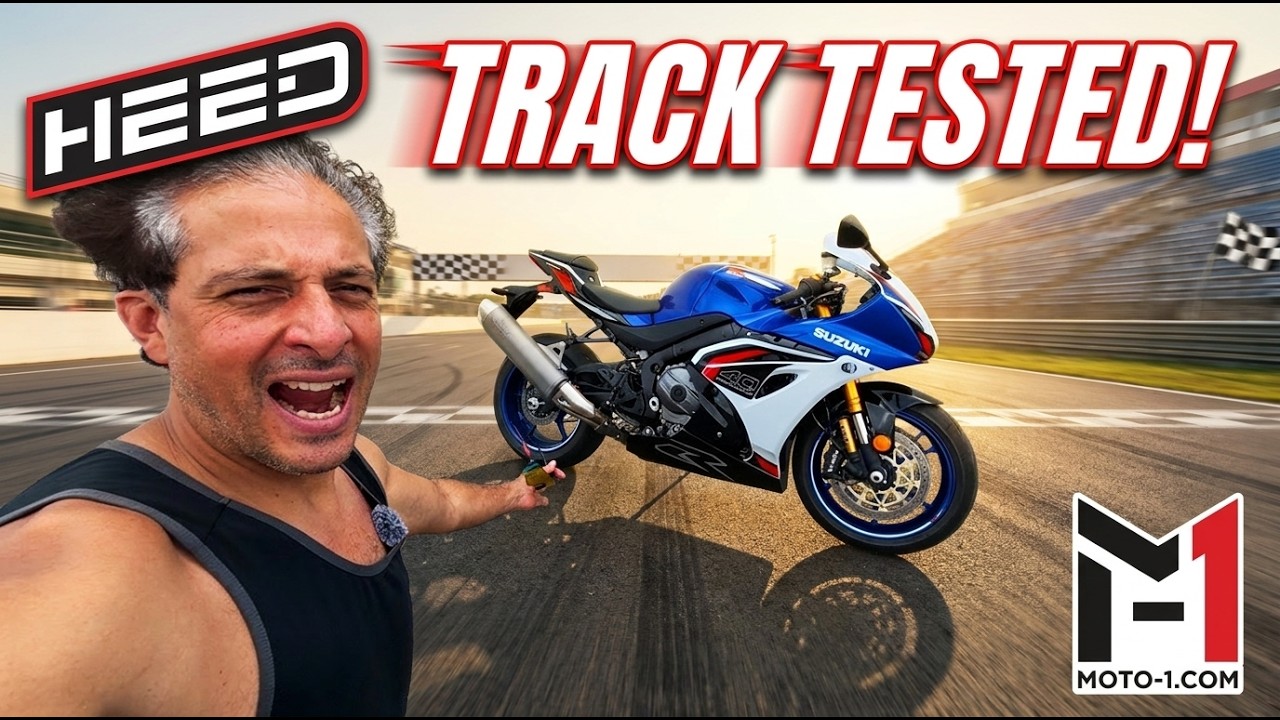
Now for the Gixxer. It looks super good in its 40th Anniversary livery, and it has a lot less electronics. The monochrome LCD isn’t color, and there isn’t a lot of adjustment to be had. We ran the most aggressive combined engine power and throttle mode with the least traction control. Heck, we just turned traction control off. But the Suzuki has an ignition key, and that’s extra points. We love ignition keys. Thank you, Suzuki.
On track, the GSX-R feels like an old-school Japanese sportbike. It’s very narrow through the midsection, and its clip-ons are angled inward more and sit a little higher than the Honda’s. It would be a little more comfortable on the street, with a lot less racy ergonomics. Not necessarily a bad thing. Once you start dipping it into turns, it comes together and feels oh so nice.
The 999cc inline-four also uses ride-by-wire. I like the Honda’s throttle response a little better, since it feels more accurate. But when you give the Suzuki the berries, it actually goes. It has electronic restriction too, but it’s a lot less noticeable, which makes it more fun right out of the box. The engine feels a little lazy in a good way, which keeps the rear tire hooked up and gives you that pleasing torque feel off corners. It loves to build revs and keeps pulling, not quite as hard or as long as the Honda, but pretty dang hard and long. Good job, Suzuki.
Its gearing is a little taller, but it still comes off corners very well. Even with traction control off, the synergy between the chain, the rear suspension and the linkage keeps the Suzuki hooked up, and you feel very connected coming off corners. The RS11s don’t have anywhere near the edge grip of the RS12s, but the rear end still lets you ride it hard.
We came in hot at one point and I felt the ABS pressing a little at the lever. The Honda’s ABS has a more aggressive, sportier calibration. It’s not at the level of the Euro bikes, but if you’re a maniac on the brakes, you’ll like the Honda’s setup better. Stopping power feels about the same, but the Honda has more feel at the lever, and for riders who live and die by feel, that matters.
The quickshifter is nice to have but isn’t as refined into turns. The chassis feels a hair more upset when you downshift into corners, where the Honda stays planted. The Suzuki is also more sluggish side to side. It doesn’t feel vastly heavier, but it changes direction like a heavier bike. You have to put real inputs into the GSX-R, where the Honda is almost telepathic. Both bikes are way more agile and easier to ride than their predecessors, but the Suzuki asks for a more committed riding style.
I hate to say it, but the Honda really is better in almost every way. The Gixxer still gets it done, though. It’s crazy fun and crazy easy to ride, and you can ride it hard with good feel and good control. And having that extra cash in the bank buys a lot of tires and a lot of fuel. You really can’t go wrong.
Sponsored by Arai
This episode is supported by Arai and its Contour-X helmet. It’s Arai’s quietest street helmet, with a round, egg-like shell surface designed to glance off objects in a crash, and it’s both DOT and Snell certified. The Swirl White version we featured is made in Japan and retails for $999.95. Check out our Arai Contour-X Swirl White Helmet First Look for more.
Design Philosophy: Old School vs. New World
Suzuki is sticking with the old-school superbike formula. Does it work in today’s world? To a point. The GSX-R won’t go as fast as the Honda, but it’s a visceral, organic riding experience. Its rider aids are far more rudimentary than a modern superbike’s, so if you rely on electronics, you won’t like it. If you’re a manual rider who doesn’t need them, you probably will. Suzuki is still battling on the value-superbike front, against bikes like Aprilia’s standard RSV4, which we put head to head in our 2027 Suzuki GSX-R1000R vs. 2026 Aprilia RSV4 comparison.
The Fireblade SP, on the other hand, is so bespoke now in its cost and features. Honda will make more money on every unit it sells, thanks to that price gap. Big Red understands that in today’s market, it’s okay to sell fewer bikes at a higher margin. It’s also good to see Honda finally embracing the modern superbike world and trying to catch up to the Europeans. It’s been forever since we rode a Honda superbike that felt truly current.
Verdict: Honda Fireblade SP Wins
In a perfect world, I’d have both: the Suzuki for the raw riding experience and the Honda for the more polished deal, once I unlocked it. But in today’s shootout, the Honda CBR1000RR-R Fireblade SP wins. It feels more modern and its engine has more visceral thrill. Yes, the electronics are hard to set up and the menu navigation is clunky, but if you want to go fast at the track, or even on the street, the Fireblade SP gets it done. It does desperately need a retune and reflash, which just shows how much potential is locked inside.
The GSX-R1000R could benefit from a retune, reflash and pipe too, just not as badly. Even in standard form, it feels a lot older: dated ergonomics, less pep in the engine’s step and suspension that’s really good but many generations behind the Öhlins Gen 3 stuff. To be fair, its brakes worked really well today. Still, it would be nice to see Suzuki up the ante and rejoin the modern liter-bike ranks. Next time, we’ll put on a lap timer and settle it once and for all.
Honda Fireblade SP vs. Suzuki GSX-R1000R Specifications
| Spec | 2026 Honda CBR1000RR-R Fireblade SP | 2027 Suzuki GSX-R1000R 40th Anniversary Edition |
|---|---|---|
| U.S. MSRP | $28,999 plus $775 destination | $17,939 plus $750 destination |
| Warranty | Transferable, one-year limited warranty; HondaCare Protection Plan available | 12-month unlimited-mileage limited warranty |
| Engine | 999.9cc liquid-cooled DOHC inline-four, four valves per cylinder | 999.8cc liquid-cooled DOHC inline-four; Suzuki Racing Variable Valve Timing (SR-VVT) |
| Bore x stroke | 81.0mm x 48.5mm | 76.0mm x 55.1mm |
| Compression ratio | 13.6:1 | 13.8:1 |
| Claimed output | Not published | Not published |
| Fuel system | PGM-DSFI fuel injection, 52mm throttle bodies, throttle-by-wire | Fuel injection with ride-by-wire throttle bodies |
| Transmission / clutch | Six-speed; three-level quick shifter | Six-speed cassette-style; bi-directional quickshifter; SCAS slipper-assist clutch |
| Final drive | #525 chain, 16/44 | DID 525HV3 chain |
| Frame | Aluminum twin-spar, 2mm wall sections; 24.5-in swingarm | Twin-spar aluminum; adjustable swingarm pivot |
| Front suspension | 43mm inverted Öhlins NPX Smart-EC fork (third generation, semi-active); 4.9 in travel | Showa Balance Free Front (BFF) inverted fork, fully adjustable |
| Rear suspension | Pro-Link, Öhlins TTX36 Smart-EC shock (semi-active); 5.6 in travel | Link-type Showa Balance Free Rear Cushion Lite (BFRC-lite) shock |
| Front brakes | Dual 330mm discs, radial-mount Brembo Stylema R four-piston calipers, Brembo master cylinder | Dual 320mm Brembo T-drive discs, radial-mount Brembo Monobloc four-piston calipers |
| Rear brake | 220mm disc, Brembo caliper | Single disc, Nissin one-piston caliper |
| ABS | Cornering ABS with Track and Race modes | Lean-sensitive Motion Track ABS |
| Rider aids | Honda Selectable Torque Control: five power curves, 10 torque-control levels, three engine-braking levels, three wheelie-control levels | IMU; Smart TLR Control (traction control, Lift Limiter, Roll Torque Control); launch control |
| Ignition | Honda Smart Key (keyless) | Keyed ignition |
| Tires | 120/70ZR-17 front, 200/55ZR-17 rear | Bridgestone Battlax Racing Street RS11; 120/70ZR17 front, 190/55ZR17 rear |
| Wheelbase | 57.2 in | 55.9 in |
| Seat height | 32.7 in | 32.5 in |
| Ground clearance | 5.1 in | 5.1 in |
| Fuel capacity | 4.4 gal | 4.2 gal |
| Curb weight | 445 lb | 448 lb |
| Instruments | 5-inch full-color TFT | LCD multifunction panel |
| Exhaust | Titanium muffler developed with Akrapovič | Compact 5.5-liter muffler |
Honda Fireblade SP vs. Suzuki GSX-R1000R FAQ
Which is better on the track, the Honda Fireblade SP or the Suzuki GSX-R1000R?
The Honda CBR1000RR-R Fireblade SP. It’s more agile, has more modern ergonomics, pulls harder up top, has more brake feel and its semi-active Öhlins Gen 3 suspension works great out of the box. The GSX-R1000R is easier on the wallet and still crazy fun to ride.
How much do the Fireblade SP and GSX-R1000R cost?
The 2026 Honda CBR1000RR-R Fireblade SP is $28,999 plus $775 destination. The 2027 Suzuki GSX-R1000R 40th Anniversary Edition is $17,939 plus $750 destination. That’s an $11,060 difference in MSRP.
Which is lighter?
The Honda, at 445 pounds curb weight versus 448 pounds for the Suzuki, even though it carries 4.4 gallons of fuel to the Suzuki’s 4.2.
Does the Fireblade SP have a key?
No. The Fireblade SP uses Honda’s Smart Key keyless ignition, so you carry the fob. The GSX-R1000R has a conventional ignition key.
What tires did you run?
The Honda ran Bridgestone Battlax Racing Street RS12s. The Suzuki ran its stock Battlax Racing Street RS11s, which don’t have nearly the edge grip of the RS12s.
More Superbike Coverage on Moto-1
- 2026 Honda CBR1000RR-R Fireblade SP vs. Yamaha YZF-R1M
- Suzuki GSX-R1000R vs. BMW S1000RR Track Comparison
- 2026 Honda CBR1000RR-R Fireblade SP Street Review
- 2026 Honda CBR1000RR-R Fireblade SP Commute Review
- 2027 Suzuki GSX-R1000R Real MC Commute
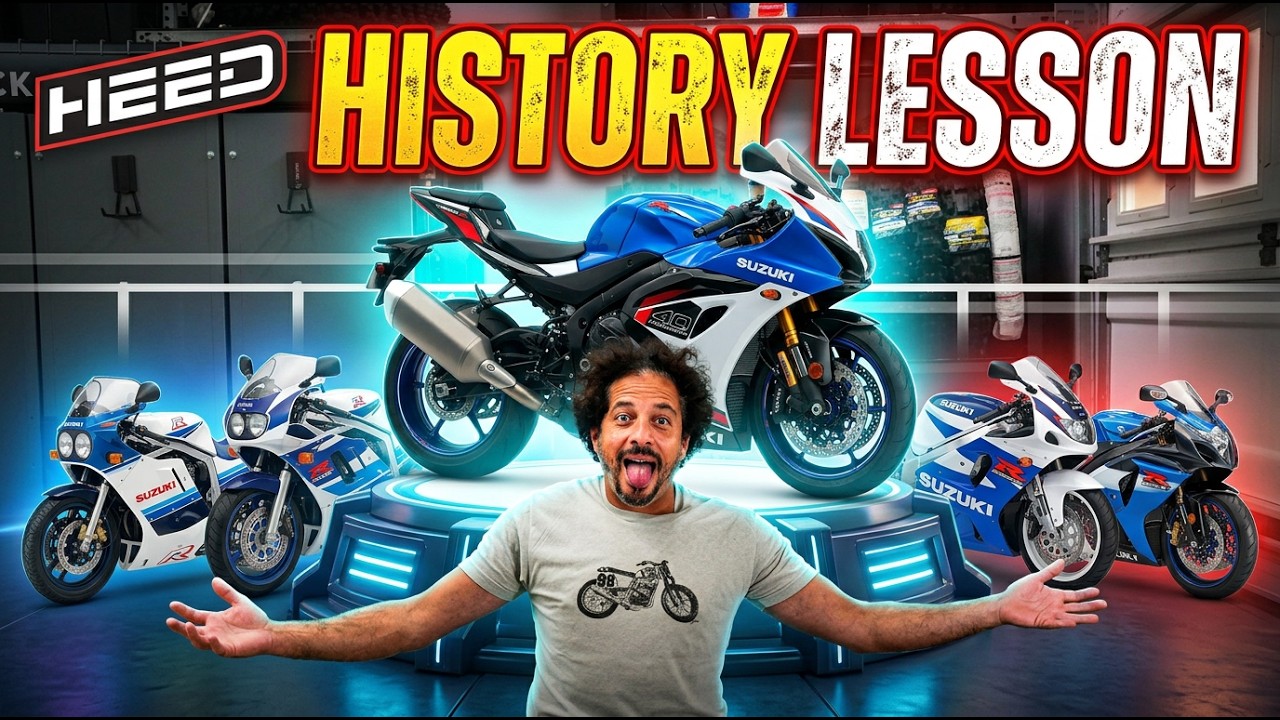
- 2027 Suzuki GSX-R1000R History Review
- 2027 Honda CBR1000RR-R Fireblade SP Preview
- 2027 Suzuki GSX-10R First Look
- Sportbikes
- Motorcycle Shootouts and Bike Comparisons
- Honda Motorcycles
- Suzuki Motorcycles