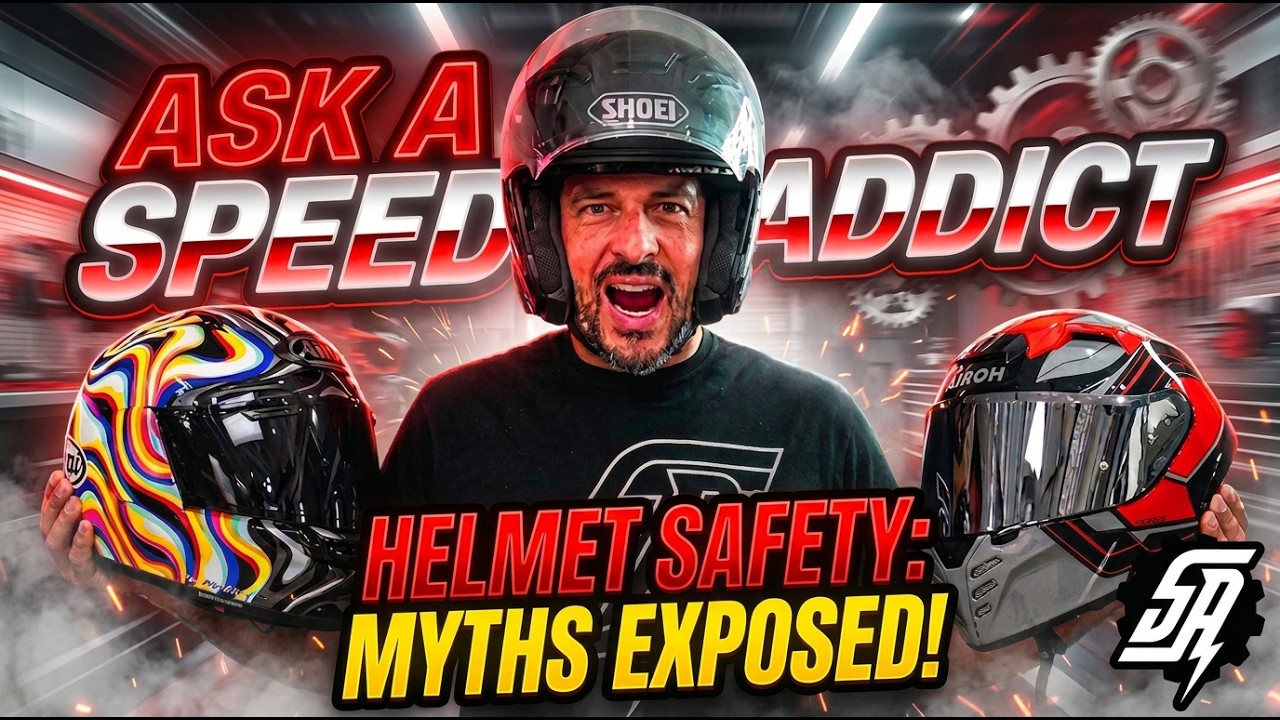
Modern motorcycle helmet safety certifications can feel like an alphabet soup designed purely to scramble your brain before you even hit the pavement. With acronyms ranging from the legacy DOT to the ultra-strict FIM standards, figuring out what truly protects your noggin is no small task.
A comprehensive breakdown of motorcycle helmet safety ratings reveals that combining U.S. DOT legality with ECE 22.06 standards provides the ideal balance of street protection and advanced impact management, helping riders bypass expensive racing-tier certifications they do not need.
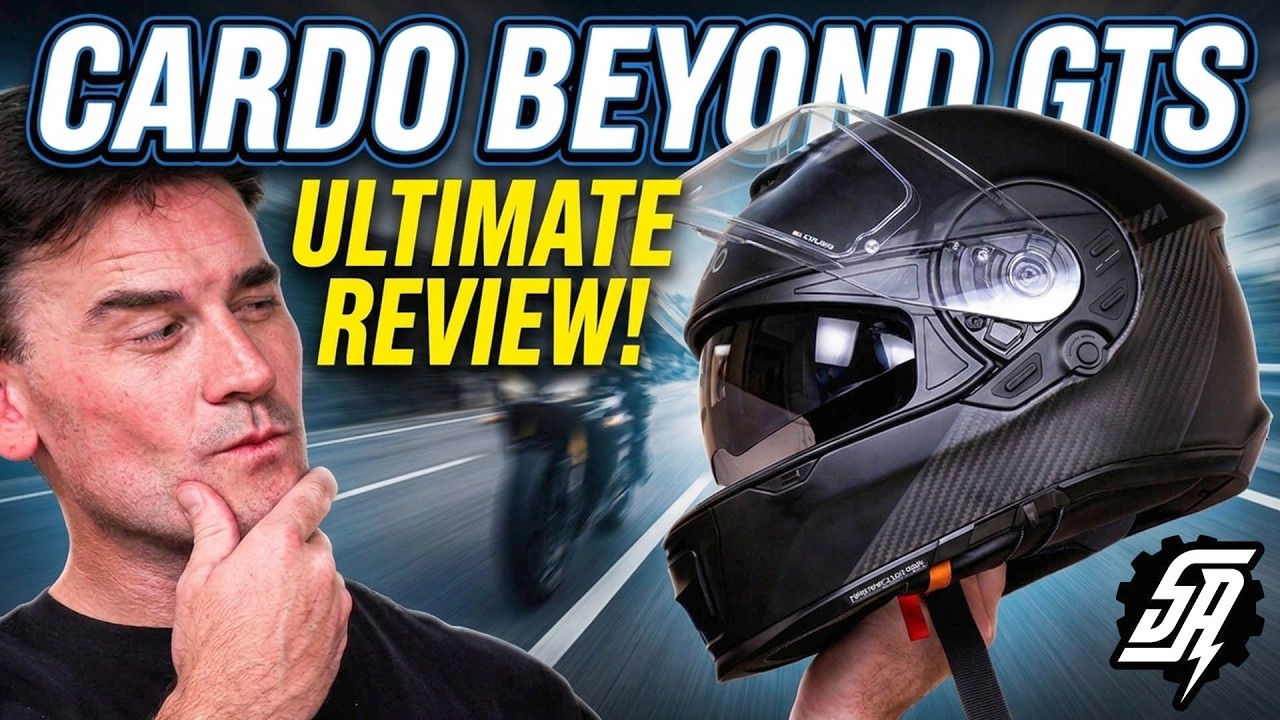
As riders, we love debating gear almost as much as we love arguing about apexes or whether chain wax is better than WD-40 lube. But when it comes to the plastic and EPS foam holding our fragile egos—and craniums—together, keyboard warriors get riled up faster than a superbike in first gear. To clear the marketing smoke and cut straight to the tarmac-tested truth, the folks over at Speed Addicts recently sat down with Bob Weber, co-founder of 6D Helmets and a true pioneer in omnidirectional suspension (ODS) technology.
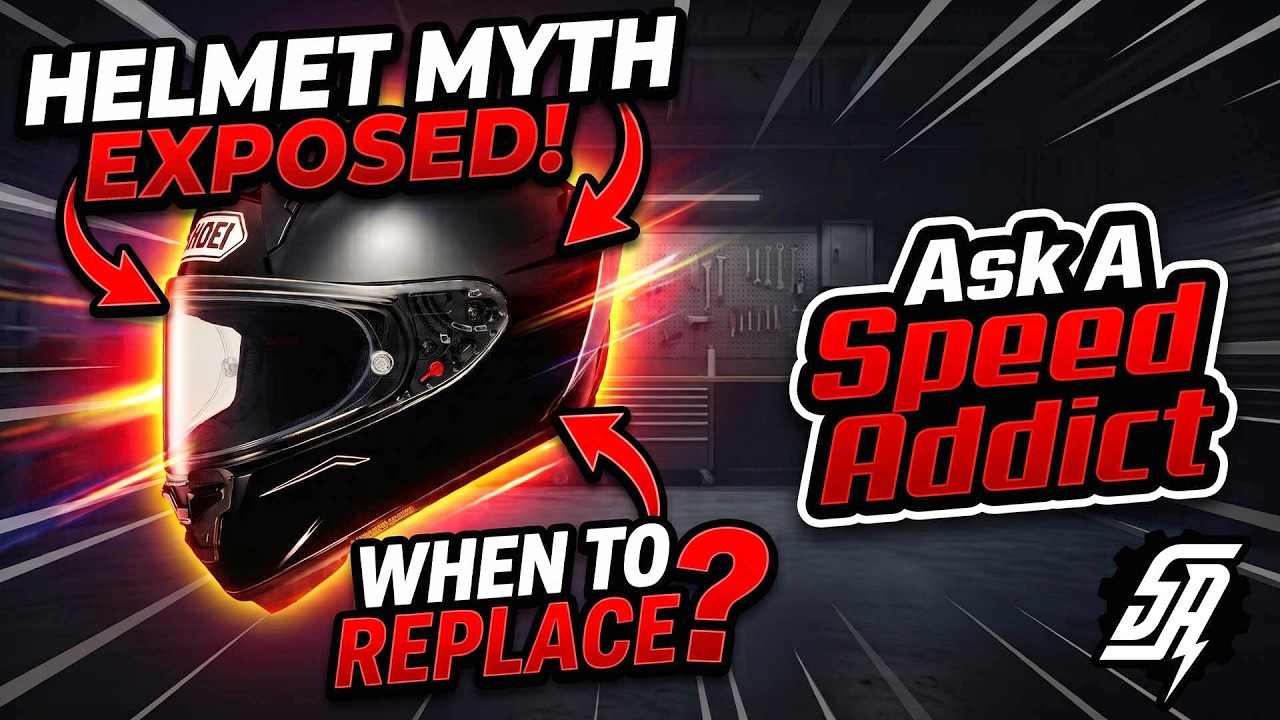
Related Content: When Should You Replace Your Motorcycle Helmet?
If you have ever stared blankly at a wall of lids wondering why some cost a Benjamin while others cost a mortgage payment, pull up a chair. We are pulling back the visor on how these safety standards actually work.
The Dynamic Duo: DOT and ECE 22.06
Let’s start with the baseline requirement for riding legally on U.S. public asphalt: the Department of Transportation (DOT) standard. Established way back in 1972—yes, 54 years ago—DOT gets roasted on online forums as a glorified sticker. Weber notes that while it has its place as a legal baseline, today’s consumer isn’t buying a helmet purely because of DOT if they are prioritizing state-of-the-art crash science.
However, when paired with the ECE 22.06 standard, you hit the sweet spot for street riding. ECE 22.06 borrows heavily from the racing world’s FIM benchmarks, incorporating rotational energy management and low-speed impacts into everyday consumer helmets.
The Snell Legacy and Low-Energy Science
For decades, seeing that little silver Snell sticker inside a helmet meant you were buying top-tier protection. But does the Snell crown still reign supreme? Weber admits that while the dealer community has relied on Snell’s rigorous multi-impact testing for generations, those tests historically forced manufacturers to build stiffer, heavier outer shells. A stiffer shell can actually transmit more blunt force energy straight into your brain during a real-world, low-speed get-off.
Fortunately, the updated Snell M2025 standard has incorporated rotational acceleration limits. Even so, industry innovators like 6D argue that the industry still needs to focus heavily on low-energy impacts—ensuring a helmet complies over a broader range of forces rather than just surviving massive, catastrophic high-velocity impacts that physics rarely lets a human walk away from anyway.
Is FIM Elite Tier Worth the Extra Cash?
If you are lining up on a professional grid in MotoGP, FIM homologation is the gold standard. But what about the average street rider? Weber points out that the difference between FIM and a top-tier ECE 22.06 helmet often boils down to fractional percentages in specific rotational injury metrics, yet pushing a helmet through FIM homologation adds significant R&D and marketing costs for manufacturers.
For the everyday street rider, paying the trickle-down tax for elite racing certifications is usually unnecessary. Your best bet is to look for a helmet offering dual certification (DOT and ECE 22.06), prioritize reputable brands with advanced energy-mitigation tech, and save your hard-earned cash for your next rear tire.