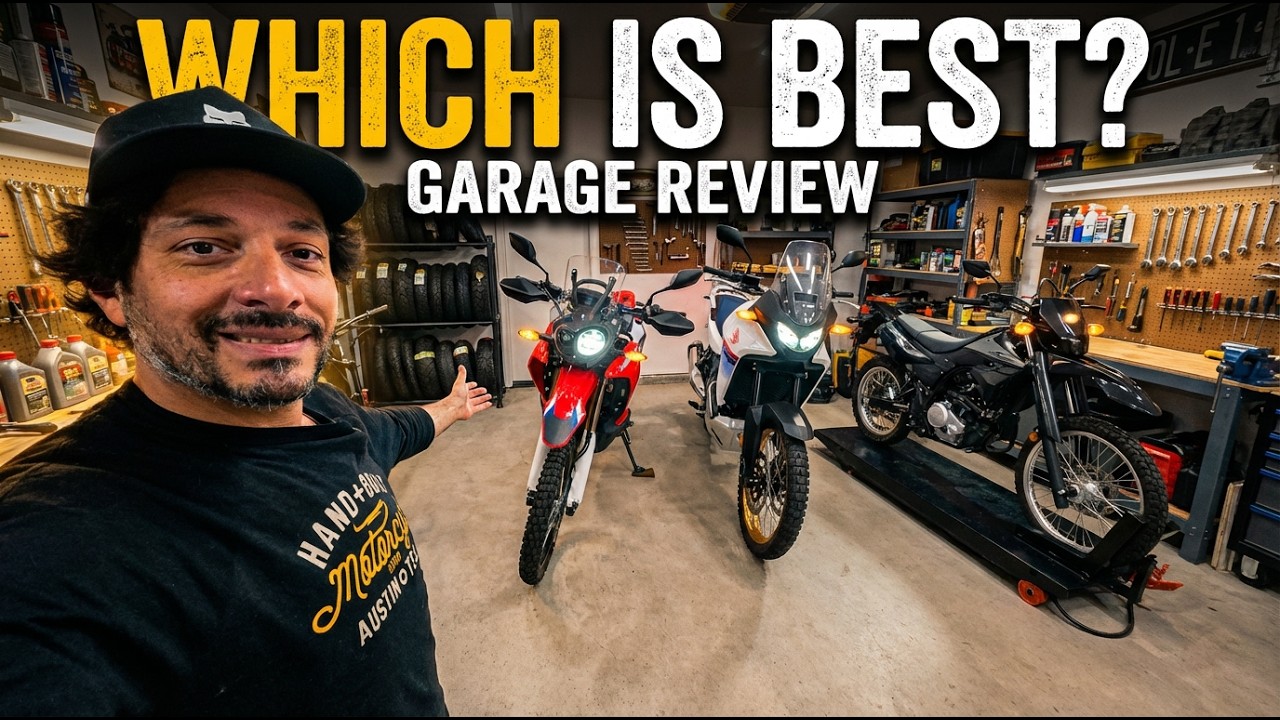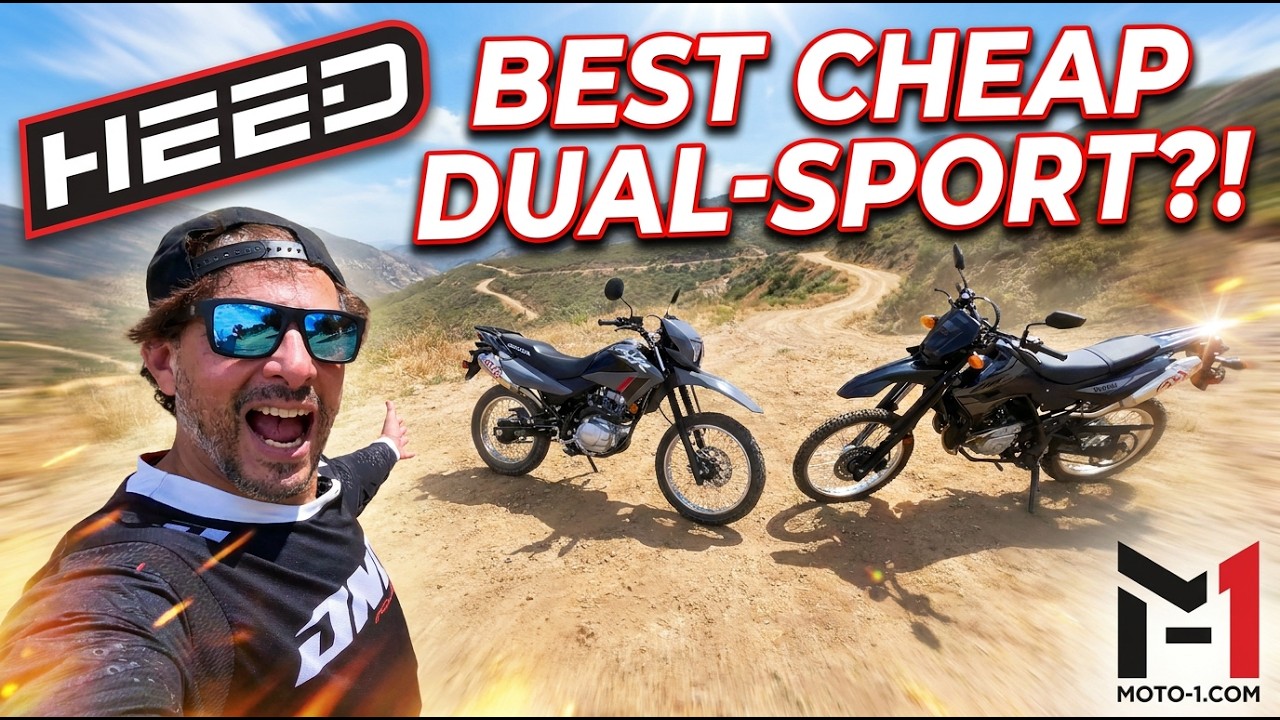
Honda owns the street. Yamaha owns the dirt.
Summary: Yamaha’s WR125R wins our road-and-trail comparison against Honda’s XR150L. The $3,999 Yamaha is the real dual-sport: fuel-injected, more playful once it’s revving, better standing ergonomics and a 21/18-inch wheelset. The $3,399 Honda is more comfortable, torquier down low and nearly 100 mpg. If you never leave the street, buy the Honda.
We already parked these two side by side in our Honda XR150L vs. Yamaha WR125R spec comparison. This Yamaha WR125R vs. Honda XR150L road and trail comparison is the ride. Same lightweight, street-legal dual-sports, now with miles on pavement and dirt, so we can finally answer the only question that matters: which bike belongs in your garage?
Honda XR150L: Plush, Simple, Street-Friendly
Let’s start with Honda’s XR150L. It’s a street-legal dual-sport from American Honda for $3,399, and we’ve already covered it in our 2025 Honda XR150L Garage Talk Review and 2025 Honda XR150L Review. Now it’s time to put it head to head against Yamaha’s WR125R. Will the Honda’s extra displacement beat the Yamaha on the road and the trail? Let’s find out.
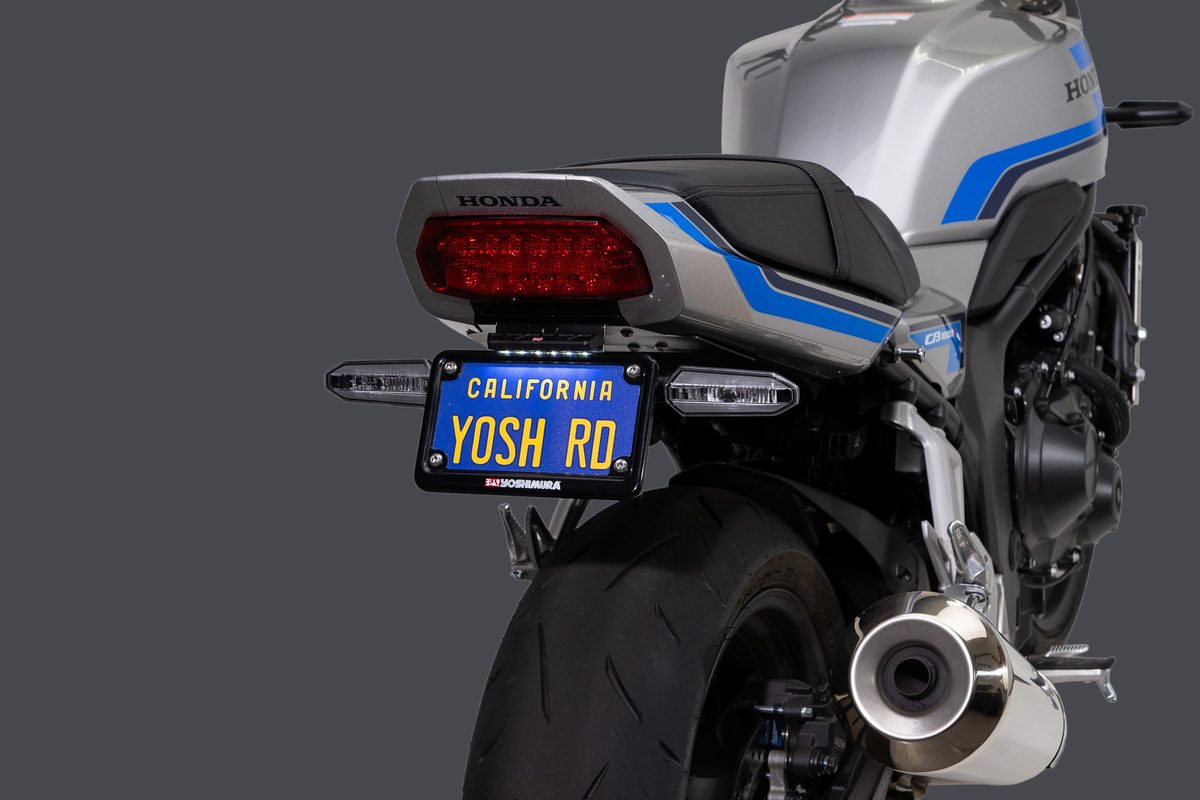
There’s a nice keyed ignition, and it thumbs to life with a button. Our test bike wears a Yoshimura RS-2 slip-on, which is all Yoshimura makes for this exhaust. It’s a two-piece system, so the header stays and the muffler comes off. The slip-on makes the XR sound a lot meaner than it does with the heavier stock can, and it gives us a little more pep, which is always nice.
Right away, the XR150L is the more street-friendly bike in this comparison. The seat is crazy low, crazy wide and supports you beautifully. If this motorcycle were freeway-legal, had a windscreen and a little more power, this saddle could almost go touring. Solo or with a passenger, the Honda has a great seat. The handlebar is another story. It’s a very old-school bend with a lot of rearward sweep, and it feels a little toy-ish if you’re used to modern motorcycles. The Yamaha’s bar is flat and modern. If you grew up on classic bikes, you’ll feel right at home. For the money, and for riding around town, it’s totally fine and really comfortable.
The engine is a 149cc air-cooled overhead-cam single, and it’s certainly cold-blooded. There’s a choke lever next to the carburetor that you want to use when you start it, then you can shut it off as the engine comes up. It builds heat fast, though. This engine is definitely not fast, but it has enough power to get to 60 or 70 mph, highway speeds for sure, and it gets nearly 100 miles per gallon. That’s our favorite feature. It also makes under 10 horsepower. It’s anemic at best. Fit the Yoshimura slip-on and re-jet the carburetor, if you can figure out how to do that, and it will be totally dialed.
You’d be surprised how well it rides over bumps. The ride is really comfortable, and the engine doesn’t vibrate like crazy. There’s some vibration, but it isn’t off-putting. Funny enough, you see more of it in the rearview mirrors than you feel in the cockpit, and those mirrors still do a good job of showing you what’s behind you. Instrumentation is basic, and there’s no tachometer.
These are exactly the kind of bikes that go up against an electric motorcycle, not on power, but on usability. You can gas this thing up anywhere. Official fuel capacity is 2.8 gallons, and at nearly 100 mpg the range is huge. If you live in an urban area and still want to kick up a little dust, the XR150L is a versatile option. It’s also wonderfully simple. There are no ride modes, because there are no electronics. Park it in the garage or a shed and it will run for years, as long as you keep ethanol out of the fuel and pull the battery when it sits.
The handling is surprisingly good. It goes around turns like it should, and the brakes work just fine. There’s no rear disc and no ABS, so you can lock them up if you want, which isn’t ideal for a new rider. The good news is the front lever is very forgiving, and the rear drum is a little dull, which is actually a good thing on this kind of bike. Simple, affordable, easy transportation is what the XR150L is all about. Not the most modern ergonomics, not the fastest thing on the road, not the best looking. Just a motorcycle that works.
Yamaha WR125R: The Real Dual-Sport
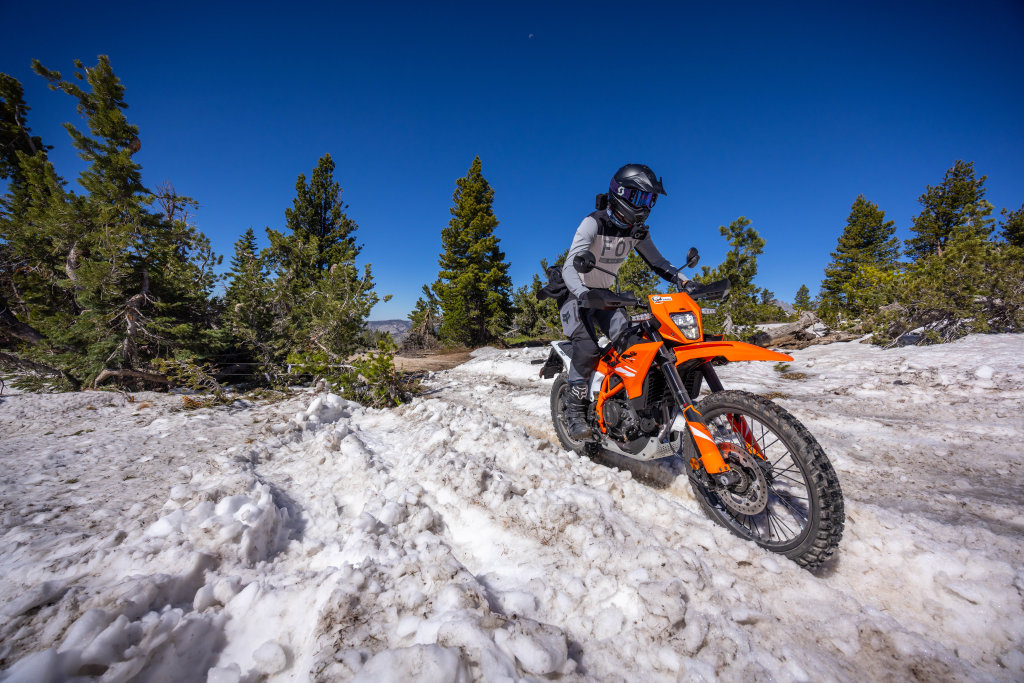
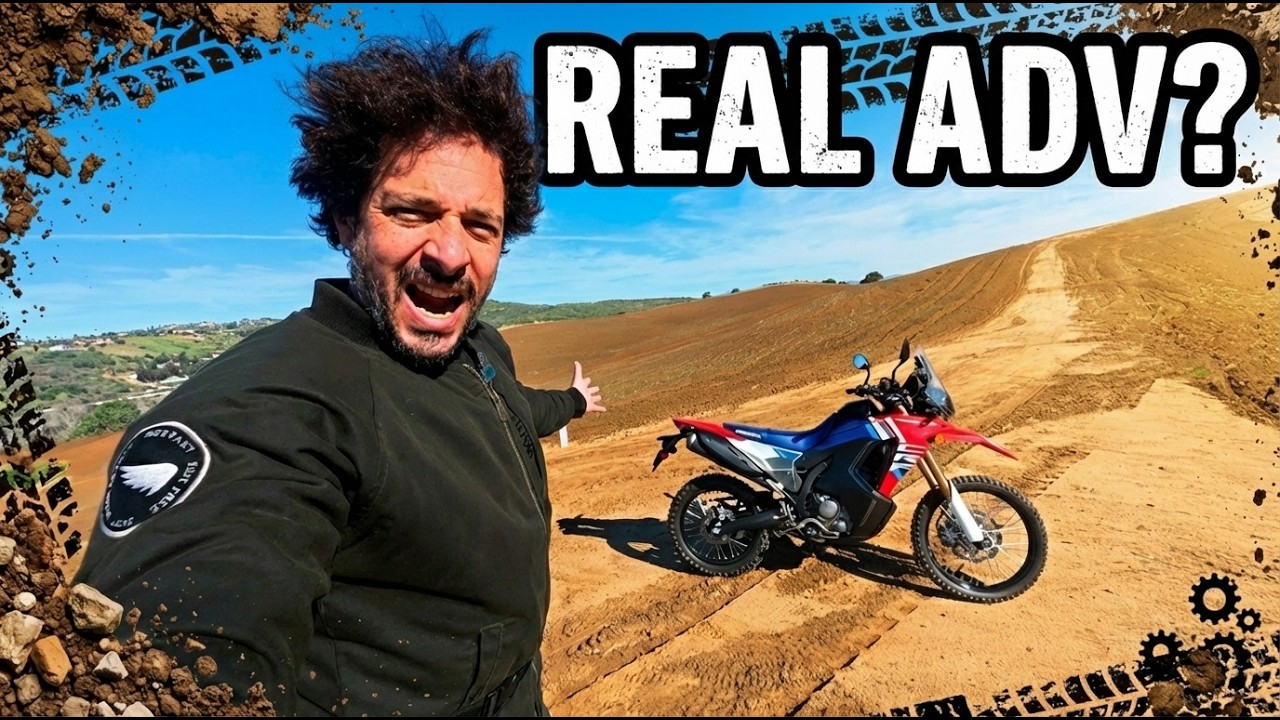
We rode both bikes off-road, and the Yamaha is our pick in the dirt. The engine is a little peppier, the suspension is a little more heavy-duty, and more than anything, the ergonomics feel like they belong on a trail. On the Honda, the seat is so low you can’t really stand on the pegs comfortably, and that swept-back bar doesn’t feel like an off-road bike at all. The WR125R does.
This is Yamaha’s 125cc, four-valve, liquid-cooled dual-sport, and it also wears a Yoshimura RS-2, only this time it’s a full system from the header back. We’ve already spent a lot of time with this motorcycle in our 2026 Yamaha WR125R Review and First Ride, Is Yamaha’s 2026 WR125R the $4K Trail Cheat Code? and our Yoshimura RS-2 install. It costs $3,999, $600 more than the XR150L, or $700 more once you add destination charges. You get bigger wheels, more suspension travel, a little more speed, a smaller fuel tank and a little more weight. It’s just a more modern interpretation of a small street-legal dual-sport. Again, not freeway-legal in many states, because both of these engines are under 151cc.
Keyed ignition, starter button, and fuel injection lets it fire right up. No choke lever, no fuss, just hit the button and go.
At the controls, the WR125R feels a lot more modern. The seat is a bit taller and a lot slimmer through the midsection, more like a dirt bike. The handlebar is nice and flat, where the Honda’s is tricycle-ish. The radiator shrouds have that YZ-style off-road look, and the inside of your legs meets the bike in a comfortable way. I like the ergonomics. It’s not quite as comfortable for everyday street riding, because the seat is thinner and narrower, but everything else I do like.
The 125cc four-valve single makes a little more power, but not off the bottom. Believe it or not, the XR150L has more torque down low. Then you get the Yamaha revving, Variable Valve Actuation does its thing, and the powerband gets a lot more playful. The clutch is nice and grabby in a good way. The six-speed gearbox meshes cogs very nicely and feels a little more precise than the Honda’s five-speed. This engine also vibrates more than the XR150L, which is surprisingly smooth. It’s a little more high-strung, but it’s still a very newbie-friendly motorcycle. Both bikes have similar top speeds, and when you get the Yamaha near 70 mph it starts vibrating like crazy. The mirrors still work, they just get a little blurry. Not a deal breaker.
The WR125R weighs 304 pounds, 22 pounds more than the XR150L, and it carries 2.1 gallons of fuel. It doesn’t necessarily feel heavier. If anything, it feels about 10% larger in its dimensions, with a longer wheelbase, and more like a real motorcycle, which we really like. It’s also a little thirstier. We got right around 70 mpg, against nearly 100 mpg from the Honda. I don’t know if that’s the engine or the fact that we were riding this one a little faster because it’s a little more capable. I’d like to think the latter. The LCD dash is cleaner, and you get a tachometer and a fuel gauge, two things the Honda doesn’t have.
The 21-inch front and 18-inch rear wheel combo is a nice setup. You can fit meaty off-road tires, and the bike feels really good on-road and off-road. We rode it in the dirt, and it’s much more capable than the XR150L. Not that the Honda can’t go there, but this one feels like a dirt bike in a good way. Standing up feels natural. On the Honda, the standing ergonomics just feel kind of goofy, especially with that old-school bar. The Yamaha is very agile and a little more top-heavy than the Honda, which has a 19/17-inch wheelset, a little lower center of gravity and a more street-friendly chassis. If you’re only going to ride the street, the XR150L is a pretty dang good, crazy comfortable bike. If you’re going to kick up dust in an actual dual-sport configuration, the WR125R is totally awesome.
The disc brakes work really well. There’s no rear ABS, so you can still lock the rear wheel. Front ABS is always on, and you can’t disengage it, which is a really nice feature for a new rider. You can use the front brake aggressively and not worry about locking the wheel, especially if you’re still learning the engagement point of a disc.
I like this bike. It feels more like a dirt bike, the ergonomics feel more modern and it feels a little larger overall. The engine always starts, you never mess with a choke, and once you get it revving it’s more playful, even if it doesn’t have the Honda’s punch off the bottom. For the street only, I might still pony up for the XR150L and save a little money. That’s not why most people buy a dual-sport, though.
Sponsored by Speed Addicts
This episode is supported by SpeedAddicts.com, the fastest-growing gear site. It offers a huge selection of new parts, gear and accessories with in-depth product breakdowns, no-cost exchanges and killer deals on the best brands. Orders over $50 ship for free, and if you want to shop in person, come by the Speed Addicts superstore in Orange, California, now open seven days a week.
Verdict: Yamaha WR125R Wins
That was an absolute hoot, getting Yamaha’s WR125R and Honda’s XR150L on the road and the trail. Both are cool, affordable, easy-to-ride, lightweight dual-sports from the tuning-fork brand and Big Red.
If I were only going to ride on the street, never off-road, I would buy the XR150L. The seat is just too comfortable. The luggage rack is just too functional. It gets nearly 100 mpg, and it has a little more torque off the line. The Yamaha is definitely faster with its liquid-cooled, four-valve engine, but the Honda still gets it done around town.
This comparison is about which one is the best dual-sport, though, and you’re buying one of these because you want to ride on- and off-road. That’s where the WR125R really fits. For four grand you get a lot of bike: fuel injection that always starts, a more modern riding position, a 21/18-inch wheelset and a machine that feels better and more capable when you leave the pavement. On the street it’s a little less comfortable, the engine vibrates a little more, the seat is a little narrower and it feels a little more top-heavy. The Honda’s 19/17-inch chassis is just a little more optimized for the road.
On-road only, XR150L all day. For a real dual-sport, the Yamaha WR125R is our winner in this lightweight dual-sport comparison.
Yamaha WR125R vs. Honda XR150L Specifications
| Spec | 2026 Honda XR150L | 2026 Yamaha WR125R |
|---|---|---|
| U.S. MSRP | $3,399 plus $300 destination ($3,699 total) | $3,999 plus $400 destination ($4,399 total) |
| Warranty | Transferable, one-year limited warranty; HondaCare Protection Plan available | 1-year limited factory warranty |
| Engine | 149cc air-cooled SOHC single-cylinder four-stroke; two valves | 125cc liquid-cooled SOHC single-cylinder four-stroke; four valves; Variable Valve Actuation (VVA) |
| Bore x stroke | 57.3mm x 57.8mm | 52.0mm x 58.7mm |
| Compression ratio | 9.5:1 | 11.2:1 |
| Fuel system | 22mm piston-valve carburetor | Fuel injection |
| Transmission / clutch | Five-speed manual | Constant-mesh six-speed; multiplate wet clutch |
| Final drive | #428 chain; 17T/49T | Chain |
| Frame | Steel | Semi-double cradle |
| Front suspension | 31mm telescopic fork; 7.1 in travel | 41mm KYB telescopic fork; 8.5 in travel |
| Rear suspension | Pro-Link single shock; 5.9 in travel | Linked-type Monocross KYB gas shock; 7.3 in travel |
| Front brake | 240mm disc, dual-piston hydraulic caliper | 267mm disc, two-piston caliper; ABS (Bosch hydraulic unit) |
| Rear brake | 110mm drum | 220mm hydraulic disc, one-piston caliper; no ABS |
| Wheels (F/R) | 19 in / 17 in | 21 in / 18 in |
| Tires (F/R) | 90/90-19 / 110/90-17 | 90/90-21 / 110/80-18 Dunlop D605 |
| Rake / trail | 27.0° / 4.1 in | 28.3° / 4.6 in |
| Wheelbase | 53.5 in | 56.3 in |
| Seat height | 32.8 in | 34.4 in |
| Ground clearance | 9.6 in | 9.4 in |
| L x W x H | 81.7 x 31.9 x 44.5 in | 85.0 x 33.1 x 47.0 in |
| Fuel capacity | 2.8 gal | 2.1 gal |
| Fuel economy | Nearly 100 mpg (our test) | About 70 mpg (our test); 105 mpg estimated (Yamaha) |
| Weight (full tank) | 282 lb curb | 304 lb wet |
| Instruments | Basic analog speedometer; no tachometer | Multi-function LCD with tachometer, fuel gauge and Y-Connect smartphone connectivity |
| Standard extras | Tubular-steel rear carrier, passenger pegs, electric starter | Y-Connect; wide motocross-style footpegs (rear rack optional) |
| As-tested exhaust | Yoshimura RS-2 slip-on | Yoshimura RS-2 full system |
Yamaha WR125R vs. Honda XR150L FAQ
Which is better, the Yamaha WR125R or the Honda XR150L?
The Yamaha WR125R is the better real dual-sport, with a more modern riding position, a more playful engine once it’s revving, a 21/18-inch wheelset and much better standing ergonomics off-road. If you only ride on the street, buy the Honda XR150L. It’s more comfortable, torquier down low and nearly 100 mpg.
How much do the WR125R and XR150L cost?
The 2026 Honda XR150L is $3,399 plus $300 destination, or $3,699 total. The 2026 Yamaha WR125R is $3,999 plus $400 destination, or $4,399 total. That’s a $600 difference in MSRP and $700 after destination.
Are the WR125R and XR150L freeway-legal?
Not in many states. Both engines are under 151cc. They will get to around 60 or 70 mph, but plan on staying off the interstate.
Which bike gets better fuel mileage?
The Honda. We got nearly 100 mpg from the XR150L and right around 70 mpg from the WR125R, which we were also riding a little harder. Yamaha rates the WR125R at an estimated 105 mpg.
What exhausts were on the test bikes?
The Honda wore a Yoshimura RS-2 slip-on, the only system Yoshimura makes for the XR150L. The Yamaha wore a Yoshimura RS-2 full system from the header back.
More Dual-Sport Coverage on Moto-1
- Honda XR150L vs. Yamaha WR125R Comparison: Less CC, More Bike
- 2026 Yamaha WR125R Review and First Ride
- Is Yamaha’s 2026 WR125R the $4K Trail Cheat Code?
- How $650 and 30 Minutes Transformed Our 2026 Yamaha WR125R
- 2025 Honda XR150L Review
- 2025 Honda XR150L Garage Talk Review
- 2026 Honda CRF300L Rally vs. Honda Transalp vs. Yamaha WR125R
- 2027 Honda ADV125 Preview
- 2027 Kawasaki KLX300 XPL ABS Joins Lineup at $6,499
- Dual-Sport Bikes
- Motorcycle Shootouts and Bike Comparisons
- Honda Motorcycles
- Yamaha Motorcycles