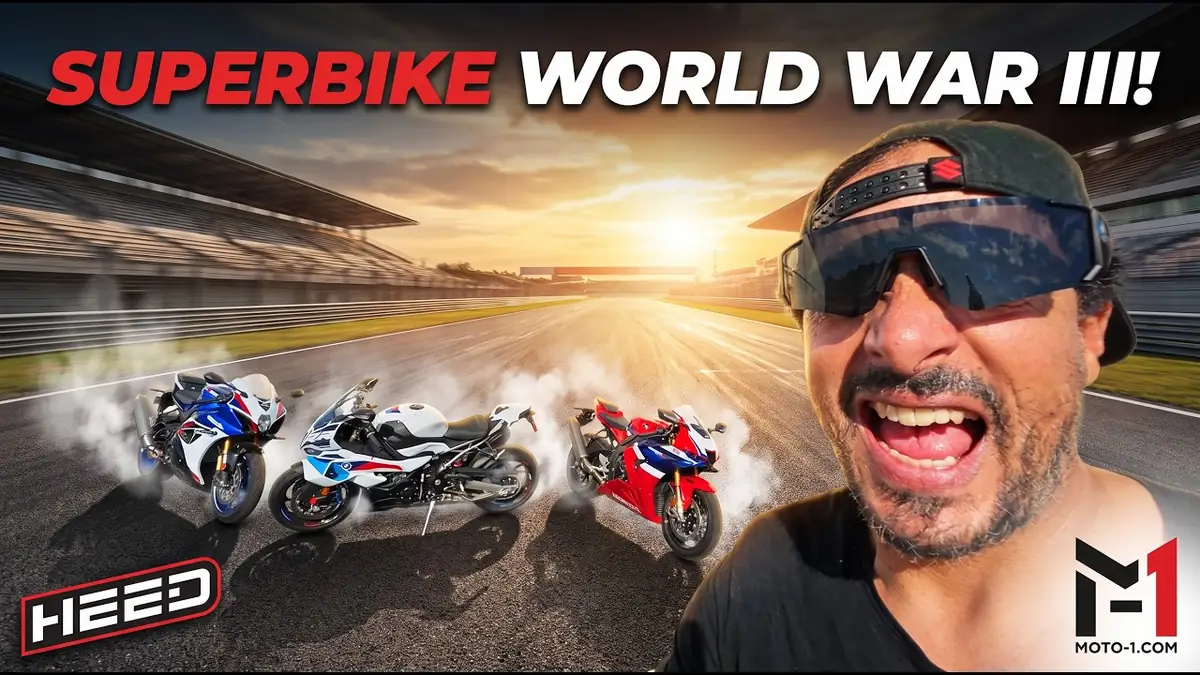
The $28,000 BMW still goes the most wild
Summary: The BMW S1000RR wins our three-bike superbike shootout over Honda’s CBR1000RR-R Fireblade SP and Suzuki’s GSX-R1000R. The $28,000 as-tested BMW drives off corners hardest and goes the most wild with the fewest menu dives. The $28,999 Honda takes second with Öhlins Gen 3 suspension and a screaming top end. The $17,939 Suzuki finishes third: raw, easy and $10,000 less.
This superbike shootout put three liter-class superbikes head-to-head on the racetrack to answer one question for American sportbike riders: which 1000cc flagship belongs in your garage? We’ve already covered each of these bikes on its own, including our 2026 BMW S1000RR review, the 2026 Honda CBR1000RR-R Fireblade SP Garage Talk and the 2027 Suzuki GSX-R1000R Garage Talk. This time all three ran back-to-back track sessions.
The two-bike tests that led here are already in our shootouts and bike comparisons archive: the Suzuki GSX-R1000R vs. BMW S1000RR and the Honda Fireblade SP vs. Suzuki GSX-R1000R. Now it’s a three-bike fight.
The $18,000, $28,000 and $29,000 Question
Adam quotes the field at $18,000, $28,000 and $29,000. The official U.S. numbers are tighter than those round figures, and they matter.
Suzuki USA lists the updated GSX-R1000R 40th Anniversary Edition as a 2027 model at $17,939 plus $750 destination. That’s the value play: a 999.8cc inline-four, fully manual Showa Balance Free suspension and SDMS electronics, with no semi-active damping. In this episode Adam calls it a 2026 bike, which is how the video frames all three machines.
The BMW S1000RR is the as-tested benchmark at about $28,000. BMW Motorrad USA listed the 2026 S1000RR at $19,895, and our bike wore M Carbon wheels, Dynamic Damping Control, Gilles adjustable rearsets, billet levers and M Motorsport paint. Carbon wheels on a production streetbike still look like witchcraft, and BMW is still the company actually building them.
The Honda CBR1000RR-R Fireblade SP is the most expensive bike here. Honda’s official U.S. MSRP is $28,999 plus $775 destination, which is the $29,000 Adam keeps quoting. It shows up in Grand Prix Red with third-generation Öhlins Smart-EC suspension, Brembo Stylema R brakes and a keyless Honda Smart Key. That last item still annoys me. Honda, put a real key on this motorcycle. You already have a key for the 4.4-gallon tank.
Honda Fireblade SP: HRC Muscle, Finally Modern
We started on the Honda, which meant fishing the key fob out of a leather suit and wading through a convoluted menu. We left the soft suspension setting from our Real MC commute and street review, then switched from A3 rain to A1 track. That’s the semi-active program: rebound, compression and, Adam believes, fork preload adjusting in real time. Power was at its maximum, with the sharpest throttle, the least traction control, the least wheelie control and, after a second look at the screen, the most engine braking. That’s fine. We were getting warm.
Sit on the Fireblade SP and Honda finally feels like it’s joining the modern superbike world. The seat is a little taller than the Suzuki’s, the clip-ons are spaced out a little more, and the cockpit is racier than the GSX-R’s. It still does not feel as modern, or as committed, as the S1000RR. Honda is moving in the right direction. It just took long enough.
Then you crack the throttle in the lower gears and the same electronic restriction we’ve complained about on the street is waiting for you. On the track it’s just as bad, if not worse. You have to keep the engine on the punch to ride out of that dead zone. Get it spinning above 10,000 rpm, though, and the muzzle comes off. That’s when you get HRC Japanese muscle, a top-end that pulls like it’s late for a flight, and an exhaust note that has to be heard to be believed. This powertrain wants to be revved, and it does not fall on its face at the redline.
The Fireblade does not come off corners as hard as the BMW or the GSX-R. Get it wound up, though, and it’s the faster of the two Japanese bikes, and faster than the BMW once that top-end comes in. The close-ratio six-speed and electronic quickshifter help, even if the gearing is a little tall. Split throttle bodies give you more accurate right-hand inputs; they’re also a little twitchy. The engine itself is silky-smooth, with almost no vibration, and far more visceral than Honda’s reputation suggests. If there is one bike in this group that is begging for a reflash and a full unlock, it’s this one.
The Öhlins Gen 3 front end splits the difference between the BMW and the Suzuki. It does not collapse under braking the way the GSX-R’s fork can, and it keeps the Fireblade flat and planted when you load the nose. In A1 track the damping feels a little fast for my taste. I like a slower fork and a slower shock. The good news is you can go into the menu and put the system in manual if the automatic program is too busy.
Official curb weight is 445 pounds, a little heavier than the BMW, but the Honda is a very nimble motorcycle. Direction changes are almost a toss-up with the S1000RR: six of one, half a dozen of the other. The Bridgestone Battlax Racing Street RS12s fitted for this test have clearly more edge grip than the stock RS11s on the Suzuki. And the Brembos? They’re the most natural brakes in this group. You squeeze the lever, the bike slows down, and you never get more or less than what you put into the Brembo master cylinder.
BMW S1000RR: The Least Buttons, the Most Wild
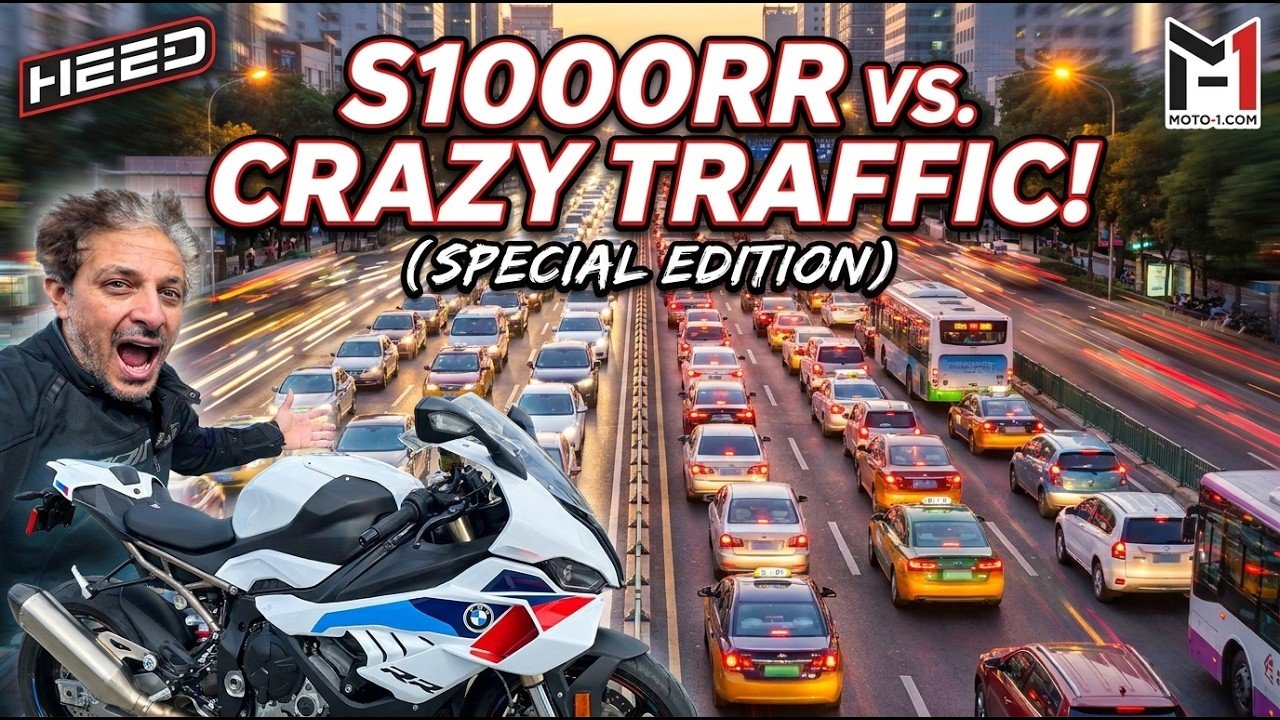
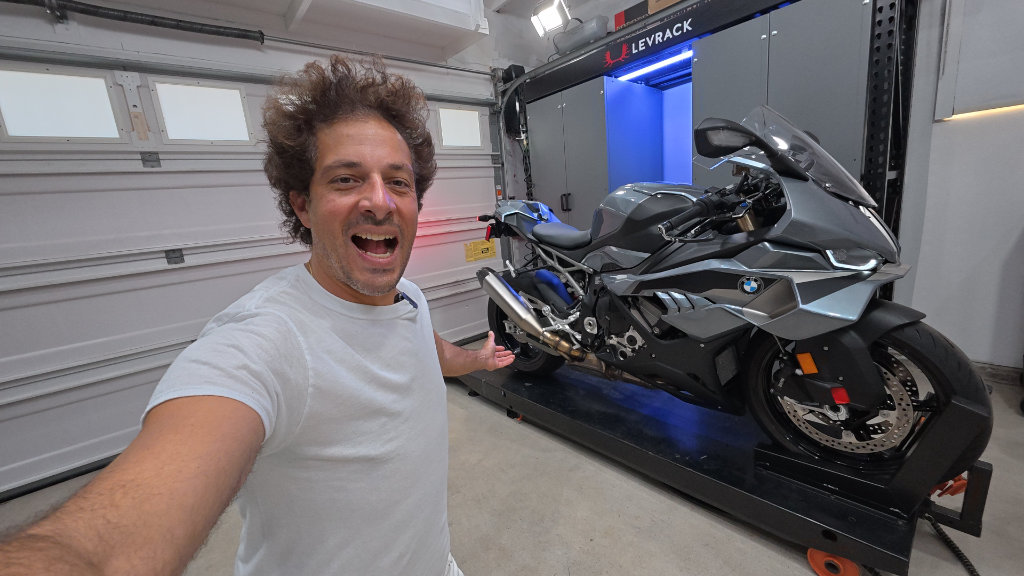
The BMW rolls up at about $28,000 with the options that define this test: M Carbon wheels, Gilles rearsets, a billet brake lever, clutch lever and guard, and M Motorsport colors. Our bike also had a 6.5-inch TFT, hill-start assist and heated grips, the most complete cockpit of the three. Of these three motorcycles, this is the easiest to set up. You dive into Vehicle Settings, pick Race Pro, then build a mode. We went with maximum engine power, maximum throttle response, the least engine braking, the least traction control, the least wheelie control, aggressive ABS and a more aggressive DDC tune, then saved it as Mode 2. That’s the hot setup. The shift pattern was reversed, one-up and five-down, and we even had tire-pressure monitoring, plus the same 90-degree valve stems you get on the Honda. Checking pressures is easy. On this bike, the computer will do it for you.
The ergonomics are the raciest of the group. The seat is tall, the bars are fairly low, and you sit on the nose in a good way. I’d call it even racier than the Honda, if only because of that seat height. Officially, the S1000RR is 437 pounds road-ready, with a 4.3-gallon tank. Open the 999cc ShiftCam four and it goes. Midrange drive is the story. BMW locks these U.S. bikes from the factory, so you do not get the old unrestricted S1000RR hit, but the U.S.-spec torque map lets this thing drive off corners as hard as anything in the group. Harder, actually. Adam called it the hardest corner-exit drive of any of the three, and the top-end is still strong even in this restricted state.
Those M Carbon wheels make the BMW ridiculously agile. It would be hard to find a production literbike that changes direction more willingly. The engine has a raw, visceral feel and a fair amount of vibration, and the final-drive setup helps it hook up and launch off the corner. In the inline-four world, the Fireblade is rawer than it used to be, in a good way. This BMW is mean in a good way: the kind of character you’d expect from a Ducati, delivered with more German refinement. The front end goes exactly where you point it under braking, the rear stays planted, and the Pirelli Diablo Supercorsa V3 tires on our bike were digging in and driving off the corner hard.
DDC in our automatic setting felt more planted and less active than the Honda’s Öhlins program, and you can still add global firmness to the front or rear if you want. The brakes have a progressive feel close to the Honda’s, with a little less mush at the lever. Least engine braking, aggressive ABS, and the BMW still slows down beautifully. This is an incredibly capable literbike, and it still sits at the top of the class for a reason.
Suzuki GSX-R1000R: $10,000 Less and Still a Hero
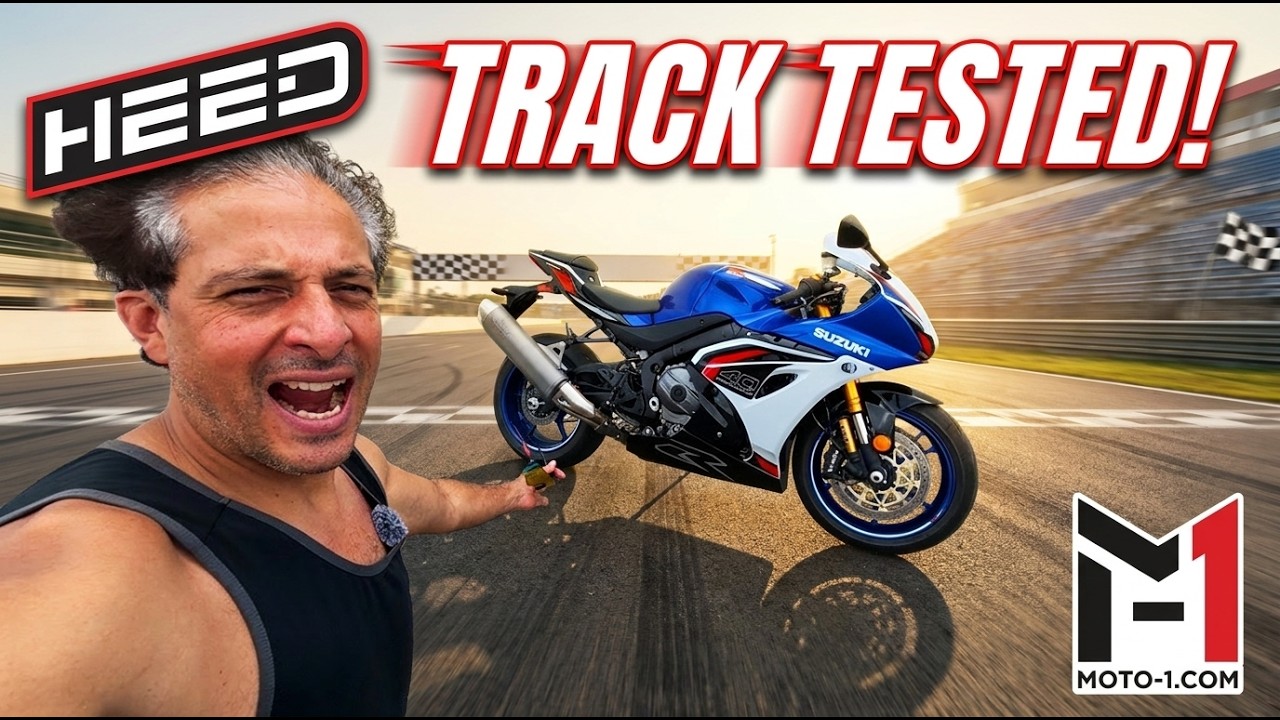
The GSX-R1000R 40th Anniversary Edition is the budget superbike in this company, if you can even use that word for an $18,000 literbike. Official U.S. MSRP is $17,939 plus $750 destination, about $10,000 under the as-tested BMW and the Honda. It wears its commemorative livery well, and the big titanium muffler looks like a torpedo hanging off the tail. This is also the only bike here with fully manual suspension: a pressurized Showa Balance Free fork and a Balance Free shock. You set it the old-school way, with an Allen on the preload and damping at either side of the fork leg.
Electronics are simpler, and more locked together. SDMS combines engine power and throttle maps. Traction control, wheelie control and lean-sensitive cornering ABS are all tied to that mode, with A the most aggressive and C the least. That’s the extent of the adjustment. You do not get the BMW’s or Honda’s à la carte control.
Of the three, the GSX-R has the most old-school ergonomics. The bars have a lot of inward, tricycle-like sweep, and even though the 32.5-inch seat is taller than past Gixxers, you still sit relatively low in the frame. It’s a narrow motorcycle and it does not feel heavy. If you love conventional Japanese sportbike ergos, you’re home. If you just stepped off a modern Euro superbike, it’s going to feel downright old. We’ve been riding GSX-Rs for decades, so it felt like slipping into a favorite jacket.
The ride-by-wire throttle is jerkier than the Honda’s or the BMW’s, but the 999.8cc engine still gets after it. It does not pull as hard as either rival, off the corner or on top, and it is not the most exciting powerband here. It is usable, torquey and easy to ride hard. Get it roaring up top and it just wants to keep pulling. That taller gearing actually suits the powerband. You’ll feel like a hero. You will not feel like you’re on the fastest bike on the pit wall.
It’s a nimble superbike, just not as sharp as the BMW or Honda. Steering is more purposeful than lazy, but you have to be more deliberate with the front tire. The manual suspension works, and Adam figures a carefully set-up Showa package can get you about nine-tenths of the way to the semi-active bikes. Out of the box, it does not have that show-up-and-wail calibration. The brakes have strong power and didn’t fade, but they are not at the Honda’s or BMW’s level.
The stock Bridgestone Battlax Racing Street RS11s are the weak link. They do not have the edge grip of the RS12s on the Honda, and they are the first thing I’d change. Even so, the chassis is so forgiving that the GSX-R almost doesn’t need help from its more rudimentary traction control. Official curb weight is 448 pounds, 3 pounds heavier than the Honda and 11 heavier than the BMW. It’s still a crazy-easy literbike to ride, and for $10,000 less than the other two, you’re getting a lot of motorcycle.
Sponsored by Arai
This episode is supported by Arai and its Contour-X helmet. It’s Arai’s quietest street helmet, with a round, egg-like shell surface designed to glance off objects in a crash, and it’s both DOT and Snell certified. The Swirl White version we featured is made in Japan and retails for $999.95. Check out our Arai Contour-X Swirl White Helmet First Look for more.
Verdict: BMW S1000RR Wins
Third place goes to Suzuki’s GSX-R1000R. We love this bike. It looks sharp, it sounds good, and it delivers a raw, analog superbike experience. It is also a little slower, a little more lazy to turn and a little less wild than the other two. Semi-active suspension on the Honda and BMW is the practical difference when you don’t have an afternoon to spend with tools and tires. Show up, pick a track mode, and let the motorcycle do the heavy lifting. The GSX-R will get there. It just asks for more of your time, and more of your right wrist, because those electronic nannies do less work.
Second place is the Honda CBR1000RR-R Fireblade SP. If there is a most-improved Japanese superbike, this is it. The engine howls, the Öhlins Gen 3 suspension and Brembo brakes are excellent, and the cockpit finally has real modern superbike ergonomics. Honda has closed the gap on the Euros, and the Fireblade has the most raw potential in this group if you unlock it. Adam even said a reflashed Fireblade might beat this BMW. The drawbacks are real: $28,999, a factory-restricted engine, and a user interface that is harder to live with than the BMW’s.
First place is still the $28,000 BMW S1000RR. It is not the newest trick in the paddock, and BMW never stops updating the formula, but this bike just gets it done. The engine goes like a bat out of hell, the chassis handles like a real superbike, and it goes the most wild with the fewest button pushes. Easy electronics, a planted DDC setup, carbon wheels and that torque-map drive off the corner are a difficult combination to beat. Good job, BMW.
Superbike Shootout Specifications
| Spec | 2026 BMW S1000RR | 2026 Honda CBR1000RR-R Fireblade SP | 2027 Suzuki GSX-R1000R 40th Anniversary Edition |
|---|---|---|---|
| U.S. MSRP | $19,895 (2026 MSRP); about $28,000 as tested with M Carbon wheels and options | $28,999 plus $775 destination | $17,939 plus $750 destination |
| Warranty | 3 years / 36,000 miles | Transferable, one-year limited warranty; HondaCare Protection Plan available | 12-month unlimited-mileage limited warranty |
| Engine | 999cc inline-four; BMW ShiftCam variable valve timing | 1000cc liquid-cooled DOHC inline-four, four valves per cylinder | 999.8cc liquid-cooled DOHC inline-four; Suzuki Racing Variable Valve Timing (SR-VVT) |
| Bore x stroke | 80.0mm x 49.7mm | 81.0mm x 48.5mm | 76.0mm x 55.1mm |
| Compression ratio | 13.3:1 | 13.6:1 | 13.8:1 |
| Claimed output | 205 hp @ 13,000 rpm; 83 lb-ft @ 11,000 rpm | Not published | Not published |
| Fuel system | Electronic fuel injection; M Quick Action Throttle | PGM-DSFI fuel injection, 52mm throttle bodies, throttle-by-wire | Fuel injection with ride-by-wire throttle bodies |
| Transmission / clutch | Six-speed; up/down quickshifter; self-reinforcing slipper clutch | Six-speed; quick shifter | Six-speed cassette-style; bi-directional quickshifter; SCAS slipper-assist clutch |
| Final drive | 525 chain, 17/46 | #525 chain, 16/44 | DID 525HV3 chain |
| Frame | Cast-aluminum bridge frame; M Chassis Kit | Aluminum twin-spar, 2mm wall sections; 24.5-in swingarm | Twin-spar aluminum; adjustable swingarm pivot |
| Front suspension | 45mm inverted fork, fully adjustable; 4.7 in travel; DDC semi-active damping on our bike | 43mm inverted Öhlins NPX Smart-EC fork (third generation, semi-active); 4.9 in travel | Showa Balance Free Front (BFF) inverted fork, fully adjustable |
| Rear suspension | Full Floater Pro, fully adjustable; 4.6 in travel; DDC semi-active damping on our bike | Pro-Link, Öhlins TTX36 Smart-EC shock (semi-active); 5.6 in travel | Link-type Showa Balance Free Rear Cushion Lite (BFRC-lite) shock |
| Front brakes | Twin 320mm discs, four-piston fixed calipers | Dual 330mm discs, radial-mount Brembo Stylema R four-piston calipers, Brembo master cylinder | Dual 320mm Brembo T-drive discs, radial-mount Brembo Monobloc four-piston calipers |
| Rear brake | 220mm disc, one-piston floating caliper | 220mm disc, Brembo caliper | Single disc, Nissin one-piston caliper |
| ABS | ABS Pro with Race ABS | Cornering ABS with Track and Race modes | Lean-sensitive Motion Track ABS |
| Rider aids | Riding Modes Pro (Race Pro 1-3); Dynamic Traction Control; wheelie control; engine-brake control; Hill Start Control Pro | Honda Selectable Torque Control: five power curves, 10 torque-control levels, three engine-braking levels, three wheelie-control levels | IMU; SDMS; traction control; Lift Limiter; wheelie control; launch control |
| Ignition | Keyed ignition | Honda Smart Key (keyless) | Keyed ignition |
| Tires (as tested) | Pirelli Diablo Supercorsa V3 (as tested); official fitment 120/70 ZR17 front, 200/55 ZR17 rear with M wheels | Bridgestone Battlax Racing Street RS12; 120/70ZR-17 front, 200/55ZR-17 rear | Bridgestone Battlax Racing Street RS11; 120/70ZR17 front, 190/55ZR17 rear |
| Wheelbase | 57.3 in | 57.2 in | 55.9 in |
| Seat height | 32.7 in (M Sport seat: 33.7 in) | 32.7 in | 32.5 in |
| Fuel capacity | 4.3 gal | 4.4 gal | 4.2 gal |
| Weight | 437 lb road-ready | 445 lb curb | 448 lb curb |
| Instruments | 6.5-inch TFT | 5-inch full-color TFT | LCD multifunction panel |
Superbike Shootout FAQ
Which bike won the superbike shootout?
The BMW S1000RR wins, ahead of the Honda CBR1000RR-R Fireblade SP in second and the Suzuki GSX-R1000R in third. The BMW went the most wild with the fewest menu dives and drove off corners hardest.
How much do the BMW S1000RR, Honda Fireblade SP and Suzuki GSX-R1000R cost?
Official U.S. MSRP is $19,895 for the 2026 BMW S1000RR, $28,999 plus $775 destination for the Fireblade SP, and $17,939 plus $750 destination for the GSX-R1000R 40th Anniversary Edition. Adam quoted the as-tested BMW at $28,000 with M Carbon wheels and options, and rounded the Honda to $29,000 and the Suzuki to $18,000.
Why did the Honda Fireblade SP finish second?
The Honda has the most raw potential of the three, excellent Öhlins Gen 3 suspension and natural Brembo feel, and it’s the most improved Japanese superbike in this group. It is also factory-restricted in the lower gears, costs $28,999, and its menus are harder to use than the BMW’s. Adam said a reflashed Fireblade might even beat this S1000RR.
Is the Suzuki GSX-R1000R worth $10,000 less?
If you want the fastest, sharpest or most adjustable superbike in this test, no. If you want a forgiving, easy literbike with a raw analog feel and a $10,000 smaller sticker, yes. The GSX-R is not $10,000 worse for regular track-day riders. It just isn’t the one that goes the most wild.
What suspension does each superbike use?
The BMW has BMW Dynamic Damping Control semi-active suspension. The Honda has third-generation Öhlins NPX / TTX36 Smart-EC semi-active suspension. The Suzuki uses fully manual Showa Balance Free fork and shock.
What tires were on the three bikes?
The Honda ran Bridgestone Battlax Racing Street RS12s. The Suzuki ran its stock Battlax Racing Street RS11s, which have less edge grip. The BMW ran Pirelli Diablo Supercorsa V3s.
More Superbike Coverage on Moto-1
- Suzuki GSX-R1000R vs. BMW S1000RR Track Comparison
- Honda Fireblade SP vs. Suzuki GSX-R1000R Track Comparison
- 2026 Honda CBR1000RR-R Fireblade SP vs. Yamaha YZF-R1M
- 2026 Aprilia RSV4 Factory vs. BMW S1000RR
- 2027 Suzuki GSX-R1000R vs. 2026 Aprilia RSV4
- 2026 Honda CBR1000RR-R Fireblade SP Street Review
- 2026 Honda CBR1000RR-R Fireblade SP Commute Review
- 2025 BMW S1000RR Real MC Commute
- 2025 BMW S 1000 RR Review
- 2027 Suzuki GSX-R1000R Track Review
- 2027 Suzuki GSX-R1000R Real MC Commute
- 2027 Suzuki GSX-R1000R History Review
- 2027 Honda CBR1000RR-R Fireblade SP Preview
- Sportbikes
- Motorcycle Shootouts and Bike Comparisons
- BMW Motorcycles
- Honda Motorcycles
- Suzuki Motorcycles
Want more Moto-1 in your Google results?
Add Moto-1 as a Preferred Source on Google