New frame, wingless aero and a titanium tank
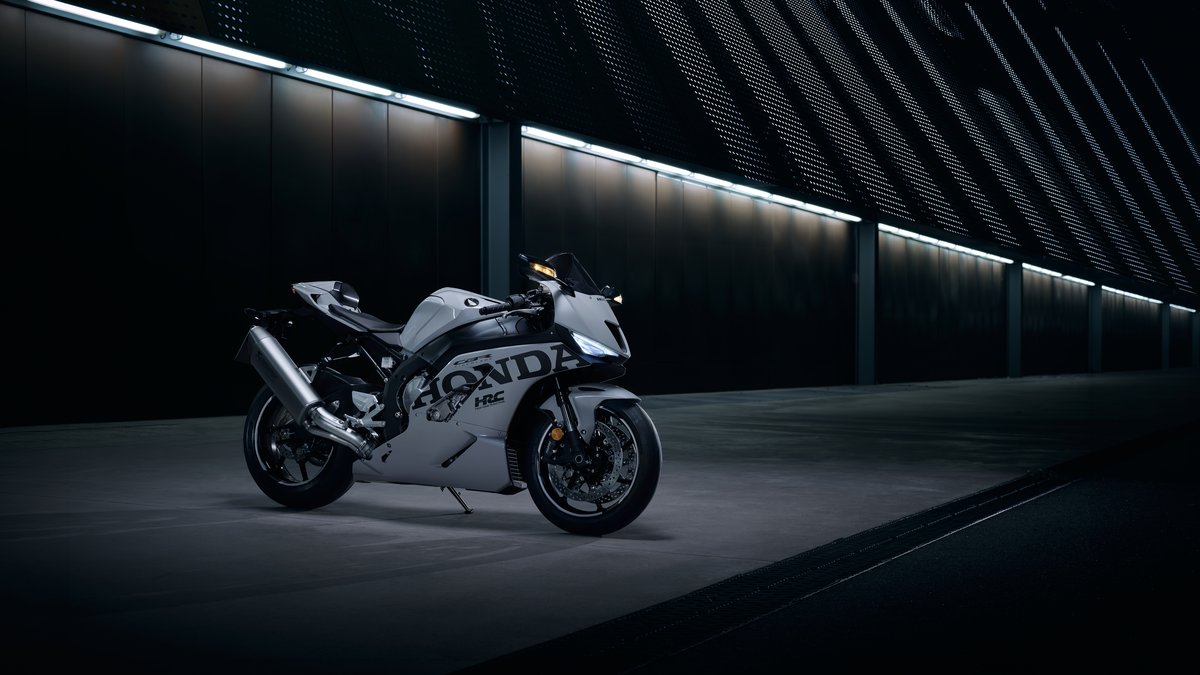
Summary: Honda’s all-new 2027 CBR1000RR-R Fireblade was designed around HRC’s WorldSBK needs first and the street second. It gets a new aluminum frame and swingarm, wingless aero, a titanium fuel tank and two-stage variable intake funnels, while the 1,000cc inline-four stays at 215 hp (160 kW). Pricing hasn’t been announced.
Honda usually builds a street bike and then hands it to the race team to sort out. For 2027, it flipped the script. Engineers sat down with the HRC WorldSBK crew, wrote down what the race bike needed, and only then started on the production Fireblade. The result is the all-new 2027 CBR1000RR-R Fireblade, which Honda says has roughly 75% new components, including the frame and swingarm. Honda’s slogan for the project is “Build for the win.” Subtle, it is not. The bike made its world premiere on November 2 ahead of EICMA 2026, and we’re in Milan this week to see it in person at Fiera Milano Rho. Keep up with every debut on our EICMA Motorcycle Show hub.
This story covers the standard Fireblade. Honda also revealed an updated Fireblade SP and a new, even more track-focused Fireblade HRC Works Edition, which we’ll break down separately.
What’s New for 2027
- All-new aluminum twin-spar frame with 20% less lateral stiffness and revised steering geometry
- New, lighter pressed-aluminum swingarm, with the rear shock’s lower mount moved to the engine
- Wingless aero package with lower-cowl sidepods that Honda says makes the same downforce as the old winglets
- Painted titanium 4.4-gallon (16.6-liter) fuel tank with no plastic cover
- Two-stage Variable Air Funnels, a first for a Honda mass-production motorcycle
- New lightweight seven-spoke wheels, 13.0-inch (330mm) front discs and a 520 chain
- New LED headlight with Daytime Running Lights, plus a smaller LED taillight
- Higher 13.8:1 compression ratio, magnesium engine covers and a 5% taller first gear
Chassis: Less Stiff, More Feel
The frame is still a gravity-die-cast aluminum diamond design with walls as thin as 2mm, but it’s completely new. Honda reduced lateral stiffness by 20% compared with the previous frame, aiming for better corner entry, mid-corner control and grip feel at the edge of the tire. The front engine hanger is now a bolt-on stay instead of being part of the frame, and the intake duct through the headstock got bigger.
Geometry gets sharper. Rake and trail go from 24.1 degrees and 4.01 inches (101.9mm) to 24.0 degrees and 3.98 inches (101mm), with a 57.3-inch (1,455mm) wheelbase. Weight distribution moves forward to 53.3% front and 46.7% rear, from 52.8/47.2. Honda also raised the crankshaft centerline 0.2 inch (5.2mm) and the seat height from 32.7 inches (831.5mm) to 33.2 inches (843mm) to help the rider move around during quick direction changes. Shorter riders, start doing calf raises now.
The new 24.4-inch (620.6mm) pressed-aluminum swingarm is 7 ounces (200 grams) lighter, with 12% less lateral rigidity and a thinner 17mm pivot shaft. Switching from a 525 to a 520 chain saves another 9.5 ounces (270 grams). The new wheels shed 0.4 pound (190 grams) up front and 1.3 pounds (590 grams) out back. Claimed curb weight drops 2.9 pounds (1.3 kg) to 439 pounds (199 kg). That’s not a crash diet, but every ounce here is unsprung or rotating mass, which is the kind that matters.
Suspension is Showa, fully adjustable at both ends: a 1.7-inch (43mm) Big Piston Fork in new triple clamps, and a Balance Free Rear Cushion Lite (BFRC-Lite) shock that now mounts low on the back of the engine. The fork is slightly longer for more trackside geometry adjustment. Front travel is 4.9 inches (125mm) and rear travel is 5.6 inches (143mm). A Showa three-level Honda Electronic Steering Damper (HESD) is controlled by the IMU.
Brakes and Wheels
Nissin radial-mount four-piston front calipers get revised piston materials and surface treatments for better heat management under Superstock-level abuse. They squeeze lighter 13.0-inch (330mm) x 0.18-inch (4.5mm) discs. Out back is an 8.7-inch (220mm) disc with a Brembo two-piston caliper. Cornering ABS has three modes. Standard is for the street and limits pitching. Track allows rear-wheel lift for harder braking from circuit speeds. Race turns off rear-wheel ABS and the cornering function. Tire sizes stay at 120/70ZR17 front and 200/55ZR17 rear, with Bridgestone Battlax Racing Street RS12 or Michelin Power GP2 rubber listed.
Aero: Winglets Out, Sidepods In
The external winglets are gone. Honda says the new fairing, shaped with HRC and input from its MotoGP program, generates the same downforce as the previous winged design while cutting drag and improving wind protection. The trick is a layered mid-section and new lower-cowl sidepods that manage airflow along the bottom of the bike, which Honda says helps during high-speed direction changes. The development process ran from computer simulations through clay models to track testing.
The new LED headlight with DRL comes out as a single unit for racing, and the taillight is smaller and lighter. The 4.4-gallon (16.6-liter) titanium tank is painted directly, so there’s no plastic cover. That’s one less part to scuff with your leathers.
Engine: Same Peak, Stronger Middle
The 1,000cc DOHC inline-four with its semi-cam gear train holds its peak output at 215 hp (160 kW) at 14,000 rpm, with 84.1 lb-ft (114 Nm) of torque at 10,500 rpm. Honda’s focus was the midrange, rideability and weight, not a bigger number on the spec sheet. Bore and stroke stay 3.19 x 1.91 inches (81 x 48.5mm).
The headline tech is the two-stage Variable Air Funnel system. Below 11,750 rpm the funnels sit in their long position to boost midrange. Above that, they switch to a short setting to keep top-end power. Honda says it’s the first time it has used the technology on a mass-production motorcycle.
Inside, machined piston crowns and combustion chambers push compression from 13.6:1 to 13.8:1. Cam timing is revised, a new cam sprocket design adds more valve-timing adjustment range for racing, and the valve springs and valve train are upgraded for durability. Titanium connecting rods carry over. Magnesium now replaces aluminum for the cylinder head cover, right crankcase cover, clutch cover and oil pan, the crankcases are lighter, and 35 aluminum fasteners replace steel ones to save another 7.6 ounces (215 grams).
The two-motor throttle-by-wire system still runs cylinders one and two separately from three and four for finer low-speed control and stronger engine braking. The gap between the mainshaft and countershaft grows 0.12 inch (3mm) to open up more gear-ratio options for racers, and first gear is 5% taller for better launches. Honda notes that gear-ratio and valve-timing changes aren’t allowed for public road use and affect the warranty. The compact titanium Akrapovič muffler stays standard. One nice detail: the rev limit is capped at 8,000 rpm until the engine warms up, then rises to over 14,500 rpm.
Electronics
A Bosch six-axis IMU runs the show. There are three default riding modes, Race, Road and Rain, all recalibrated for 2027, with adjustable settings for Power (five levels), Engine Brake (three levels), Wheelie Control (three levels plus off) and nine-level Honda Selectable Torque Control. Start Mode gives you four launch rpm limits: 6,000, 7,000, 8,000 and 9,000 rpm. Everything is managed through a 5-inch color TFT and a four-way switch on the left grip. A quickshifter is optional, and Smart Key, Emergency Stop Signal and auto-canceling turn signals are standard.
Accessories
Honda’s new Sport Pack bundles a Smoke Windscreen, Center Tank Pad, Wheel Stripes, Frame Guard, Sprocket Protector, Seat Cowl and the Quick Shifter. Separate items include a USB-C charger, indoor cover, HRC sticker kit and new HRC graphics.
Price and U.S. Availability
Honda hasn’t announced pricing or a U.S. release for the 2027 standard Fireblade. Its European release lists one color, Pearl Deep Mud Gray, and all specs are provisional. For context, in the U.S. American Honda sold the 2026 Fireblade SP at $28,999 plus a $775 destination charge, as we noted in our 2026 Honda CBR1000RR-R Fireblade SP Street Review. We’ll update this story when U.S. details are out.
Want to see how the outgoing bike stacks up? Read our 2026 Honda Fireblade SP vs. Yamaha YZF-R1M comparison and our Fireblade SP Garage Talk review. Honda’s other new sportbikes for 2027 are in our 2027 Honda CBR600RR Preview and 2027 Honda CBR500R Four Preview, and our 2026 EICMA Preview covers what else to expect at the show.
2027 Honda CBR1000RR-R Fireblade Specs
| Engine | Liquid-cooled DOHC inline-four, 16 valves, semi-cam gear train |
| Displacement | 1,000cc |
| Bore x Stroke | 3.19 x 1.91 in. (81 x 48.5mm) |
| Compression Ratio | 13.8:1 |
| Claimed Horsepower | 215 hp (160 kW) @ 14,000 rpm |
| Claimed Torque | 84.1 lb-ft (114 Nm) @ 10,500 rpm |
| Fuel System | PGM-FI, 52mm throttle bodies, two-motor TBW, two-stage Variable Air Funnels |
| Transmission / Clutch | 6-speed; wet multiplate assist/slipper clutch; quickshifter optional |
| Final Drive | 520 chain |
| Frame | Aluminum twin-spar diamond; 19.8 lb (9 kg) |
| Front Suspension | Showa 1.7 in. (43mm) BPF USD fork, fully adjustable; 4.9 in. (125mm) travel |
| Rear Suspension | Showa BFRC-Lite shock, Pro-Link, fully adjustable; 5.6 in. (143mm) travel |
| Front Brakes | Dual 13.0 in. (330mm) discs, Nissin radial-mount four-piston calipers |
| Rear Brake | 8.7 in. (220mm) disc, Brembo two-piston caliper |
| ABS | Cornering ABS, Standard/Track/Race modes, Rear Lift Control |
| Tires | 120/70ZR17 front, 200/55ZR17 rear |
| Rake / Trail | 24.0 degrees / 4.0 in. (101mm) |
| Wheelbase | 57.3 in. (1,455mm) |
| Seat Height | 33.2 in. (843mm) |
| Ground Clearance | 5.1 in. (130mm) |
| Fuel Capacity | 4.4 gal. (16.6 liters), titanium |
| Claimed Fuel Economy | 35.1 mpg (6.7 L/100 km, WMTC) |
| Claimed Curb Weight | 439 lb (199 kg) |
| Claimed Top Speed | 186 mph (299 km/h) |
| Electronics | Six-axis IMU, 3 riding modes, 9-level HSTC, Wheelie Control, Engine Brake, Start Mode, HESD, 5-in. TFT, Smart Key |
| Color | Pearl Deep Mud Gray (Europe) |
| Price | N/A (not announced) |
| U.S. Availability | N/A (not announced) |
Specs are Honda Motor Europe’s provisional figures.
2027 Honda CBR1000RR-R Fireblade FAQ
What’s new on the 2027 Honda Fireblade?
Nearly everything that matters: a new aluminum frame and swingarm, revised geometry, wingless aero with sidepods, a titanium fuel tank, new wheels and brakes, two-stage Variable Air Funnels and a higher compression ratio. Honda says about 75% of the parts are new.
How much horsepower does the 2027 Fireblade make?
Honda rates it at 160 kW, about 215 hp, at 14,000 rpm, with 84.1 lb-ft (114 Nm) at 10,500 rpm. Peak output is unchanged; the gains are in the midrange.
Does the 2027 Fireblade still have winglets?
No. Honda says the new fairing and lower sidepods make the same downforce as the old winglets, with less drag and better wind protection.
How much does the 2027 Fireblade cost, and is it coming to the U.S.?
Honda hasn’t announced pricing or U.S. availability yet. The 2026 Fireblade SP sold in the U.S. for $28,999 plus $775 destination.