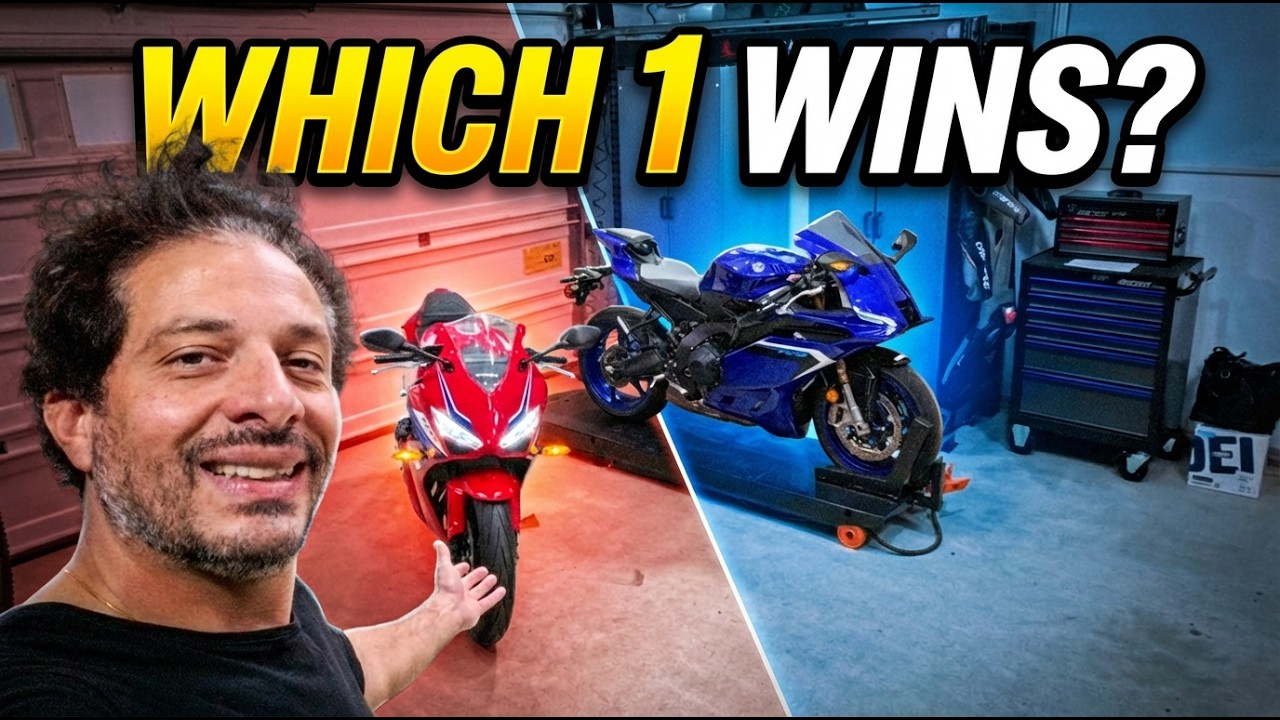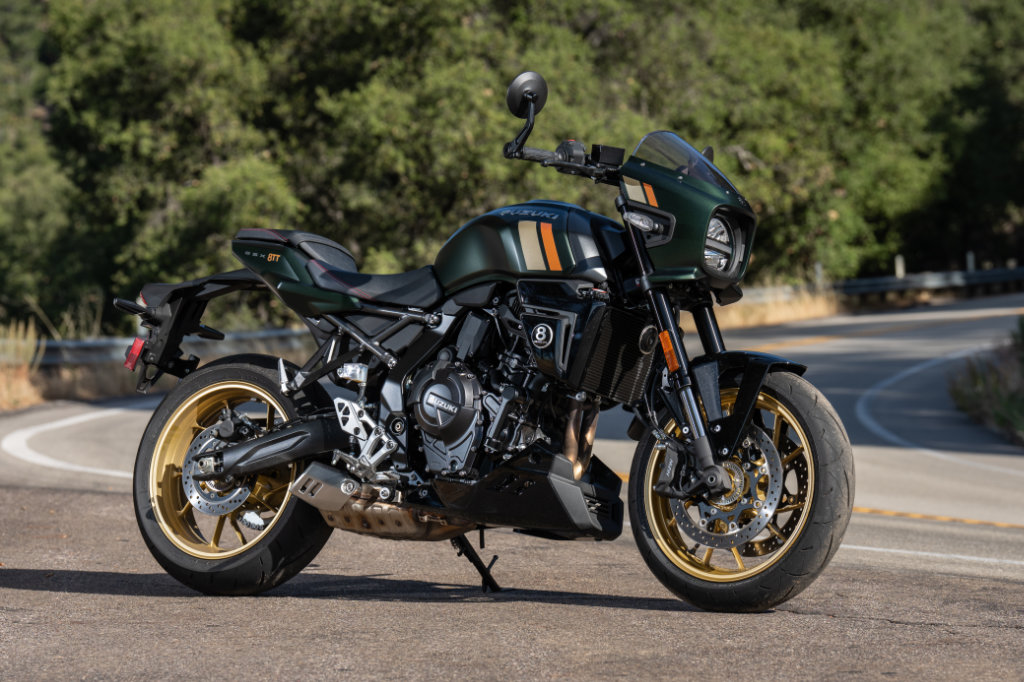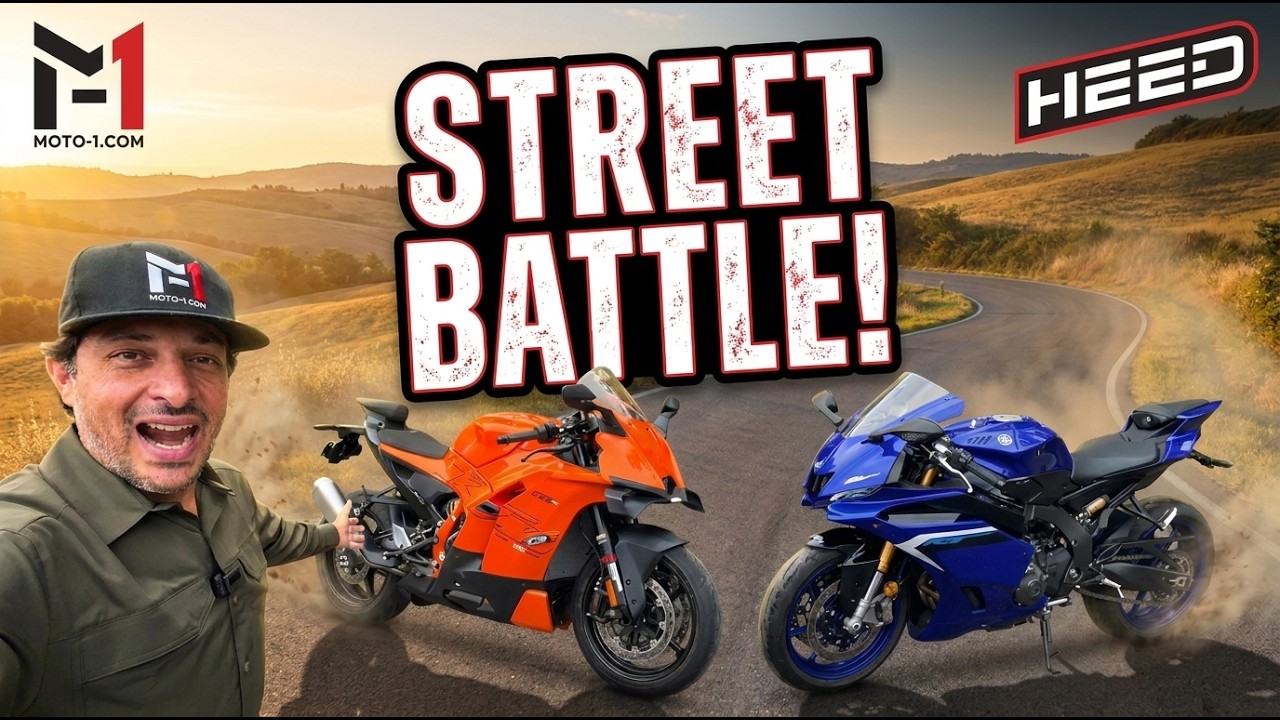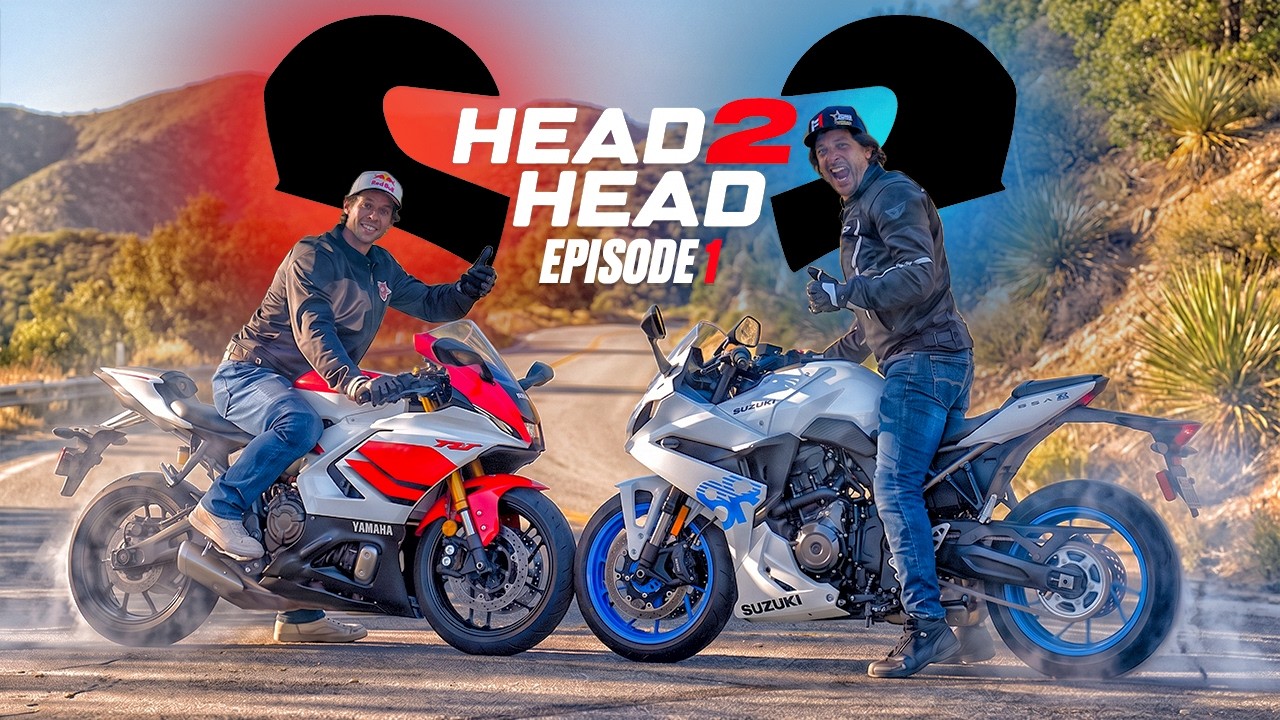
Hey everyone, welcome to Head-to-Head! I’m here with Red Bull stunt maestro Aaron Colton to put two highly demanded middleweight twin-cylinder sportbikes through their paces: the refreshed 2026 Yamaha YZF-R7 and the Suzuki GSX-8R.
This episode of Head 2 Head is supported by EBC Brakes and its GPAFX brake pads.
Both of these machines land in the sweet spot of modern street riding. They ring the register right around the $9,800 mark, pack 3.7-gallon fuel cells, and utilize parallel-twin powerplants designed to give you V-twin-like character without the chassis packaging headaches. But as soon as you drop the clutch, their distinct personalities shine through.
Related Content: 2026 Suzuki GSX-8R vs. Yamaha YZF-R7 Shootout (Street)
Engine Performance and Power Delivery
On paper, Suzuki brings bigger displacement to the fight. The GSX-8R boasts a 776cc parallel-twin, while the Yamaha YZF-R7 sticks with the well-loved 689cc CP2 motor.
Out on the asphalt, that 87cc advantage isn’t just a bench-racing statistic—it translates directly to real-world punch.
- Suzuki GSX-8R: The 776cc twin delivers a rich, instant roll-on response. Gearbox and fueling integration feel seamless, letting the bike pull with continuous authority right off the bottom. In a drag race, the Suzuki simply walks away.
- Yamaha YZF-R7: The CP2 crossplane twin has plenty of bark and legendary mid-range response, but it runs just a hair leaner by comparison. It demands a bit more gear-shifting hustle to match the Suzuki’s sheer acceleration.
Ergonomics and Chassis Handling
Weight and rider position are where these two diverge completely.
If you are looking for a true, aggressive, clip-on-heavy supersport stance, the Yamaha feels like a proper YZF grown-up bike. Its aggressive seat-to-bar geometry puts you in a track-ready attack position. Despite carrying a 417 lb wet weight, the chassis feels remarkably light, flickable, and razor-sharp in the apexes.
Conversely, the Suzuki GSX-8R takes a page out of the sport-touring playbook. With raised clip-ons, a roomier cockpit, and plush ergonomics, it fits taller riders (even those of us hovering around 6’0″ and 195 lbs) without cramping knees. If you’re planning a cross-country sprint, the GSX-8R is the bike you want underneath you.
Suspension, Electronics, and Braking
When we lined up for a 50-mph emergency stopping test on our matched EBC GPFA street pads, the Yamaha showed off its premium components.
- Braking: The R7’s Brembo radial master cylinder delivers superior lever feedback and modulation. You don’t have to squeeze anywhere near as hard to get aggressive, predictable stopping power.
- Electronics: Yamaha equipped the 2026 R7 with an IMU-powered electronics suite, including adjustable Engine Brake Control and a polished TFT interface. Suzuki keeps things simple with a straightforward, non-intrusive traction control system and a bright, functional digital dash. Both bikes come stock with factory bi-directional quickshifters—a massive win at this sub-$10,000 price point.
The Final Verdict
At the end of the day, both of these middleweight contenders offer exceptional value for street riders and track enthusiasts alike. The Suzuki GSX-8R takes the crown for raw power, comfortable ergonomics, and effortless long-distance ridability.
However, when you weigh the total package—the sharper styling, IMU-assisted electronics, Brembo braking hardware, and track-ready chassis geometry—the 2026 Yamaha YZF-R7 edges out the victory for our inaugural episode of Head-to-Head.
For more motorcycle comparisons, deep-dive reviews, and track breakdowns, check out our latest test rides and features at Moto-1.com.
Technical Specifications Comparison
| Feature / Specification | 2026 Yamaha YZF-R7 | 2026 Suzuki GSX-8R |
| Engine Type | 689cc liquid-cooled DOHC parallel-twin; 4v/cyl | 776cc liquid-cooled DOHC parallel-twin; 4v/cyl |
| Bore x Stroke | 80.0mm x 68.6mm | 84.0mm x 70.0mm |
| Fuel Delivery | Fuel Injection | Fuel Injection (Ride-by-Wire) |
| Transmission | 6-speed with Quick Shift System (QSS) | 6-speed with Bi-Directional Quick Shifter |
| Front Suspension | KYB 41mm inverted fork, fully adjustable | SHOWA SFF-BP inverted fork |
| Rear Suspension | KYB single shock, adjustable preload/rebound | SHOWA link-type mono-shock, adjustable preload |
| Front Brakes | Dual 298mm discs, Brembo radial master cylinder | Dual 310mm discs, radial-mount calipers |
| Curb Weight | 417 lbs | 452 lbs |
| Fuel Capacity | 3.7 gal | 3.7 gal |
| U.S. MSRP | $9,199 (Base) / $9,599 (Anniversary Edition) | $9,439 |
| Factory Warranty | 1 Year Limited Factory Warranty | 12 Month Unlimited Mileage Limited Warranty |