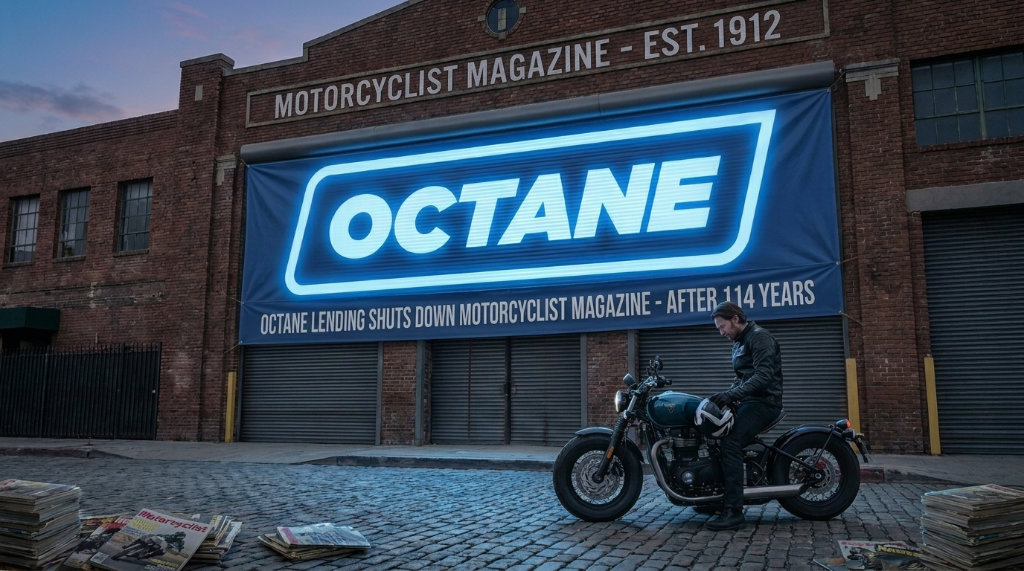

It appears the kickstand is coming down for good on one of the most storied titles in automotive journalism. According to industry insiders, Cycle World, is winding down its operations. The move brings a quiet close to a legendary publication that has spent the last ten years navigating a relentless obstacle course of shifting ownership, collapsing print models, and an increasingly digital-first media landscape.
For riders who grew up with grease on their knuckles and a glossy copy of Cycle World on their coffee tables, the news hits like an unexpected patch of black ice. Founded in 1962 by Joe Parkhurst, the magazine spent decades as the largest consumer motorcycle publication in the United States, delivering rigorous instrumented track tests, exhaustive dyno readouts, and the kind of evocative storytelling that could make a commuter scooter sound like a passport to freedom.
But the last decade proved to be a brutal stretch of twisty roads for the media icon.
The publication’s bumpy ride began in earnest during its tenure under Bonnier Corporation, which struggled to keep the print model profitable against a tide of free online content. In a bid to adapt, Cycle World transitioned from a monthly format to a high-quality quarterly journal in 2018. While visually stunning, the strategic pivot wasn’t enough to outrun changing economic realities and constant mis-management.
By October 2020, the inevitable occurred: the printing presses stopped forever.
In a surprising plot twist that same year, powersports fintech startup Octane Lending acquired Cycle World and its sister titles, shifting the brand entirely into the digital space. The acquisition was meant to safeguard the magazine’s objective testing legacy while integrating it into the modern era of online financing. And for a while, it worked. The digital iteration kept the rubber side down, continuing to review new machinery and cover the racing world well into the mid-2020s.
Ultimately, however, due to poor leadership, the digital pivot couldn’t fully resurrect the golden age of legacy moto-journalism. Keeping an independent, large-scale media operation revving in an era dominated by algorithmic social feeds and YouTube vloggers proved to be a steep hill to climb.
While enthusiasts will undoubtedly mourn the loss of Cycle World’s voice, industry veterans suggest looking at the bright side. The writers, photographers, and editors who made the title great haven’t lost their passion—they are simply migrating to new platforms, including Moto-1.com. The classic print archives remain for now, and the generations of riders inspired to twist a throttle because of a Cycle World cover story aren’t going anywhere.
The blog may have run out of fuel, but the ride it gave the motorcycling community over the last 64 years was nothing short of spectacular.
Stay tuned for more updates as this story unfolds.