A 1,000-unit homologation special that does it all
Summary: The 2017 Kawasaki Ninja ZX-10RR ($18,899) is a 1,000-unit homologation special built to go racing. We rode it on Oregon streets, a racetrack and a drag strip. The Showa BFF fork, Brembo brakes, IMU electronics and new auto-blip downshifter make it a weapon everywhere. The dated LCD dash is our only gripe.
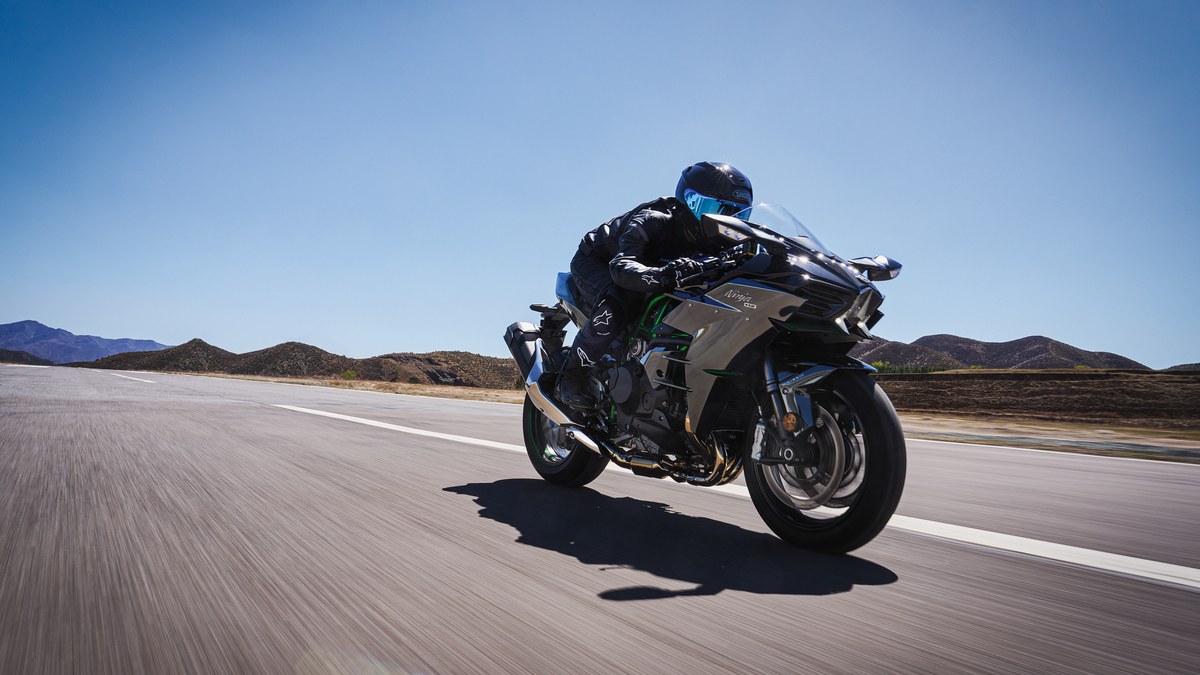
We just got done riding a very special motorcycle: the 2017 Kawasaki Ninja ZX-10RR. This is the return of the RR. Back in the ’80s and ’90s, Kawasaki routinely built up-spec bikes designed for competition. It only made a handful of them, because the only reason they existed was to go racing. That’s exactly what Kawasaki has done again here. Only 1,000 ZX-10RRs are being built worldwide.
I hadn’t spent much time on the current-generation ZX-10R, so it was great to get reacquainted. And wow. We rode it on the street. We rode it on the track. We even took it to the drag strip. The real question is, what can’t this bike do? Answer: nothing. It does it all.
What Makes the ZX-10RR Different
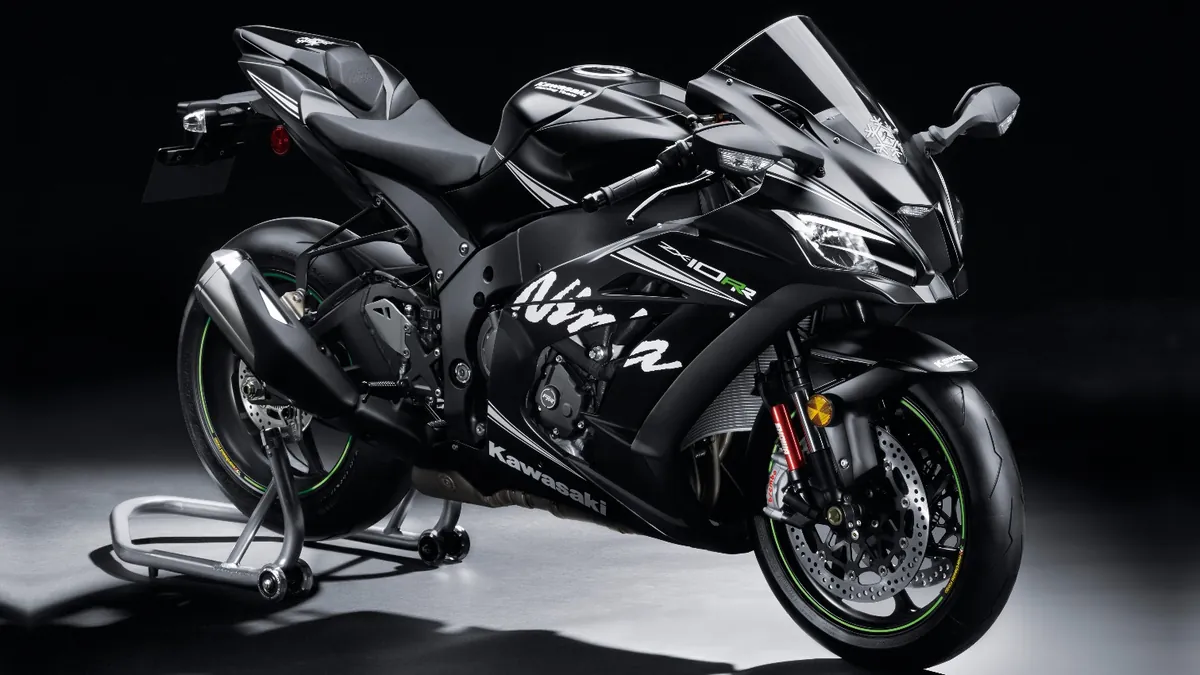
The RR starts with the standard ZX-10R and goes racing. The cylinder head is modified to clear race-kit high-lift cams, the crankcase is reinforced, and the tappets wear a Diamond-Like Carbon coating to cut friction in a race-tuned engine. It rolls on seven-spoke forged Marchesini aluminum wheels wrapped in Pirelli Diablo Supercorsa SP rubber, and the Kawasaki Quick Shifter now handles clutchless downshifts as well as upshifts.
Anything that doesn’t make the bike quicker got tossed. It’s a single-seat machine with no passenger pegs, wearing a seat cowl and the flat black Kawasaki Racing Team Winter Test livery, snowflake logo and all. There’s an RR logo on the engine cover and even on the ignition key. It’s still street legal, with proper lighting and a street-friendly engine tune.
Showa BFF Fork: Hands-and-Knees Feel
On the track, this bike is an absolute weapon. I love the suspension, and the handling is incredible. You won’t find many bikes you can take to the track, do nothing to and just wail on, and have them be this competent, this easy to ride, this fun and this charismatic. There’s so much feel in the chassis.
When you’re riding around corners on this bike, it feels like you’re on your hands and knees. That’s how much feel comes through the gas-charged Showa Balance Free Fork. It’s literally incredible. The 43mm BFF moves its damping valves into an external chamber with nitrogen pushing back against the oil, and a matching Balance Free gas-charged shock holds up the rear. Kawasaki revised the settings for the RR’s single-seat layout and new wheels and tires. The ZX-10R and RR are among the best-handling liter-class bikes you can buy today.
IMU Traction Control That Lets You Ride
The IMU-equipped electronics work really well on both the track and the street. Kawasaki pairs a Bosch five-axis inertial measurement unit with its own software, which calculates yaw rate for a sixth axis. That feeds Sport-Kawasaki Traction Control, launch control, cornering ABS and engine brake control.
We were riding some sketchy roads here in Oregon, and with traction control on its maximum setting, Level 5, I could ride the bike hard. I didn’t have to worry about losing traction or the bike getting crazy underneath me. I could just focus on riding. That’s the real point of electronics on these motorcycles: take the worry out of the equation so you can focus on the road ahead and have fun. The Ninja’s systems do that quite well.
Brembo Brakes and KIBS ABS: No Fade, All Feel
I haven’t ridden a bike lately with brakes as good as this thing’s. No fade, plenty of power and excellent feel. Up front are Brembo M50 monobloc four-piston calipers biting 330mm semi-floating discs, with braided stainless lines front and rear. The Kawasaki Intelligent anti-lock Brake System is the real deal, and its Cornering Management Function helps keep the bike on line if you’re still on the brakes while leaned over.
You can ride this bike insanely hard. The brakes work with the whole dynamic of the bike, from the Showa fork to the new auto-blip downshifter. Everything is seamless and well integrated, and it lets you ride obscenely hard without scaring yourself. I really like this bike.
Auto-Blip Downshifter Makes the Chassis Even Better
On the standard ZX-10R, clutchless auto-blip downshifts required race-kit parts. On the RR, they’re standard, and my God, the feature complements the chassis splendidly. This bike loves to go into corners, and the front-end feedback is incredible.
With the auto-blipper, corner entry is even more seamless. There’s no pitch and no weird chassis movement. The bike stays hooked up the whole time, from braking to turn-in to mid-corner to exit. It’s glued to the pavement.
The OEM Pirelli Diablo Supercorsa SP tires only add to that. It’s a high-performance track-day tire with a ton of grip and excellent handling, but it isn’t going to last the longest. We’ll take that trade for the performance you get.
Roomy Ergonomics for Bigger Riders
This Kawasaki fits guys like me really well. I’m 6 feet tall, a little bigger and a little lankier, and the cockpit suits me. It’s a bit more stretched out and feels bigger than some other liter-class bikes, and I like that. I can tuck under the windscreen well, and on the street I don’t feel like I’m riding a 600 or some teensy-weensy bike. I feel like I’m riding something meaty. A lot of you are going to like that.
Our Only Gripe: The Dash
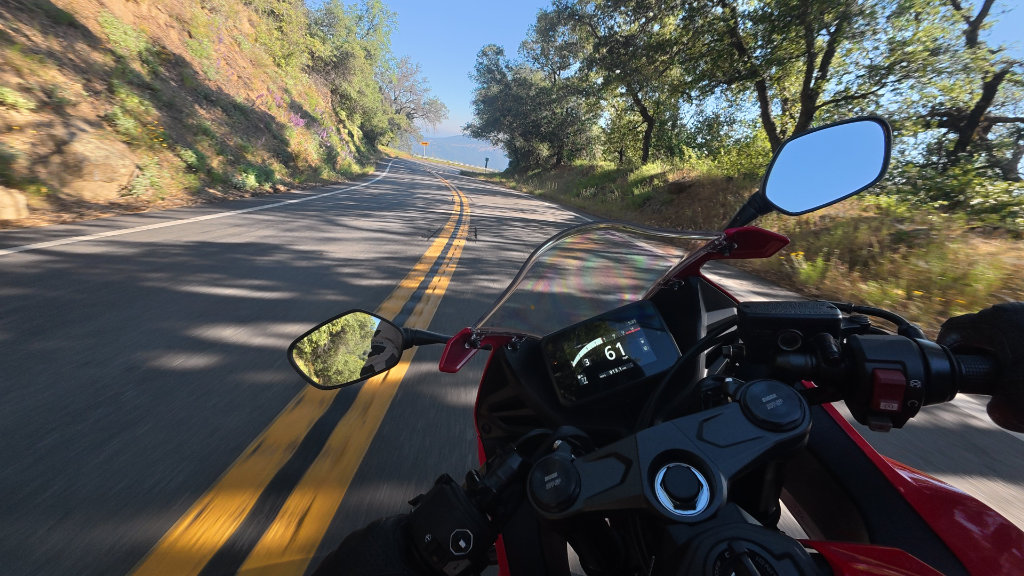
If I have one real squawk, it’s the instrumentation. The dash is still essentially 2011 spec, and it isn’t color. It’s a basic monochrome LCD. The tachometer is hard to read even though it’s a big horizontal bar graph, and the LCD speed readout is tiny. It’s tough to see while riding, or even parked at a standstill.
I’d love to see Kawasaki fit something more premium. It doesn’t have to be color. It just needs to be easier to read and decipher on the move.
Launch Control at the Drag Strip
The final trick is Kawasaki Launch Control Mode. KLCM offers three settings, and I ran Mode 1, the least intrusive of the bunch. I couldn’t believe how easy the bike was to launch. We ran about a 10.4-second quarter mile with the electronics on, and I was actually quicker with launch control than without it. Kudos to Kawasaki for getting the electronics right on this motorcycle.
Verdict: A True Kawasaki Homologation Hero
If you’re looking for a really special motorcycle, something you can hold onto that makes you want to ride, the 2017 Kawasaki Ninja ZX-10RR is it. It harkens back to the days of superbike racing when Doug Chandler was winning races and Scott Russell was the man. It embraces the heritage, spirit and racing pedigree of Kawasaki, and it’s an awesome bike on the track or the street. This bike does it all.
Want more Team Green and superbike coverage? Check out our 2026 Kawasaki Ninja ZX-6R Review, the 2027 Kawasaki Ninja H2 Carbon Preview, our 2027 Suzuki GSX-R1000R Track Review and the 2026 Honda CBR1000RR-R Fireblade SP Street Review. Browse more in Kawasaki Motorcycles.
2017 Kawasaki Ninja ZX-10RR Specifications and Price
| Specifications | 2017 Kawasaki Ninja ZX-10RR |
|---|---|
| U.S. MSRP | $18,899 |
| Warranty | 12-month limited warranty |
| Production | 1,000 units worldwide |
| Engine | 998cc liquid-cooled inline four-cylinder, DOHC, 16 valves; reinforced crankcase, race-cam head clearance, DLC-coated tappets |
| Bore x stroke | 76.0 x 55.0mm |
| Compression ratio | 13.0:1 |
| Claimed power | 200 PS (147.1 kW) @ 13,000 rpm; 210 PS (154.4 kW) with ram air |
| Claimed torque | 83.7 lb-ft (113.5 Nm) @ 11,500 rpm |
| Fuel system | DFI with 47mm Mikuni throttle bodies (4), oval sub-throttles, two injectors per cylinder |
| Exhaust | Titanium-alloy headers |
| Transmission | 6-speed cassette-type, slipper clutch; KQS quickshifter (clutchless upshifts and auto-blip downshifts) |
| Final drive | Sealed chain |
| Electronics | Bosch 5-axis IMU; S-KTRC (5 modes plus off), KLCM launch control (3 modes), KIBS ABS, Kawasaki Cornering Management Function, Kawasaki Engine Brake Control, power modes (Full, Middle, Low) |
| Frame | Aluminum perimeter |
| Front suspension | 43mm inverted Showa Balance Free Fork, adjustable rebound, compression and spring preload; 4.7 in travel |
| Rear suspension | Horizontal back-link with Showa Balance Free gas-charged shock, dual-range (high/low-speed) compression, rebound and spring preload adjustable; 4.5 in travel |
| Front brakes | Dual 330mm Brembo semi-floating discs, Brembo M50 radial-mount monobloc 4-piston calipers, KIBS |
| Rear brake | Single 220mm disc, single-piston aluminum caliper, KIBS |
| Wheels | Marchesini 7-spoke forged aluminum |
| Tires | Pirelli Diablo Supercorsa SP; 120/70ZR17 front, 190/55ZR17 rear |
| Rake/trail | 25.0 degrees / 4.2 in |
| Wheelbase | 56.7 in |
| Seat height | 32.9 in |
| Ground clearance | 5.7 in |
| Length/width/height | 82.3 in / 29.1 in / 45.1 in |
| Fuel capacity | 4.5 gal |
| Curb weight | 454.2 lb |
| Seating | Single seat with seat cowl |
| Color | Flat Ebony (KRT Winter Test Edition) |
2017 Kawasaki Ninja ZX-10RR FAQ
How much does the 2017 Kawasaki Ninja ZX-10RR cost?
The 2017 Ninja ZX-10RR has a U.S. MSRP of $18,899 with ABS standard, backed by a 12-month limited warranty.
How many 2017 Kawasaki Ninja ZX-10RRs is Kawasaki building?
Kawasaki is building just 1,000 ZX-10RRs worldwide as a homologation special for superbike racing.
What’s the difference between the ZX-10R and ZX-10RR?
The RR adds a modified cylinder head for race-kit cams, a reinforced crankcase, DLC-coated tappets, forged Marchesini wheels, Pirelli Diablo Supercorsa SP tires, a quickshifter with auto-blip downshifts, a single seat and Winter Test paint.
Is the 2017 Kawasaki Ninja ZX-10RR street legal?
Yes. It meets emissions regulations, has full street lighting and runs a street-friendly engine tune. We rode it on Oregon roads as well as the track and drag strip.
Does the Kawasaki ZX-10RR have launch control?
Yes. Kawasaki Launch Control Mode has three settings. In Mode 1, we ran about a 10.4-second quarter mile, and the bike was quicker with launch control than without it.
Want more Moto-1 in your Google results?
Add Moto-1 as a Preferred Source on Google