Supercharged and back: $39,400, already sold out
Summary: The 2027 Kawasaki Ninja H2 Carbon is the updated, Euro 5+ road-going version of Kawasaki’s supercharged flagship, shown on the Kawasaki stand at EICMA 2026. It gets a reworked 998cc engine with an 11.2:1 compression ratio, a new exhaust, shorter gearing, Brembo Hypure calipers, cruise control and heated grips. U.S. MSRP is $39,400.
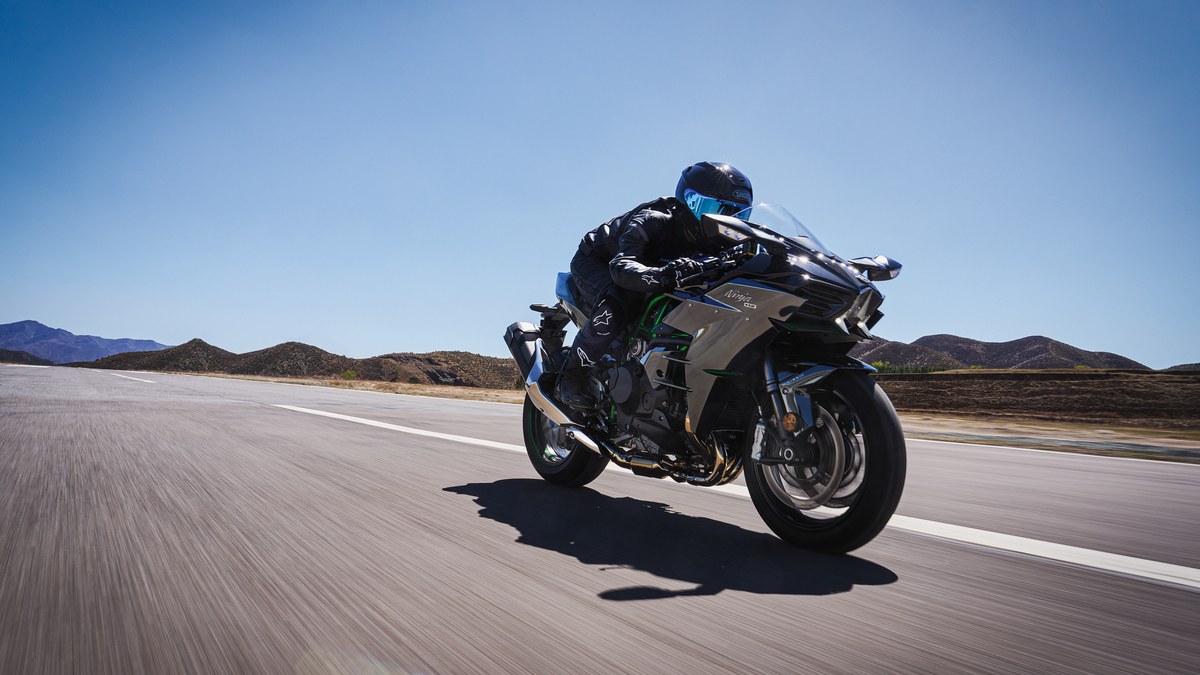
The last day of EICMA 2026 is a lot like the last lap of a race: our feet hurt, our phones are dead, and we’re still making laps of Hall 11. One of the reasons we keep circling back to Kawasaki’s stand (Hall 11, Stand N46) is the 2027 Kawasaki Ninja H2 Carbon. The supercharged Ninja H2 returns to Europe for 2027 as a Euro 5+ road bike, and the limited-edition Carbon version comes with it. In the U.S., Kawasaki’s 2027 release lists the Carbon and the track-only Ninja H2R ABS, and the H2 Carbon carries a $39,400 MSRP. The engine has been heavily reworked to pull harder in the midrange, and the bike gains Brembo Hypure front calipers, a new TFT dash, cruise control and heated grips. Kawasaki ran a short order window from November 3 to 13, and its U.S. website already says the order period is sold out. For everything else we saw at the show, see our 2026 EICMA Preview.
What’s New at EICMA 2026
- Road-going Ninja H2 and limited-edition Ninja H2 Carbon return to Europe for 2027 with Euro 5+ compliance, plus a 2027 U.S. release for the Carbon
- Updated 998cc supercharged inline-four with an 11.2:1 compression ratio (up from 8.5:1), new pistons, cylinder head, cylinder, crankshaft and camshafts
- Revised supercharger impeller, smaller intake chamber and ECU-controlled blow-off valve
- New lightweight 4-into-1 exhaust with a more compact silencer
- Shorter final drive: 44/17, down from 44/18
- First Kawasaki with Brembo Hypure front brake calipers
- New aviation-inspired TFT dash with two display types
- Updated five-mode KTRC traction control and KLCM launch control
- New electronic cruise control, Integrated Riding Modes, new switchgear and heated grips
- Carbon fiber reinforced plastic (CFRP) upper cowl similar to the Ninja H2R’s, plus updated silver-mirror paint
- U.S. MSRP $39,400 plus $840 destination
Why the Ninja H2 Is Back
The Ninja H2 landed in 2015 and changed the conversation about what a road bike could be: a compact 998cc inline-four fed by a supercharger that Kawasaki designed in-house. Kawasaki says engineers from its aerospace and gas turbine divisions helped develop it, and it wears the company’s “River Mark” logo, which Kawasaki saves for models of historic significance. When Euro 4 ended on December 31, 2020, the road-legal Ninja H2 and H2 Carbon left the European market. For 2027 they’re back, and the H2 Carbon is listed as a limited edition.
There’s a catch for spec-sheet racers. Getting through Euro 5+ meant tuning the engine for the real world rather than a big peak number, so this H2 makes less peak power than the version it replaces. Kawasaki doesn’t seem worried. Its whole pitch for 2027 is stronger acceleration in the rpm range people actually use on the street.
Engine: More Compression, More Midrange
On the outside the supercharged engine looks familiar. Inside, Kawasaki Europe calls it essentially a completely different engine. The compression ratio jumps from 8.5:1 to 11.2:1, and a revised piston crown with a smaller squish area improves combustion and thermal efficiency. Because the engine now runs cooler, Kawasaki swapped the dual piston oil jets for single jets. That lets the oil pump work less, and oil capacity drops by about 0.5 quart (500 mL), saving roughly 0.6 pound.
The supercharger impeller is the same size as before, but Kawasaki changed the blade inlet angle to smooth airflow at lower rpm and reduce intake air temperature. That helps suppress knock so the engine can make use of the higher compression. The aluminum intake chamber shrinks from 1.5 gallons to 1.3 gallons and gets a new diffuser, and a single net replaces the individual funnel nets. The outer cylinders use shorter intake funnels than the inner two. The U.S. press release says the throttle valves shrink to 1.8 inches (46mm) from 2.0 inches (50mm), while both the U.S. and European spec sheets list 1.6-inch (40mm) throttle bodies with dual injection, so we’re listing both figures until Kawasaki clarifies. An ECU-controlled blow-off valve releases excess intake pressure when the throttle snaps shut, which helps prevent impeller surge.
New cams have shorter intake and exhaust duration and less valve overlap, tuned for airflow between 4,000 and 7,000 rpm. Kawasaki says the engine pulls hard from low rpm, and from around 8,000 rpm the familiar supercharged rush takes over. The U.S. spec sheet lists 206 hp (ISO 4106 measurement) at 11,000 rpm and 99.5 lb-ft (135 Nm) of torque at 8,500 rpm. Kawasaki Europe quotes 197 hp (200 PS) at 11,000 rpm, or 206 hp (209 PS) with Ram Air. That’s still plenty to rearrange your internal organs.
New Exhaust and Shorter Gearing
The exhaust is completely new. Header pipes measure 1.50 inches (38.1mm) at the cylinders before growing to 1.68 inches (42.7mm), and a 360-degree collector pairs cylinders 1-4 and 2-3. Kawasaki dropped the old pre-silencer chamber for a straighter layout with a longer collector, a larger catalyst and a more compact silencer. Silencer volume drops from 2.6 gallons to 2.3 gallons, and the can sits closer to the center of mass, tucked in beside the single-sided swingarm. Kawasaki says the change boosts torque from about 4,000 to 8,000 rpm. Visually, the silencer gets a black body, a gray end cap and a buff-polished heat guard.
To make the most of the new midrange, final gearing goes from 44/18 to 44/17, and the clutch springs are revised to match. Kawasaki says the shorter gearing makes the supercharged shove more obvious below 8,000 rpm, even at part throttle. That’s exactly where most of us live on public roads, usually while pretending we’re not.
Brembo Hypure Brakes and Premium Suspension
The Ninja H2 Carbon is the first Kawasaki to use Brembo’s Hypure front calipers. These are Brembo’s latest high-performance street calipers, with an asymmetrical shape, light weight and high rigidity. They’re radial-mount, opposed four-piston monoblocs clamping dual 13.0-inch (330 mm) semi-floating discs. Out back there’s a single 9.8-inch (250 mm) disc with a two-piston Brembo caliper, and Kawasaki’s KIBS supersport ABS manages both ends.
Suspension is a 1.7-inch (43mm) inverted KYB AOS-II fork with adjustable compression, rebound and preload and 4.7 inches (120 mm) of travel. The rear uses an Öhlins TTX36 gas-charged shock with a piggyback reservoir, 24-way compression and rebound damping, 15-way preload and 5.3 inches (135 mm) of travel. An Öhlins electronic steering damper is standard. The trellis frame uses high-tensile steel with a swingarm mounting plate that bolts to the back of the engine. Bridgestone Battlax RS11 tires come in 120/70-17 front and 200/55-17 rear sizes.
Electronics, Dash and Creature Comforts
The new high-resolution TFT sits next to an analog tachometer and offers two layouts. Type 1 is inspired by the air ducts that feed the supercharger and shows boost temperature and pressure plus a max lean angle readout. Type 2 borrows from an aircraft head-up display, with graphics for boost pressure, lean angle and pitch angle. The pitch scale moves as the front end lifts, so the dash can tell you about your wheelie.
KTRC traction control now has five modes plus off, and the IMU-based KCMF cornering management oversees the traction control, ABS and engine brake control. KLCM launch control holds the engine at 6,250 rpm up to 37 mph, then lets revs climb until 93 mph or third gear. It locks out for 150 seconds afterward to let the clutch cool, and Kawasaki says it’s for closed-course use only. Integrated Riding Modes include Sport, Road, Rain and a customizable Rider mode. The Kawasaki Quick Shifter works for upshifts and downshifts.
Then come the touring-bike touches nobody expected on a supercharged hyperbike: new electronic cruise control, new handlebar switches and heated grips. Smartphone connectivity runs through RIDEOLOGY THE APP MOTORCYCLE, and voice command and navigation are available as purchased add-ons.
Carbon Cowl and Self-Healing Paint
The Carbon’s signature part is its CFRP upper cowl, which Kawasaki describes as high-rigidity and lightweight and similar to the Ninja H2R’s. Kawasaki also updated the silver-mirror paint with different reflective particles for more sparkle, and all of the non-carbon bodywork gets Kawasaki’s Highly Durable Paint, which can repair certain fine surface scratches on its own. Sadly, it doesn’t work on bruised egos. The forged wheels get new right-side graphics, a green gradation with the Ninja logo, placed where the single-sided swingarm shows them off. The color is Mirror Coated Spark Black.
2027 Kawasaki Ninja H2 Carbon Specs
| Spec | 2027 Kawasaki Ninja H2 Carbon |
|---|---|
| U.S. MSRP | $39,400 + $840 destination ($40,240) |
| UK price | About $41,871 (£31,350) |
| Austria price | About $44,651 (€39,999 incl. taxes) |
| Engine | 998cc liquid-cooled, DOHC, 16-valve inline-four with Kawasaki supercharger |
| Bore x stroke | 3.0 x 2.2 in. (76.0 x 55.0 mm) |
| Compression ratio | 11.2:1 |
| Fuel system | DFI with dual injection; spec sheets: 1.6 in. (40mm) throttle bodies (4); U.S. release: 1.8 in. (46mm) throttle valves |
| Claimed horsepower | 206 hp (209 PS) @ 11,000 rpm with Ram Air; 197 hp (200 PS) @ 11,000 rpm without |
| Claimed torque | 99.5 lb-ft (135 Nm) @ 8,500 rpm |
| Transmission / final drive | 6-speed dog-ring, KQS up/down; sealed chain, 44/17 |
| Frame | High-tensile steel trellis with swingarm mounting plate; single-sided swingarm |
| Front suspension | 1.7 in. (43mm) KYB AOS-II inverted fork, fully adjustable; 4.7 in. (120 mm) travel |
| Rear suspension | Öhlins TTX36 with piggyback reservoir, 24-way comp/rebound, 15-way preload; 5.3 in. (135 mm) travel |
| Front brakes | Dual 13.0 in. (330 mm) semi-floating discs, Brembo Hypure radial-mount four-piston monobloc calipers, KIBS |
| Rear brake | 9.8 in. (250 mm) disc, Brembo two-piston caliper, KIBS |
| Tires | Bridgestone Battlax RS11; 120/70-17 front, 200/55-17 rear |
| Rake / trail | 24.5° / 4.1 in. (103 mm) |
| Wheelbase | 57.3 in. (1,455 mm) |
| Seat height | 32.5 in. (825 mm) |
| Ground clearance | 5.1 in. (130 mm) |
| Length / width / height | 82.1 / 30.3 / 44.3 in. (2,085 / 770 / 1,125 mm) |
| Fuel capacity | 4.5 gal. (17.0 L) |
| Claimed fuel economy | 39.9 mpg (5.9 L/100 km, Kawasaki Europe) |
| Curb weight | 524.8 lb (238 kg) |
| Estimated dry weight | 480.7 lb (218 kg) |
| Electronics | IMU, KCMF, five-mode KTRC, KLCM, KIBS, KEBC, KQS, Integrated Riding Modes, electronic cruise control, Öhlins electronic steering damper |
| Display | Full-color TFT with analog tach, two display types; RIDEOLOGY app connectivity |
| Color | Mirror Coated Spark Black |
Price and Availability
In the U.S., the 2027 Kawasaki Ninja H2 Carbon ABS has a $39,400 MSRP, plus an $840 destination charge for $40,240 total. The Ninja H2R ABS returns at $64,300. Kawasaki took orders for both from November 3 to 13, and kawasaki.com already shows the H2 Carbon order period as sold out. If you missed it, talk to your dealer and be nice. In the UK, the H2 Carbon is about $41,871 (£31,350 at $1.3356 per pound on November 8, 2026). Kawasaki Austria lists it at about $44,651 (€39,999 including taxes at $1.1163 per euro on November 8, 2026), with availability from November 2026.
Our Take From Milan
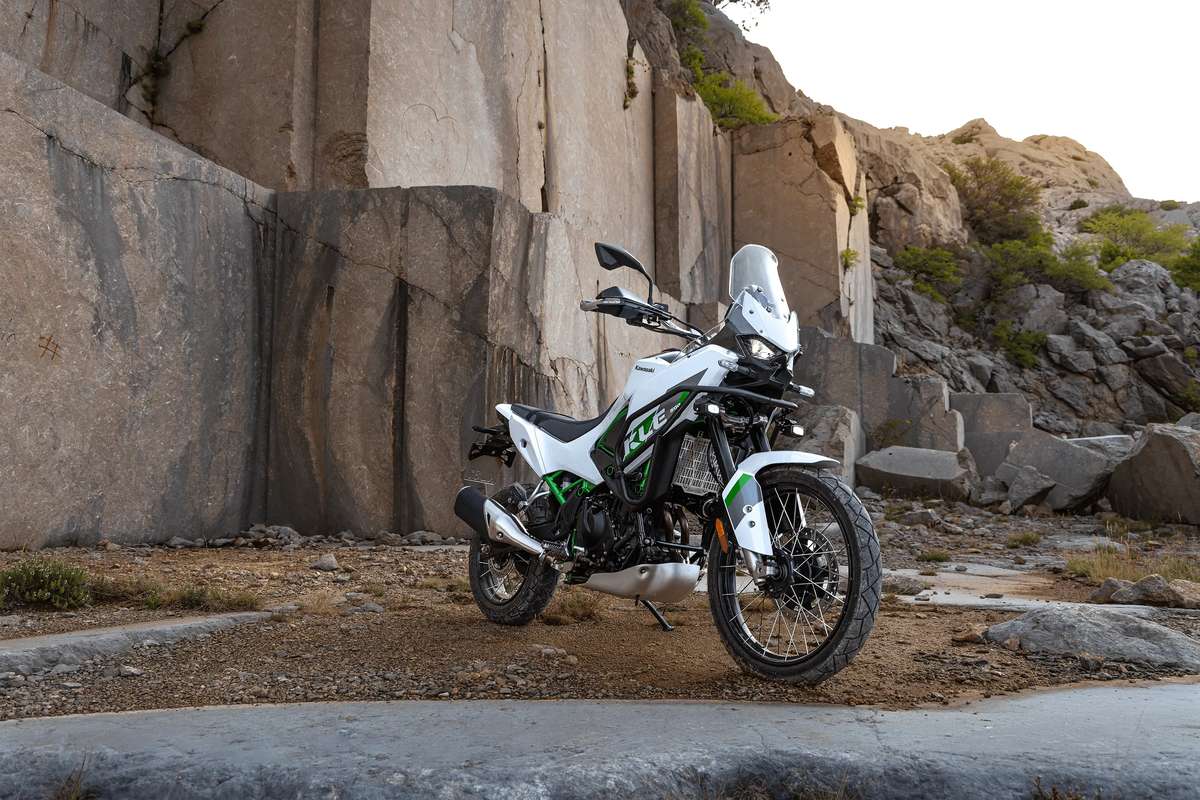
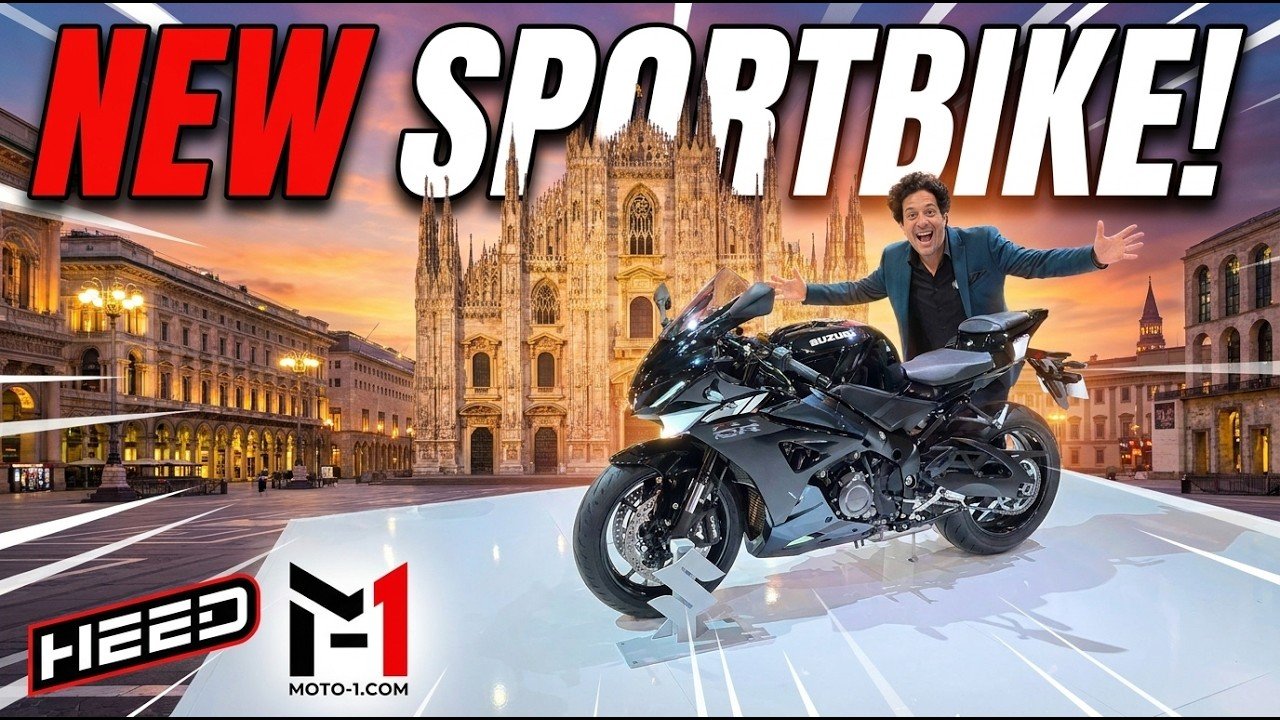
We’ll admit it: we walked up to this thing hoping to hate the lower peak number, and we left Kawasaki’s stand plotting how to get one. Kawasaki did more than add a carbon nose and new paint. More compression, new cams, a smaller intake chamber, a new exhaust and shorter gearing all point at the same goal: hitting harder where riders actually ride. Add Hypure brakes, cruise control and heated grips, and the H2 Carbon looks like it grew up without losing its sense of humor. It’s one of the coolest bikes in a busy Kawasaki booth that also includes the 2027 Versys 900, KLE650, Ninja 650 and KX327. If you want a sportbike with a gentler price tag, check out Suzuki’s new GSX-10R. For more, see our Kawasaki motorcycles and sportbikes sections.
FAQ
How much does the 2027 Kawasaki Ninja H2 Carbon cost?
U.S. MSRP is $39,400, plus $840 destination. The UK price is about $41,871 (£31,350).
How much horsepower does the 2027 Ninja H2 Carbon make?
Kawasaki claims 206 hp (209 PS) at 11,000 rpm with Ram Air and 99.5 lb-ft (135 Nm) of torque at 8,500 rpm.
How much does it weigh?
Curb weight is 524.8 pounds (238 kg) with a full tank.
Can you still order one in the U.S.?
Kawasaki’s order window ran from November 3 to 13, and kawasaki.com says the order period is sold out.
What’s the difference between the H2 Carbon and the standard Ninja H2?
The Carbon adds a CFRP upper cowl similar to the Ninja H2R’s. In Europe both versions are sold, and Kawasaki lists the Carbon as a limited edition.