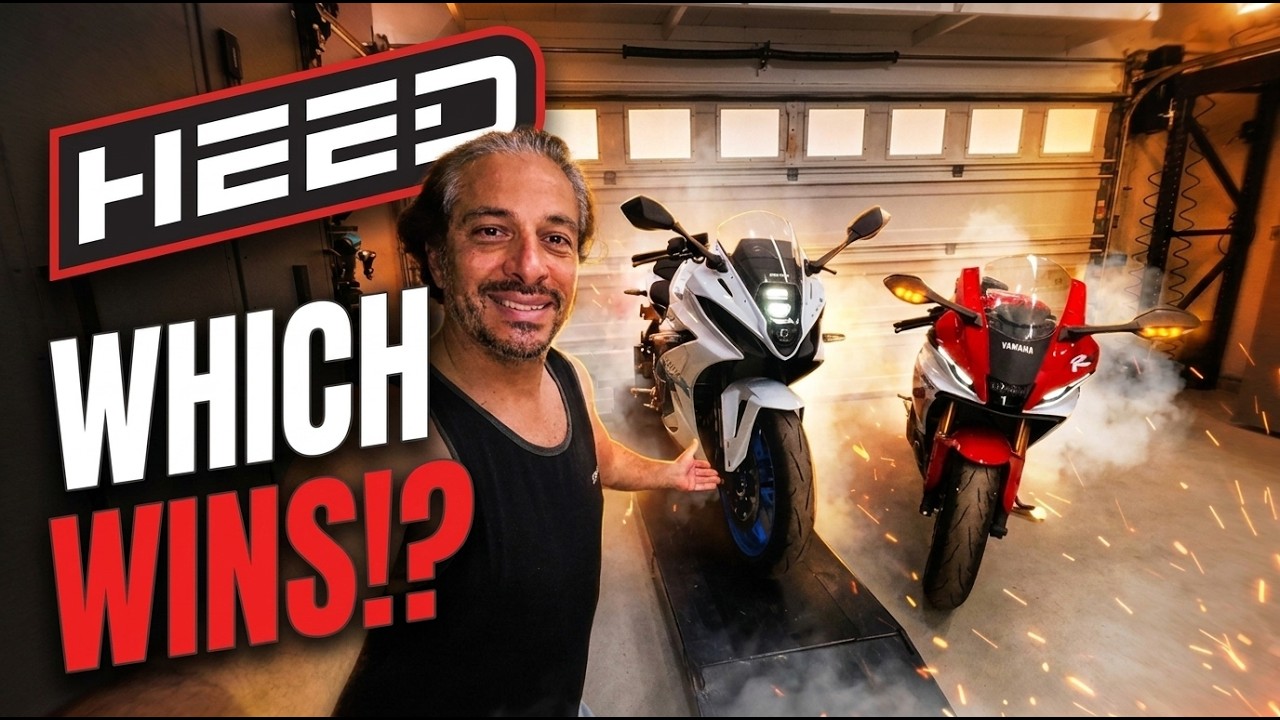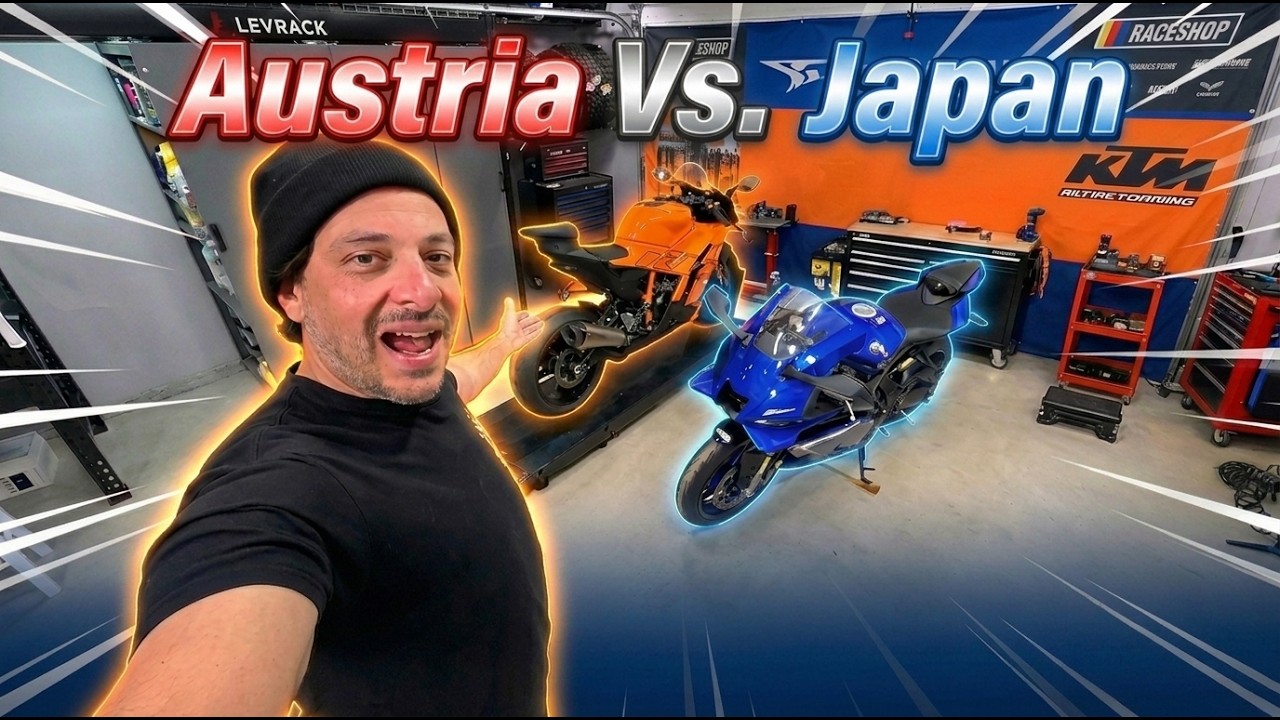
The sun is shining bright over Southern California, the asphalt is calling, and we have a beautifully rowdy garage shootout for you. If you are a rider searching for a friendly, road-going sport bike that can still absolute blast around a local track day, you’ve arrived at the right destination. We are putting the all-new 2025 Yamaha YZF-R9 head-to-head against Austria’s latest orange weapon, the 2026 KTM 990 RC R.
Japan versus Austria. A screaming triple versus a torquey parallel twin. Let’s dive into how these premium, “plus-size” middleweights stack up before we take them out to stretch their legs on the tarmac.
The Heart of the Beasts: Two Completely Different Flavors
Starting with the contender from the Land of the Rising Sun, the Yamaha YZF-R9 is propelled by the heavily celebrated 890cc CP3 engine. This liquid-cooled, dual overhead camshaft, 12-valve triple sends power to its 17-inch rear wheel via a six-speed transmission equipped with a slick electronic quickshifter. To unlock a bit more track-focused aggression, our test model swapped out its stock Bridgestones for high-grip Dunlop Sportmax Q5 and Q5S tires. We also bolted on a gorgeous Yoshimura AT2 full race exhaust system—a closed-course, stainless-steel masterpiece that retails for just over $1,300—and tidied up the tail with a Yoshimura Fender Eliminator V2 kit.
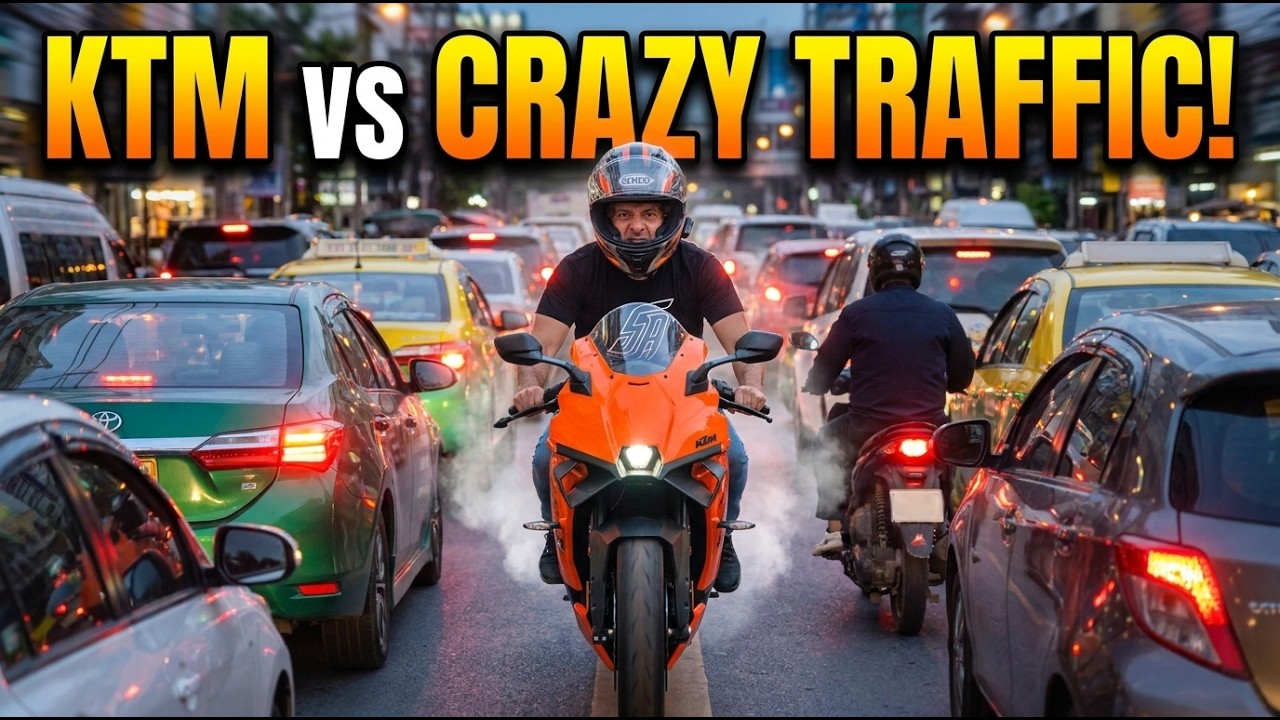
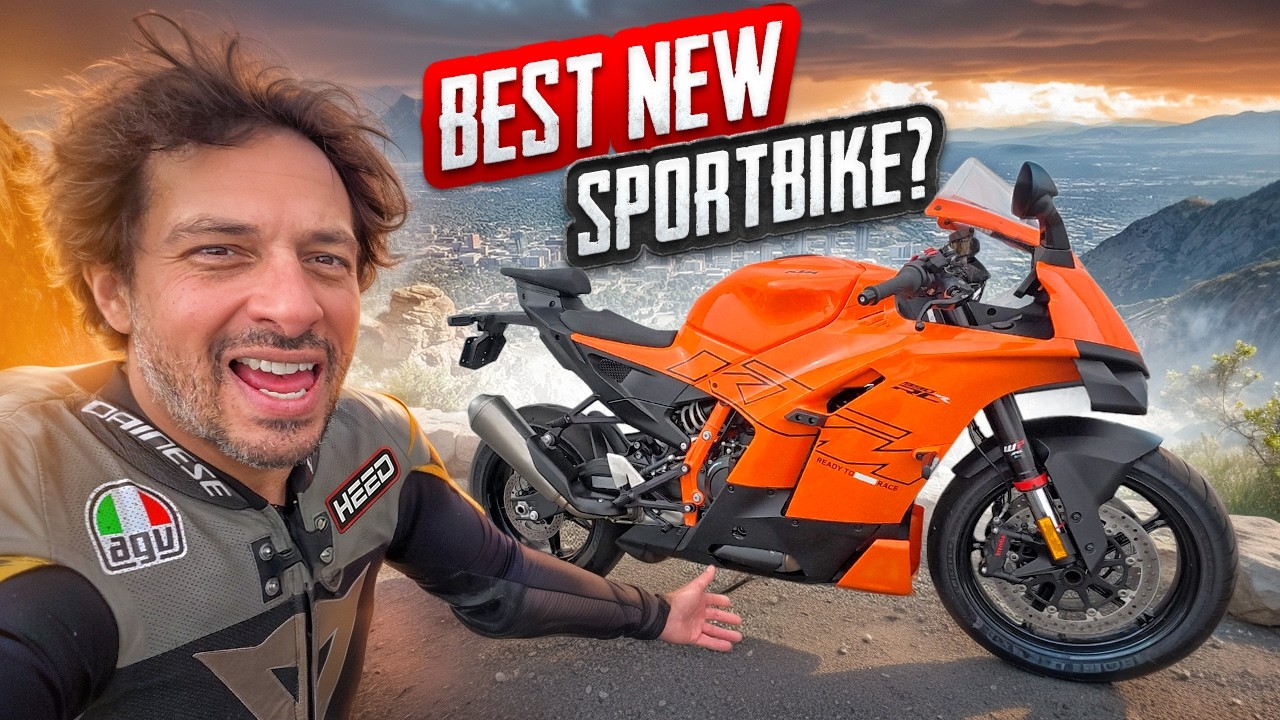
On the European side of the garage sits the KTM 990 RC R, sporting a larger 947cc parallel-twin engine tucked beneath some of the most aggressive bodywork we’ve seen in years. Like the Yamaha, it utilizes a six-speed gearbox with an electronic quickshifter and a chain final drive. For this review, it’s rolling on Continental Sport Attack 5 tires—though, full disclosure, the original equipment Michelin Power tires are actually superior to these Contis! If you want the full breakdown on that rubber, check out our comprehensive Continental Sport Attack 5 Tire Review. To give the KTM an extra voice, it’s fitted with a stunning Akrapovič full factory racing titanium exhaust. At $2,500, it costs nearly $1,000 more than the Yoshimura on the Yamaha, but the weight savings and exotic look of titanium are undeniably glorious.
In terms of pure engine character, the KTM parallel twin is an absolute hoot with massive amounts of low-end torque. However, it simply cannot match the iconic, sweet-sounding exhaust note of the Yamaha triple. If you miss the legendary wail of the Triumph 675 or 765, the CP3 engine will sing right to your soul. One quick warning for commuters: the Yamaha CP3 motor is notoriously thirsty at the pump, so the KTM’s slightly larger fuel tank and better mileage will keep you out riding longer between fill-ups.
Chassis, Suspension, and Ergonomics
On paper, these bikes are practically twins on the scale. The Yamaha weighs in at 430 pounds stock, while the KTM tips the scale at 429 pounds. However, the moment you throw a leg over them, they feel entirely different.
The KTM is remarkably narrow through the midsection thanks to its parallel-twin layout and deep cutouts in the 4-plus gallon fuel tank. It features a stiffer, more traditional race-like saddle. The Yamaha feels wider through the center, offering a more cushioned, plush seat that’s friendly for longer street rides.
When it comes to hardware, Austria takes a slight edge in the premium department:
- Suspension: The Yamaha relies on a fully adjustable KYB inverted fork and a horizontal back-link mounted rear shock with a handy tool-less preload adjustment knob. The KTM counters with beefier, larger-diameter WP front forks featuring tool-less compression and rebound clickers right on the fork caps. Out back, the KTM features a clever mechanical advantage linkage system on its shock. The KTM setup is noticeably more taut and handles aggressive chassis transitions with a bit more composure, closely mimicking an old-school YZF-R6 feel.
- Brakes: The Yamaha features capable Brembo calipers paired with a conventional radial-pump master cylinder and stainless-steel lines. The KTM steps the game up with razor-sharp Brembo Monobloc radial-mount calipers and a Brembo adjustable-ratio master cylinder. For high-performance riders who demand precision braking feel, that adjustable master cylinder is an absolute game-changer.
Cockpit Tech: Touchscreens vs. Tradition
KTM went all-out on the dashboard, delivering a massive, horizontal, touchscreen-compatible display. You can easily make on-the-fly electronic adjustments with your gloved fingers or use the premium, back-lit switchgear. It features IMU-powered traction control, lean-sensitive ABS (with a Supermoto mode to disable the rear), global riding modes, and standard cruise control.
Yamaha utilizes a slightly more conventional, non-touch TFT color display. While it lacks back-lighting on the switchgear, the menu navigation is incredibly intuitive and easy to master. It packs a matching suite of top-tier safety tech, including IMU-powered traction control, slide control, ABS, cruise control, and highly customizable riding modes.
Oh, and a quick hat-tip to one of our sharp-eyed readers from our preview article: you were completely right! The front intake on the Yamaha is a “faux” Ram Air system. It features a cool-looking snorkel that unfortunately leads to a dead end. Hopefully, Yamaha adds functional Ram Air in future generations for a free horsepower boost!
The Verdict: Price, Warranty, and Intent
At the end of the day, your choice comes down to your budget and where you intend to spend your miles. The Yamaha YZF-R9 starts at an incredibly reasonable base price of $11,500. Even after adding our Yoshimura exhaust, fender eliminator, and track tires, you are looking at just over $14,000 out the door. It is proudly built in Japan and carries a standard 1-year warranty.
The KTM 990 RC R starts at $13,000 in stock form, jumping to $15,500 with that premium titanium Akrapovič pipe. While it is more expensive, it is built in Austria, looks exactly like a MotoGP bike with wings, and comes backed by KTM’s stellar 4-year factory warranty.
If you want a highly capable, comfortable daily street rider that can comfortably handle the occasional track weekend, the Yamaha YZF-R9 is an absolute bargain. But if you are a circuit-focused rider looking for the most exhilarating, sharp-handling, and track-ready weapon straight out of the box, the KTM 990 RC R takes the crown.
YZF-R9 and 990 RC R Technical Specifications
| Feature | 2025 Yamaha YZF-R9 | 2026 KTM 990 RC R |
| Engine Type | 890cc Liquid-Cooled Inline-Triple | 947cc Liquid-Cooled Parallel-Twin |
| Valve Train | DOHC, 12-valve | DOHC, 8-valve |
| Transmission | 6-speed w/ Electronic Quickshifter | 6-speed w/ Electronic Quickshifter |
| Final Drive | Chain | Chain |
| Stock Weight | 430 lbs | 429 lbs |
| Fuel Capacity | 3.9 gal | 4.0+ gal |
| Front Suspension | KYB Inverted Fork (Fully Adjustable) | WP Inverted Fork (Tool-less Adj.) |
| Front Brakes | Brembo Calipers, Fixed Radial Master | Brembo Monobloc, Adjustable Master |
| Dashboard | Color TFT Display | Horizontal Touchscreen TFT Display |
| Switchgear | Standard | Back-lit |
| Country of Origin | Japan | Austria |
| U.S. MSRP (Base) | $11,500 | $13,000 |
| Warranty | 1-Year | 4-Year |