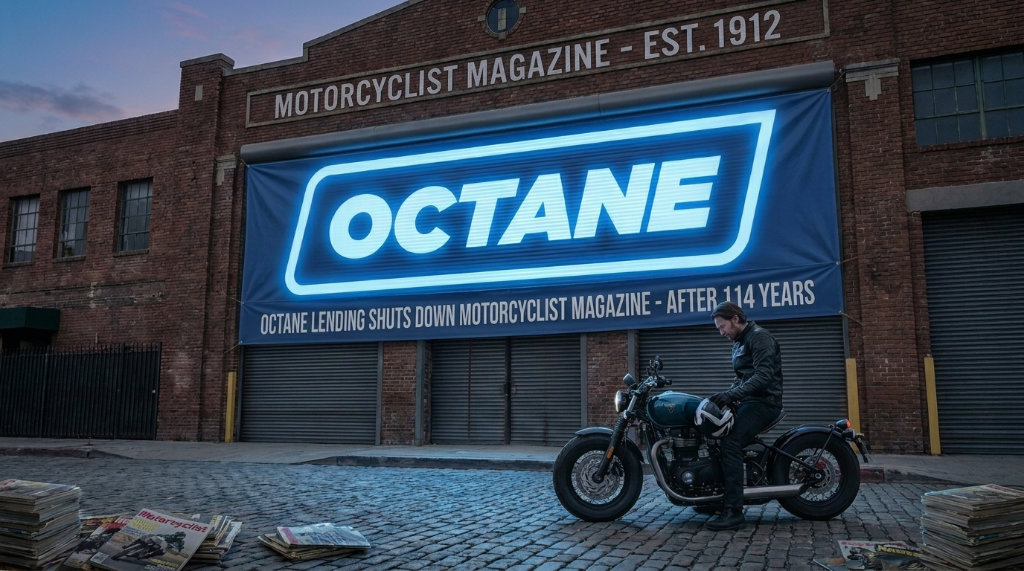
The final chapter has officially been written for Motorcyclist, the world’s oldest continuously running motorcycle publication. After surviving the Great Depression, World War II rationing, and the turbulent dawn of the digital age, the iconic title is winding down operations under its parent company, Octane Lending, drawing the curtain on a legacy that began in July 1912.
Related Editorial: Cycle World Reportedly Winding Down Operations After A Bumpy Decade
While corporate pivots in the media landscape are nothing new, sources close to the operation point to a much sharper reality behind the collapse: gross mismanagement and a prolonged pattern of weak leadership that ran the historic brand clean into the ground.
From Handlebars to Hard Drives
Motorcyclist first hit the streets 114 years ago under the banner Pacific Motocycling, launching as a bi-weekly newspaper in Los Angeles just as the American powersports industry was roaring to life. Over the next century, it grew into the definitive journal of record for riders worldwide. It captured the evolution of the machine from primitive motorized bicycles to high-tech sportbikes, delivering peerless motorcycle reviews, deep-dive journalism, and cultural storytelling that galvanized generations of enthusiasts.
The brand’s modern troubles accelerated after its acquisition by Bonnier Corp, which eventually eliminated the glossy print edition in 2019 due to gross mismanagement and a clear disconnect from the realities of modern media.
Enter Octane in 2020. Because if there is one thing a century-old journalism legacy needs to thrive, it’s the guidance of a powersports financing fintech company. Octane acquired the digital assets of Motorcyclist and sister publication Cycle World with lofty promises to invest heavily in independent online editorial coverage.
Running on Empty
The strategy backfired spectacularly. Driven by erratic, half-baked directives from Cycle World’s inept leadership and lack of executive oversight abandoned both logical digital metrics and core editorial values. Instead of cultivating the platforms, management choked proven content and video productions, squandered company resources for personal gain, and buried the website under a mountain of ineffective advertisements that made navigating the homepage feel like dodging traffic on the interstate.
Worse still, the brand’s sole remaining veteran staff member was systematically marginalized, while the strategic direction shifted faster than an quickshifter-equipped sportbike —proving those at the helm had zero understanding of basic business practices let alone digital media, or the huge powersports community Motorcyclist had spent over a century building.
The closure leaves a massive void in the motorcycle community—one that Moto-1.com, America’s fastest-growing motorcycle magazine, is racing to fill.
For over a century, Motorcyclist proved that while bikes require fuel, the culture requires a voice. Unfortunately for riders everywhere, the final hand on the throttle didn’t know how to steer.