The $18K Literbike Commute Test
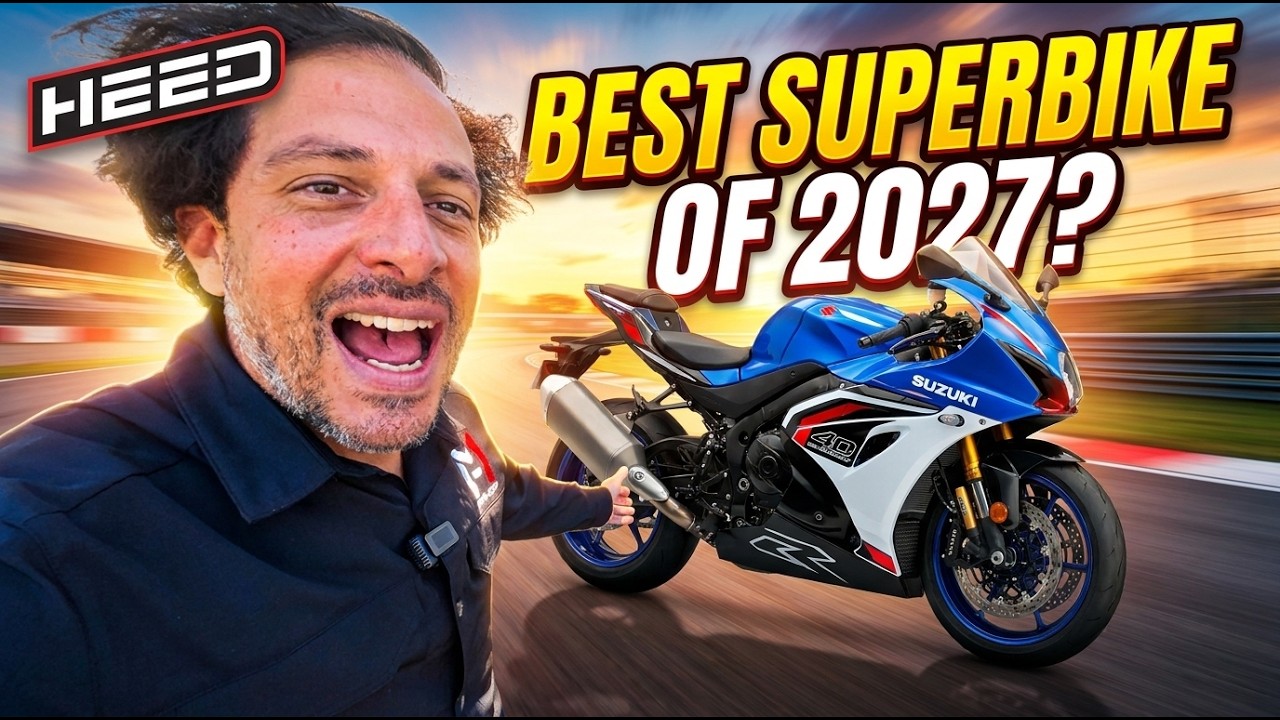
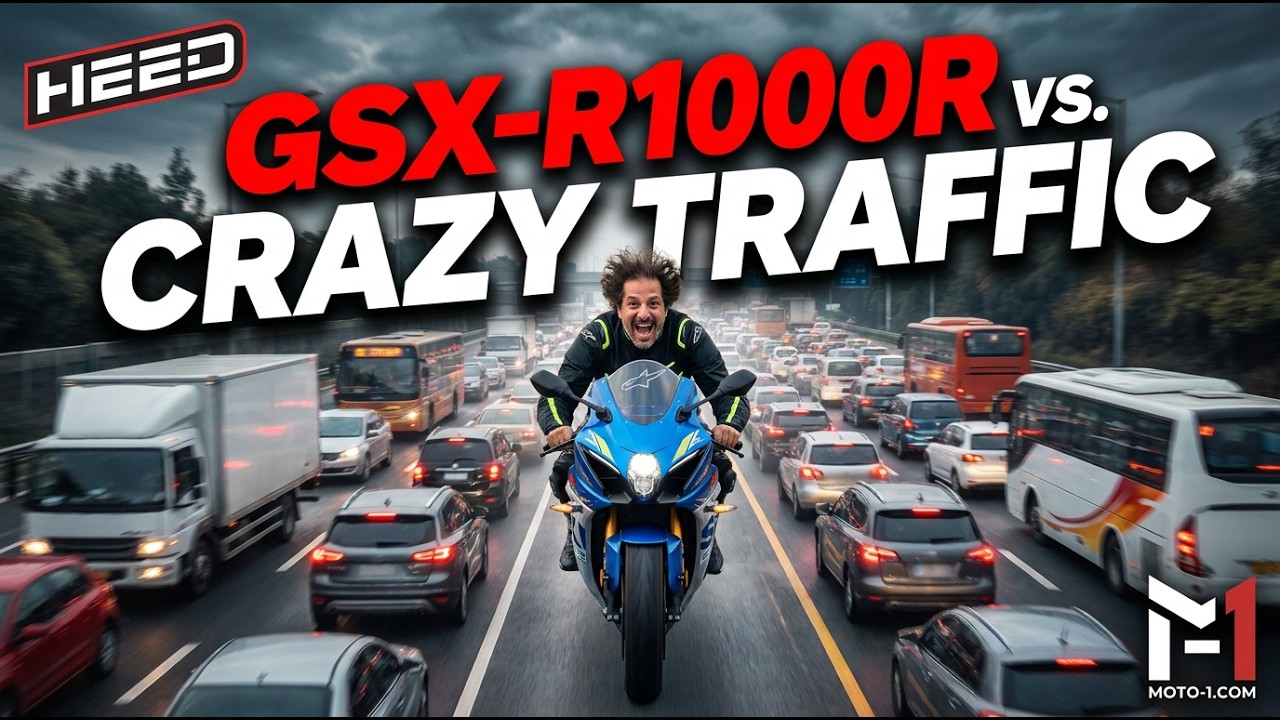
Welcome back to another edition of Real MC Commute, the show where we take full-bore motorcycles, swing a leg over, and actually commute to work—no slacking, no posing, and zero BS allowed! Today, we’re straddling Suzuki’s 2027 GSX-R1000R in its gorgeous 40th Anniversary livery. It earns the honor of being the very first 2027 model year machine to hit our official test loop.
If you caught our Moto-1 Garage Talk Special Edition live from Suzuki’s campus, you already know Hamamatsu put serious work into this beast. Thanks to a massive double-shotgun exhaust assembly and comprehensive top-to-bottom internal engine tweaks, Suzuki resurrected the Gixxer 1000 to meet stringent Euro5+ standards. That means this sportbike is road-legal in Europe and Japan again.
Related Content: 2026 Suzuki GSX-8R vs. Yamaha YZF-R7 Shootout (Street)
First Impressions & Ergos: Old School Cool
Firing up the 999cc inline-four with Suzuki’s Easy Start system is pure magic—just a momentary tap of the button and that engine instantly growls to life. Sitting on the bike, the ergonomics deliver a classic GSX-R feel. The saddle remains arguably one of the most comfortable, well-cushioned perches ever fitted to a production sportbike, making highway miles melt away with ease.
Related Content: 2025 Suzuki GSX-S1000 Out on the Review (Road Test)
While the seat height perches you slightly taller than old-school low-slung cockpits, it offers a great balance. The bike feels remarkably narrow through the midsection compared to modern wide-body superbikes. The clip-on handlebars feature a pronounced inward sweep, offering an authentic, mechanical feel. The footpegs sit in a fixed position—neither too high nor ridiculously low—striking a happy medium for street carving and track duty.
Engine Performance & Highway Slog
On the highway, the re-engineered 999cc engine behaves like an absolute pussycat when you want it to, delivering roughly 170 to 172 horsepower directly to the sticky Bridgestone Battlax RS11 rear tire. Power delivery through the ride-by-wire throttle is smooth as silk. Suzuki’s S-DMS offers A, B, and C engine modes; rather than limiting peak power, these settings soften throttle response, allowing you to tailor how aggressively the bike arrives at speed.
The mechanical Variable Valve Timing (VVT) system—originally introduced a decade ago—continues to perform miracles here. You get massive low-end and mid-range grunt combined with an explosive top-end surge, all while returning a respectable 38.6 MPG on average.
The standard bi-directional quickshifter allows clutchless upshifts and downshifts through the six-speed gearbox. Cruising at 83 mph keeps revs just below 6,000 RPM. However, two things stand out during long highway stretches:
- Engine Vibration: There is a noticeable high-frequency buzz through the clip-ons and footpegs around cruising RPMs—vibier than a crossplane YZF-R1, though less harsh than an S1000RR.
- Heat Management: While vastly superior to its Italian rivals, the updated powertrain dumps noticeable heat onto the rider’s feet and ankles when ambient temperatures rise.
Electronics, Chassis & Braking
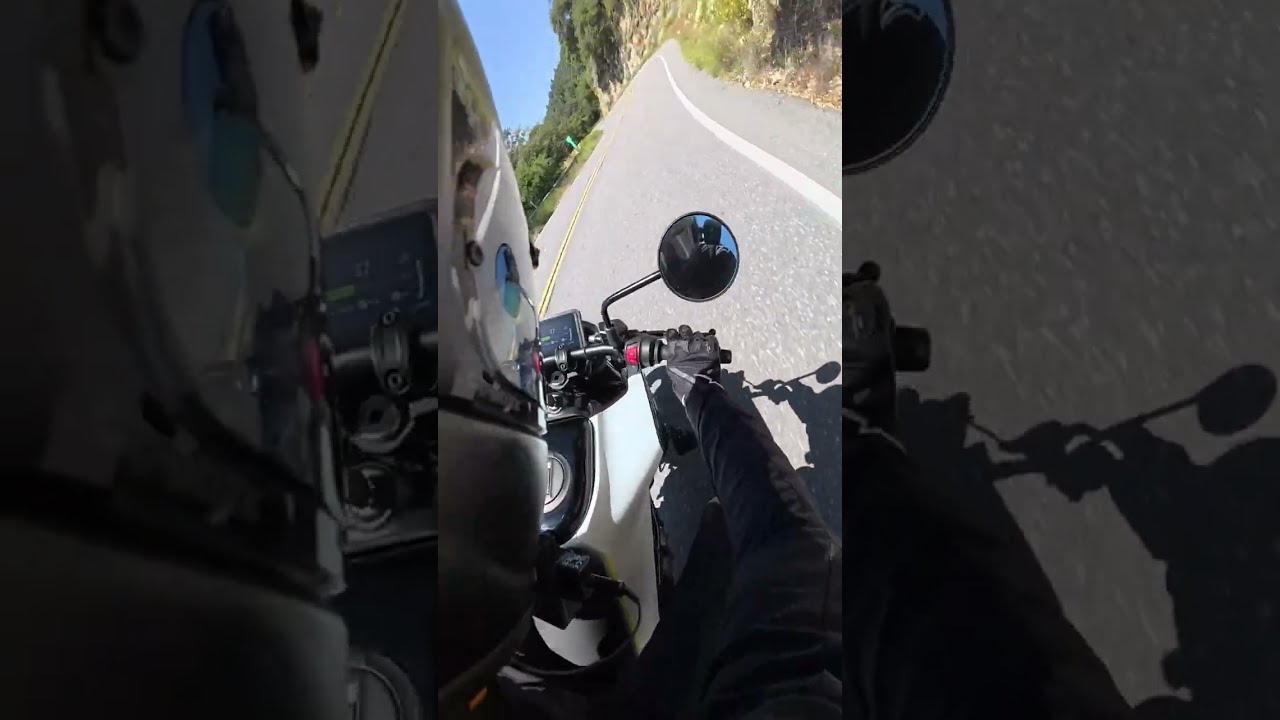
Slicing through Southern California traffic toward the Speed Addicts Superstore in Orange, California, the 448-pound wet weight feels feather-light. Suzuki has a knack for engineering neutral, stable chassis geometry that leans into corners effortlessly without ever feeling twitchy or flighty. The Showa Balance Free Fork (BFF) and rear shock do a solid job absorbing small highway ripples, though sharper hits remind you this is a track-focused weapon.
The digital dash retains a monochrome LCD display. While some riders clamor for a full-color TFT, the high-contrast display resembles a race-spec MoTeC setup. Information is tightly packed, but key data—speed, RPM, gear position, A-mode status, air temp, clock, and fuel gauge—is easy to read at a glance.
Braking duties are handled by triple-disc hydraulics backed by an IMU-powered lean-sensitive ABS system and wrapped in braided stainless steel lines. Stopping power is predictable with good lever feel for daily commuting, though hard-charging track enthusiasts might still desire a manual ABS disengage option.
The Verdict
At an $18,000 MSRP, Suzuki’s updated GSX-R1000R isn’t cheap, but it remains one of the most characterful, capable, and ergonomically forgiving Japanese superbikes on the market today. It blends classic analog feel with modern electronic safety nets into a package that turns heads everywhere it goes.
2027 Suzuki GSX-R1000R Technical Specifications
| Specification | Manufacturer Feature / Detail |
| Engine Type | 999cc, 4-stroke, liquid-cooled, 4-cylinder, DOHC with VVT |
| Bore x Stroke | 76.0 mm x 55.1 mm |
| Compression Ratio | 13.2:1 |
| Fuel System | Electronic Fuel Injection with Ride-by-Wire |
| Transmission | 6-speed constant mesh with Bi-directional Quick Shifter |
| Final Drive | Chain |
| Front Suspension | Showa Balance Free Front Fork (BFF), fully adjustable |
| Rear Suspension | Showa Balance Free Rear Cushion (BFRC lite), fully adjustable |
| Front Brakes | Brembo 4-piston radial calipers, dual 320mm discs w/ Motion Track ABS |
| Rear Brakes | Single-piston caliper, 220mm disc w/ Motion Track ABS |
| Front Tire | 120/70ZR17M/C (58W), Bridgestone Battlax Racing Street RS11 |
| Rear Tire | 190/55ZR17M/C (75W), Bridgestone Battlax Racing Street RS11 |
| Curb Weight | 448 lbs (203 kg) |
| Fuel Capacity | 4.2 US gal (16.0 L) |
| U.S. MSRP | $18,000 |
| Warranty | 12-month unlimited mileage limited warranty |
For more hands-on motorcycle reviews, track tests, and gear roundups, check out our deep-dive coverage on Moto-1.com. Stay tuned for our upcoming full road test and track shootout!