For U.S. motorcycle enthusiasts, the name BMW Motorrad often evokes a unique blend of “Old World” craftsmanship and futuristic engineering. While many American riders recognize the iconic blue-and-white roundel, the brand’s history is a story of resilience that began not on the road, but in the sky. Founded in 1916 as an aircraft engine manufacturer in Munich, BMW was forced to pivot after World War I due to the Treaty of Versailles, which banned German aviation production. This pivot led to the birth of the BMW R 32 in 1923, the first official BMW street bike. It introduced the flat-twin “Boxer” engine and shaft drive, two hallmark features that remain the soul of the brand’s lineup over a century later.
Throughout the mid-20th century, BMW established itself as a pioneer of suspension and safety. In 1935, they introduced the world’s first production motorcycles with hydraulically damped telescopic forks, a standard that would eventually be adopted by every major manufacturer. For the American market, the 1950s and 60s were pivotal; while motorcycle sales slumped in Europe, they remained robust in the U.S. BMW responded by creating specific “US” models in the late 1960s, such as the R 69 US, which swapped the traditional Earles forks for telescopic ones to better suit American riding styles.
A major shift in BMW’s German manufacturing occurred in 1969. To make room for expanding car production in Munich, BMW moved its entire motorcycle manufacturing operation to Berlin-Spandau. This factory became the birthplace of the legendary 5 Series, which modern riders still celebrate for its reliability and classic styling. Today, the Berlin plant remains the global headquarters for BMW Motorrad production, where over 2,200 employees build up to 900 motorcycles a day, ranging from the world-conquering R 1300 GS to the high-performance S1000RR sportbike.
For the American rider, the most significant milestone in recent history arrived in 1980 with the R 80 G/S. This bike invented the “Adventure” segment, combining off-road capability with long-distance touring comfort—a category that now dominates U.S. sales charts. Whether it’s the heritage-inspired R 18 cruiser designed specifically with American tastes in mind or the high-tech K 1600 touring machines, BMW Motorrad continues to blend its historic German manufacturing roots with the evolving needs of the American open road.
In 2025, BMW Motorrad has solidified its position as a high-tech powerhouse, blending its traditional mechanical excellence with a massive push into digital and electric mobility. The Berlin-Spandau plant continues to be the heart of this evolution, recently celebrating the production debut of the R 12 G/S, a “retro-modern” machine that bridges the gap between the brand’s heritage and current engineering. Simultaneously, the 2025 lineup showcases the Automated Shift Assistant (ASA) and the debut of the R 1300 GS Adventure, which features a completely redesigned chassis to maintain its dominance in the U.S. adventure market. Beyond internal combustion, BMW’s “Electric Revolution” is in full swing with the CE 04 and the newly launched CE 06, targeting urban commuters with futuristic designs and integrated smart-hub cockpits. This year also marks a high point for their racing pedigree, as the M 1000 RR enters the 2025 season defending a World Superbike title, proving that even as they pivot toward sustainability, the “M” badge remains a symbol of ultimate track performance for riders across the globe.
-
-

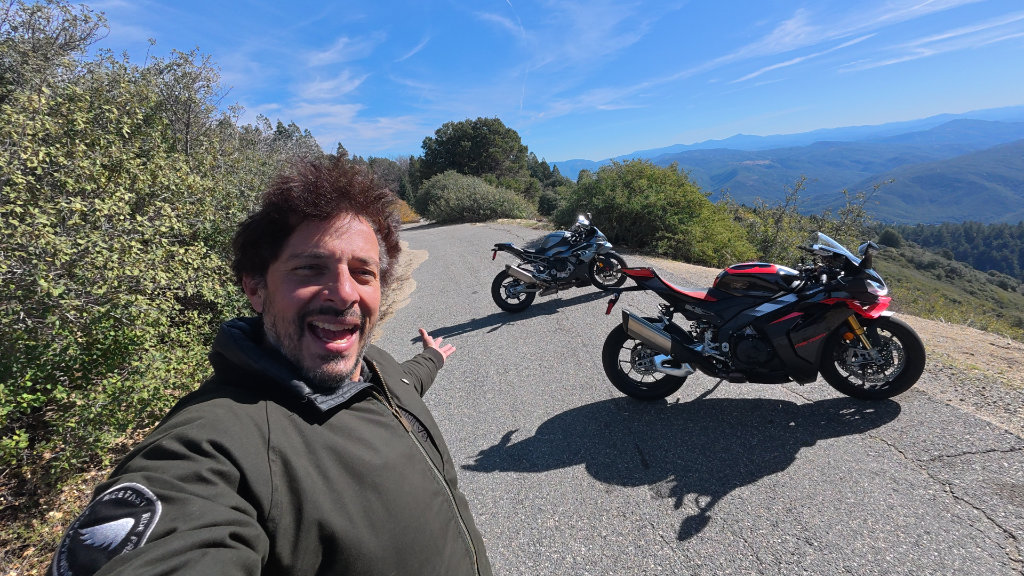
2026 Aprilia RSV4 Factory vs. BMW S1000RR
2026 Superbike Shootout: Aprilia RSV4 vs BMW S1000RR!
-

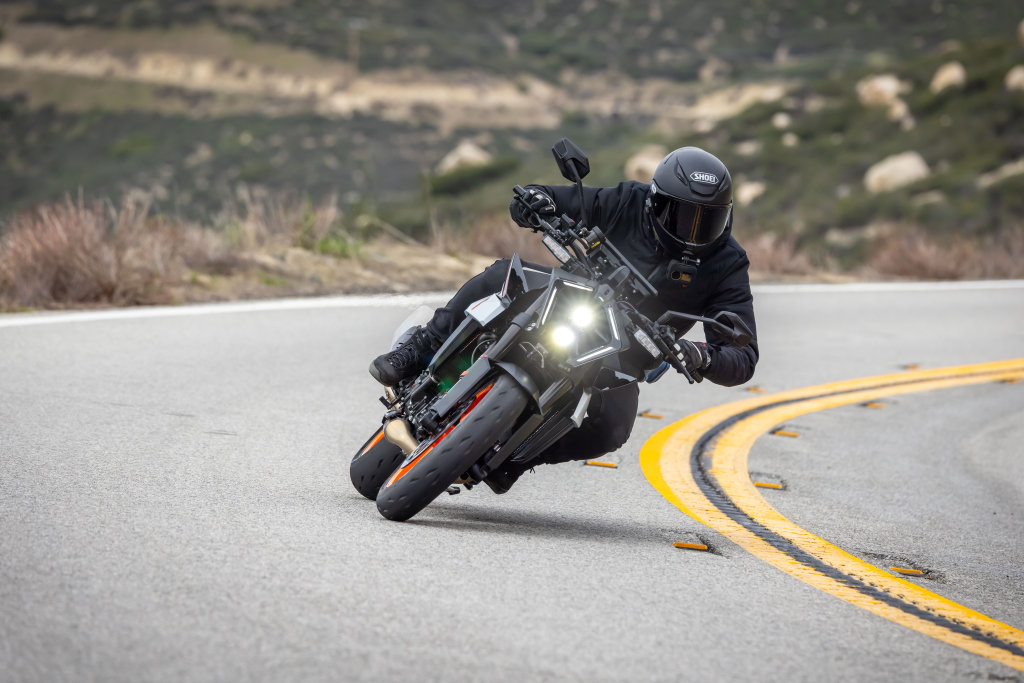
Ripping to Palm Springs: The 2026 KTM 990 Duke R First Ride
Shredding Highway 74: KTM 990 Duke R Hits Palm Springs!
-
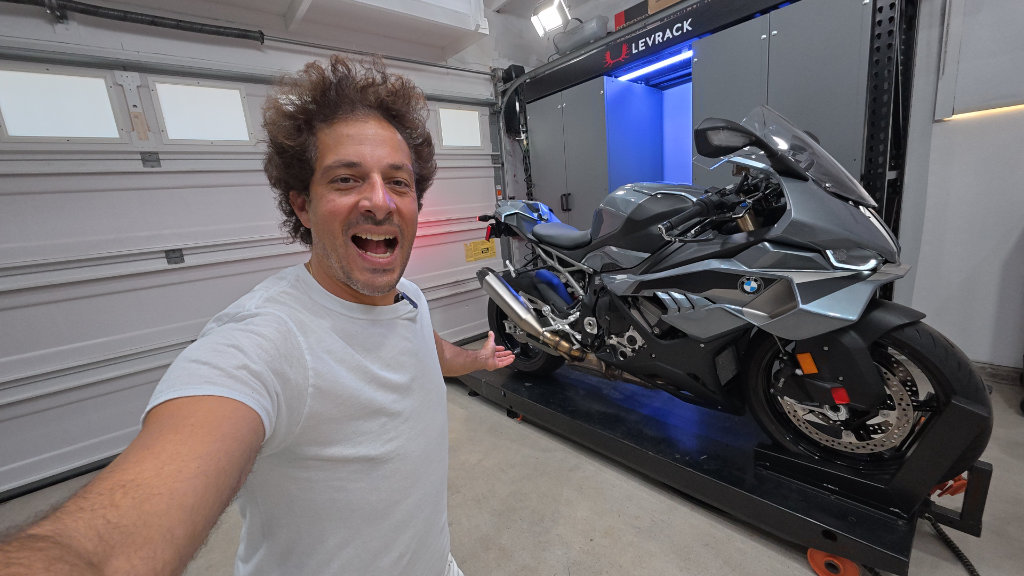
2026 BMW S1000RR Review
Conquering San Diego’s Backroads on the BMW S1000RR There’s a certain expectation…
-
2025 BMW S1000RR Review
BMW’s 2025 S1000RR: 180HP of German precision and comfort.
-
-
-
2026 Aprilia RSV4 Factory vs. BMW S1000RR
2026 Superbike Shootout: Aprilia RSV4 vs BMW S1000RR!
-
Ripping to Palm Springs: The 2026 KTM 990 Duke R First Ride
Shredding Highway 74: KTM 990 Duke R Hits Palm Springs!
-
2026 BMW S1000RR Review
Conquering San Diego’s Backroads on the BMW S1000RR There’s a certain expectation…
-
2025 BMW S1000RR Review
BMW’s 2025 S1000RR: 180HP of German precision and comfort.
-
-
-
2026 Aprilia RSV4 Factory vs. BMW S1000RR
2026 Superbike Shootout: Aprilia RSV4 vs BMW S1000RR!
-
Ripping to Palm Springs: The 2026 KTM 990 Duke R First Ride
Shredding Highway 74: KTM 990 Duke R Hits Palm Springs!
-
2026 BMW S1000RR Review
Conquering San Diego’s Backroads on the BMW S1000RR There’s a certain expectation…
-
2025 BMW S1000RR Review
BMW’s 2025 S1000RR: 180HP of German precision and comfort.
-
-
-
2026 Aprilia RSV4 Factory vs. BMW S1000RR
2026 Superbike Shootout: Aprilia RSV4 vs BMW S1000RR!
-
Ripping to Palm Springs: The 2026 KTM 990 Duke R First Ride
Shredding Highway 74: KTM 990 Duke R Hits Palm Springs!
-
2026 BMW S1000RR Review
Conquering San Diego’s Backroads on the BMW S1000RR There’s a certain expectation…
-
2025 BMW S1000RR Review
BMW’s 2025 S1000RR: 180HP of German precision and comfort.
-