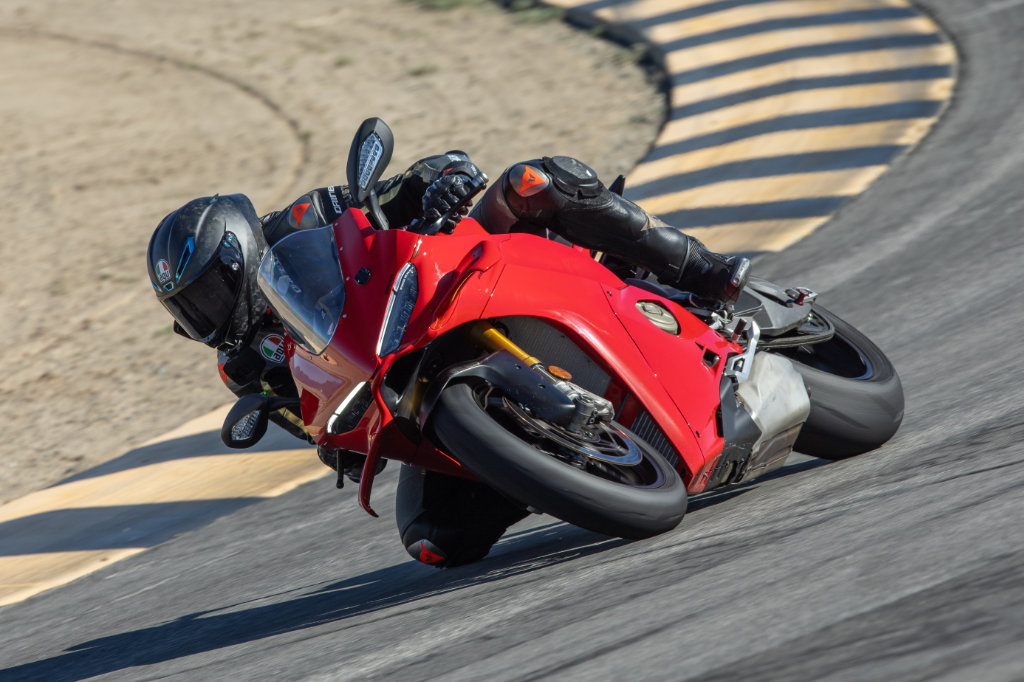
A Ducati isn’t just a motorcycle—it’s “Borgo Panigale Passion” on two wheels. However, the brand’s origins are far removed from the racetrack. Founded in 1926 by the three Ducati brothers—Adriano, Bruno, and Marcello—in Bologna, Italy, the company originally manufactured radio components. It was so successful that by the 1930s, it was the largest employer in the city. After their factory in Borgo Panigale was leveled by Allied bombing in 1944, the brothers pivoted to meet Italy’s desperate need for cheap transport. Their first venture into “wheels” was the Cucciolo (Puppy), a tiny 48cc auxiliary engine that could be clipped onto a bicycle, which became a post-war sensation across Europe and eventually led to the production of their first complete motorcycle, the Ducati 60, in 1949.
The “soul” of modern Ducati was forged in 1954 with the arrival of legendary engineer Fabio Taglioni. Known as “Dr. T,” Taglioni introduced the Desmodromic valve system, a design that mechanically opens and closes valves rather than relying on springs. This allowed engines to reach much higher RPMs without the risk of “valve float,” giving Ducatis a distinct mechanical advantage on the track. For the American market, the 1960s and 70s were transformative. The brand developed the massive Apollo V4 specifically for U.S. police departments (though it never saw full production) and captured the imagination of American racers when Cook Neilson rode a 750SS “California Hot Rod” to victory at Daytona in 1977—the first time an Italian bike won a major U.S. production-based race.
The Borgo Panigale Powerhouse
Today, Ducati remains headquartered at its historic Borgo Panigale site in Bologna, which serves as both its primary manufacturing plant and the home of Ducati Corse, its world-beating racing division. Since 2012, Ducati has been part of the Volkswagen Group (under Audi), which has infused the brand with German-level manufacturing precision while keeping its Italian design flair intact. For the U.S. rider, this marriage of cultures has resulted in bikes that are as reliable as they are beautiful. The factory is the birthplace of the Monster—the bike credited with saving the company in the 1990s—and the Panigale series, which remains the gold standard for superbike aesthetics and performance.
Ducati in 2025: The Centenary Countdown
In 2025, Ducati is operating at the absolute peak of its powers, currently celebrating its sixth consecutive MotoGP Constructors’ World Title. This racing dominance is being directly translated into the 2025 consumer lineup, most notably with the redesigned Panigale V4, which features a new double-sided swingarm and integrated “mirrored” aerodynamics. 2025 also marks a historic pivot for the brand as it dives headfirst into the dirt with the Desmo450 MX, Ducati’s first-ever production motocross bike, signaling an aggressive push to compete with KTM and the Japanese brands in the U.S. off-road scene. Simultaneously, the “Safety Road Map 2025” has reached its goal, with nearly the entire fleet now featuring front and rear radar for adaptive cruise control and blind-spot detection, proving that even as they prepare for their 100th anniversary in 2026, Ducati remains obsessed with the future of the ride.